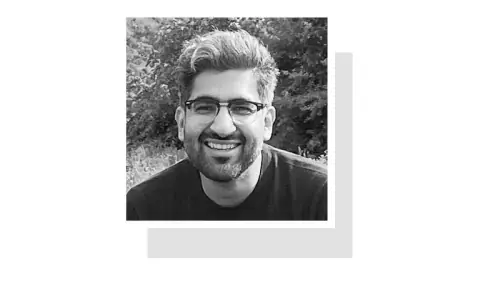
Kazi Anis Ahmed, or K. Anis Ahmed as he is popularly known, is a young Bangladeshi writer touted as one of the strongest and most active advocates of English literature in his country. Through his family newspaper ‘Ajker Kagoj’, he was at the forefront of the country’s reclamation of democratic principles in the early 90s.
He returned to Bangladesh in 2004 after his studies in the US and co-founded the country’s first liberal arts university. He also co-founded Bengal Lights, an English literary journal, in 2012; most recently he co-launched an English-language daily newspaper, Dhaka Tribune, along with his brothers and some friends.
Ahmed also turned his family business into the country’s first and only organic tea garden and cooperative, Kazi & Kazi Tea Estate Ltd. He is also the co-founder of Dhaka Translation Centre that according to him aims at translating the best of Bangladeshi English literature in Bangla and vice versa.
“For me it’s about opening up Bangladeshi literature, Bengali or English, to the wider world so our readers have more exposure to the writings across the world. It also wanted us to be able to start talking about things in a way where the world would also want to engage in a conversation with us,” he told Dawn in an exclusive chat during the recent Lahore Literary Festival (LLF).
His first publication, a collection of short stories -- Good Night, Mr Kissinger in 2012, and his first novel -- The World in My Hands, in 2013 got an outstanding response in Bangladesh and internationally. “I have always wanted to write stories and novels. I only write when there’s an issue I feel is close to my heart or when something is going wrong or right and should be commended or celebrated,” he said.
Currently, Ahmed is working around an idea for a new novel. “I haven’t gotten into writing it enough to know if it will hold. But if it does then it will be about extreme foodies in New York: a bunch of friends trying to get a restaurant going.”
About Lahore and the LLF, Ahmed said he enjoyed the food here and was “charmed” by the city. “I’d love to come back soon. The number of colleges and universities here reminds me of Boston. The warmth and sophistication of the people has been a charming experience.
[The festival] has given us a chance to engage with our cultural peers,” he said.
“I’m really struck and impressed by a very vibrant society and culture. I’m also getting a very liberal and educated side of Pakistan. There is a lot more liberal tendency and potential in this country than it gets credit for.”
He said he was looking forward to reading new Pakistani writers like Saba Imtiaz, H.M. Naqvi and Bilal Tanweer after having read Nadeem Aslam, Kamila Shamsie, Mohsin Hamid, Mohammed Hanif and Intizar Husain.
But the festival was not the only reason that brought Ahmed to Lahore. “My father went to college here in the early 60s. He lived here for 14 years; my mother came here when they got married. I grew up hearing stories about the city and was always curious to know more about it,” he recalled.
Ahmed’s father was a Bengali officer in the Pakistan Army who, along with many others, had become a prisoner of war and was finally sent to Bangladesh in November 1973.
He was optimistic about the Pakistan-Bangladesh relationship despite a “difficult and unresolved history”. “I don’t know when our countries, Pakistan in particular, will manage to take that step towards a formal reconciliation that people on the other side of the conflict have gone through. But I think it’s possible even outside the mechanisms of state just because of these kinds of platforms,” he concluded.