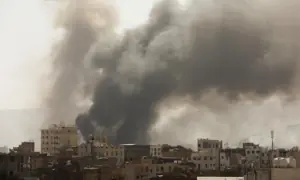
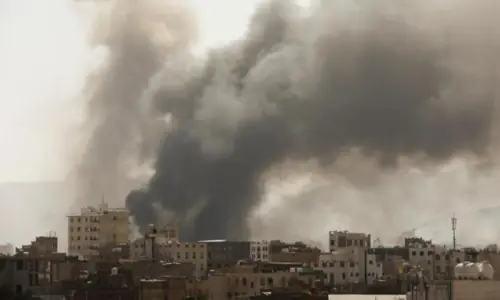
BAGHDAD: A bomb exploded inside a Sunni mosque in central Iraq during midday prayers Friday, killing at least 17 people in the latest outburst of deadly violence targeting worshippers during the holy month of Ramadan.
Suicide attacks, car bombings and other violence have killed nearly 200 people since the faithful began daytime fasting to mark the Islamic holy month, which started earlier in July.
The violence is an extension of a surge that has ripped through Iraq for months, reviving fears of a return to the widespread sectarian bloodshed that pushed the country to the brink of civil war after the 2003 US-led invasion.
Diyala provincial councilman Sadiq al-Husseini said Friday's explosion hit the Abu Bakir al-Sideeq mosque in the town of Wijaihiya, which is about 80 kilometers northeast of Baghdad. He said it killed at least 17.
Diyala province, where the attack occurred, was once the site of some of the fiercest fighting between US forces and insurgents in Iraq.
It remains a hotbed for terrorist attacks.
The area is religiously mixed and witnessed some of the worst atrocities as Shia militias battled Sunni insurgents for control in the years after the invasion.
''Terrorism is targeting all sects in Diyala mainly by attacking Sunni and Shia mosques, funerals and football fields to draw the province into a sectarian conflict. All the victims were civilians,'' al-Husseini said, appealing for calm. ''I call on all Diyala residents to show self-restraint.''
Police and hospital officials, who spoke on condition of anonymity because they weren't authorised to release the information to media, confirmed the death toll. They also reported that more than 50 were wounded in the explosion, and warned that the number of dead could rise.
The attack struck while Iran's outgoing president, Mahmoud Ahmadinejad, wrapped up a two-day trip to Iraq with visits to Shia Muslim holy cities of Najaf and Karbala south of Baghdad.
There was no indication the mosque blast was related to his trips.
Violence across Iraq has risen sharply since a heavy-handed crackdown by security forces on a Sunni protest camp in the northern town of Hawija on April 23.
That raid followed months of rallies by Iraq's minority Sunnis against the Shia-led government over what they contend is second-class treatment and the unfair use of tough anti-terrorism measures against their sect.
The surge in bloodshed has left more than 2,800 people dead and many more wounded since the start of April.
Attacks on Sunni mosques, for years a relatively rare target in Iraq, have picked up significantly in recent months.
There has been no claim of responsibility for Friday's bombing or many of the other recent attacks.
Sunni extremists such as Al Qaeda's Iraq arm that seek to undermine the Shia-led government are frequently blamed for bombing attacks targeting civilians.
They could be behind the Sunni mosque bombings too, hoping to incite a sectarian backlash against Shias.
So could Shia militias that have been remobilising following years of relative quiet.