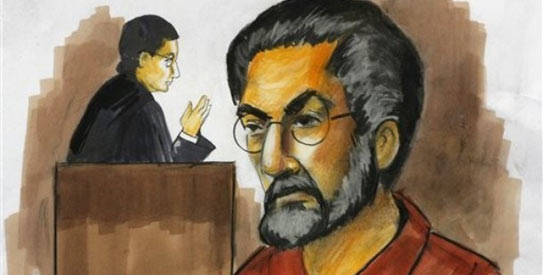
CHICAGO: The Chicago trial of a man accused of working with Pakistani terrorist to plot the 2008 Mumbai attacks opened Monday amid fears it could further inflame regional tensions.
Chicago businessman Tahawwur Hussain Rana, 50, is charged with providing material support to terrorists by acting as a messenger and providing a cover for a key figure in the bloody 60-hour siege of India's largest city in which 166 people died.
The proceedings are likely to add fuel to a diplomatic crisis over suspicions of official Pakistani complicity with terrorism after US commandos killed Osama bin Laden on May 2 in a garrison city just 55 kilometers (35 miles) from Islamabad.
David Coleman Headley -- Rana's old friend from military school in Pakistan -- has been cooperating with prosecutors since his 2009 arrest and will be a star witness at Rana's trial.
Jurors are also expected to hear a series of conversations between the two men that was secretly recorded by the FBI.
Pakistani intelligence, under the microscope following the revelation that the Al-Qaeda chief lived for years under the noses of Pakistani authorities, will come in for further scrutiny because the indictment names officers of Pakistan's powerful Inter-Services Intelligence (ISI) agency as conspirators in the Mumbai attacks.
Headley formally admitted to 12 terrorism charges in March 2010 after prosecutors agreed not to seek the death penalty or to allow him to be extradited to either India, Pakistan or Denmark to face related charges.
The Washington-born son of a former Pakistani diplomat and an American woman, Headley admitted to spending months scoping out sites for the Mumbai siege and plotting to kill a Danish cartoonist.
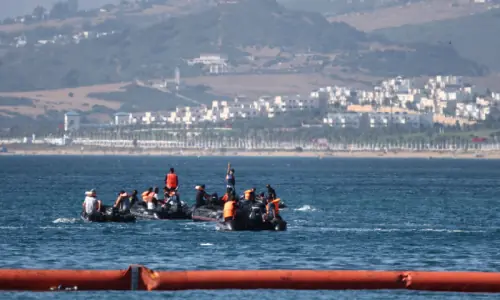
In a plot that reads like a movie thriller, Headley spent two years casing Mumbai, even taking boat tours around the city's harbor to identify landing sites for the attackers and befriending Bollywood stars as part of his cover.
India and Washington blamed the Mumbai rampage on Pakistan's banned militant group Lashkar-e-Taiba (LeT).
The attacks stalled a fragile four-year peace process between the two South Asian neighbors and nuclear-armed rivals which was only resumed in February.
Rana -- who holds Canadian citizenship -- insisted after his 2009 arrest that he is a pacifist who was “duped” into letting his old friend use his immigration services company as a cover.
But in pre-trial motions, his lawyers proposed defending Rana's actions by arguing that he believed Headley was working on behalf of ISI, not terrorists.
Headley testified to a grand jury that he had told Rana about “my meetings with Sajid and others in Lashkar” and “how I had been asked to perform espionage work for ISI,” court records show.
“I explained to him that the immigration office would provide a cover story for why I was in Mumbai,” Headley said, according to court records.
Three of the suspected conspirators named in the indictment are ISI officers, court records showed.
None of the Pakistani men are in US custody and a spokesman for the US attorney's office declined to say whether the US government would be seeking their extradition or even knows their whereabouts.
Headley -- who changed his name from Daood Gilani so he could hide his Pakistani heritage -- joined LeT in 2002, attending terrorist training camps five times over the next three years.
He began working with an Al-Qaeda-linked group in Pakistan called Harakat-ul-Jihad-Islami on the Danish plot after LeT became distracted with the final planning for the Mumbai attack, a plea agreement said.
Headley was arrested at Chicago's O'Hare airport on his way to deliver 13 surveillance videos he obtained after pretending to be interested in buying ads in Jyllands-Posten, Denmark's highest circulation daily.
The newspaper triggered a furor in the Muslim world by publishing 12 cartoons of Prophet Mohammed in 2005.
Rana's trial is expected to last about four weeks.