0
0
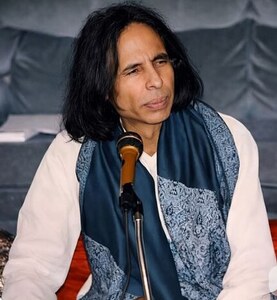
AMIR Hamza Khan Shinwari, or Hamza Baba as he is known, started writing poetry in Urdu when he was only in grade five. But his spiritual guide, Syed Abdul Sattar Shah Baacha, asked him to switch to his mother tongue — Pashto. Baba may not have been a first-rate Urdu poet, but once he started composing verses in Pashto, he perfected Pashto ghazal to the extent that Pashtun critics conferred on him the title, Baba-e-Pashto ghazal.
Now a recently-released book, An introduction to Hamza Baba, by a young poet and a writer, Haroon Shinwari, tries to introduce the legendary 20th century Pashto literary figure to the English-speaking world. Haroon Shinwari has shed light on the various aspects of Baba’s poetry and has also looked at Hamza Baba’s school of thought. One of Baba’s most popular poems, “Junghara” (The Hut) gets an entire chapter. The book also discusses Baba’s Sufism and its place in Pashto literature.
Born in 1907 in Landikotal, Baba authored 35 books in Urdu and Pashto and devoted his life to Sufism and literary pursuits. He has influenced almost three generations of Pushtun poets and writers and brought about a significant change in Pashto literary tradition.
He amalgamated the chivalric spirit of Khushhal Khan Khattak, the humility of Rahman Baba and the refined romanticism of Abdul Hameed Baba into Pashto verse due to which Pashto ghazal poetry attained new heights. Hamza Baba also heralded a new era in Pashto prose and fiction. Being a prolific writer, Baba contributed to almost every literary genre in Pashto — short story, novel, drama, literary criticism, satirical essays, pen-portraits and free verse.
He wrote 250 plays for PBC, Peshawar, on various social issues and also penned the script and songs for the first Pashto movie — Laila Majnoon — released in Mumbai in 1941. He was paid Rs 250 for his efforts.
During his early life, Hamza Baba was inclined towards the leftist school of thought but during a visit in the late 1930s to the shrine of Hazrart Khwaja Moinuddin Chisti he got deeply influenced by Sufism. The hallmarks of his poetry are Pashtunwali and Sufism through which he wanted to reform Pashtun society.
When Hamza Baba began composing poetry in Pashto, only Rahman Baba’s poetry was available to the Pashtun public.
With the foundation of Ulasi Adabi Jirga, a literary organisation, Hamza Baba gave a new direction to Pashto literature. Young Pushtun poets and writers found a strong vehicle for their voice, thus introducing new literary genres and expressions which were previously unheard of in Pashto.
An Introduction to Hamza Baba looks at how Pashto poetry evolved and Baba’s contribution in enriching it with Sufi thoughts and Pushtunwali.
Hamza Baba in fact Pashtunised Pashto ghazal and nazm, consciously presenting a soft image of the Pashtun nation and keeping the Sufi trend of Rahman Baba alive with a new vision and approach. The book is also a reflection of how the tribal belt gave birth to a great literary genius who changed the course of modern Pashto literature.
The reviewer is an English language teacher and writes on Pakhtun art and culture
An introduction to Hamza Baba (POETRY) By Haroon Shinwari Published by Community Appraisal and Motivation Camp and Hamza Baba Adabi Society, Peshawar 101pp, Rs250