WASHINGTON: The United States (US) is preparing sanctions against firms and individuals in Iran, Hong Kong and the United Arab Emirates (UAE) over alleged links to Iran's ballistic missile program, the Wall Street Journal reported Wednesday.
Such a move would be the first American sanctions against Iran since Tehran signed a nuclear deal with world powers in July that will eventually see Washington drop separate sanctions targeting that program.
According to the Journal, the Treasury Department is preparing sanctions on two Iran-linked networks helping develop the missile program.
Under the planned restrictions, US or foreign nationals would be barred from doing business with the firms and people in the networks. US banks would also freeze any US-held assets.
Treasury officials did not immediately return an AFP call seeking comment, and the Iranian government did not comment to the Journal on the possible new sanctions.
But Iranian officials have previously warned that Supreme Leader Ayatollah Ali Khamanei would view such new US sanctions as a violation of the nuclear deal.
US officials told the Journal the Treasury Department maintains the right to sanction Iranian entities allegedly involved in missile development, or those that support rights abuses or international terrorism.
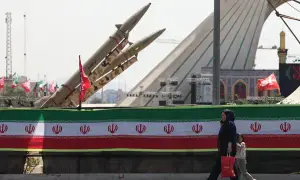
Iran has test-fired two ballistic missiles since the July accord, officials told the Journal. Iran says its missile program is only for defence purposes.
The planned sanctions target UAE-based Mabrooka Trading and its founder, Hossein Pournaghshband, for allegedly helping procure carbon fibre for the missile program.
Pournaghshband also allegedly used a Hong Kong subsidiary for the heat-resistant material's procurement and financing, the Journal reported.
Attempts by the newspaper to reach him were unsuccessful.
The Treasury is also preparing to sanction five Iranian officials who allegedly worked on the missile program, the Journal reported.
The planned new sanctions come even as the United States prepares to begin lifting earlier, far-reaching international restrictions on Iran related to its nuclear program.
Iran's atomic energy agency said 11 tons of uranium materials were sent to Russia on Monday, a move US Secretary of State John Kerry said was “significant progress” under the July 14 nuclear agreement between Iran and six major powers.
Critics of the Iran nuclear deal worry that ballistic missiles could be used to carry a nuclear warhead.
When the nuclear deal is implemented Iran will be allowed to return to the international financial system, receive billions of dollars that were frozen by foreign banks, and sell greater quantities of oil abroad.