It’s silly season again: most people want to get done and dusted with their Eid sacrifice rituals before noon on the first day, and in their desire to do so, often let in makeshift butchers who charge less money than professionals. But butchering is an art — one wrong incision and the bulk of your sacrificial meat can go to waste.
“Any successful project needs to start with firm footings, else it’ll flop. Sacrificing a goat, lamb or a cow follows the same rule: you need to know where to make the first cut else it’ll affect the rest of the process,” says Mohammad Yasin, co-owner of Bismillah Meat Mart situated in Karachi’s Nursery area.
“It is literally a matter of small differences,” he says while resting both hands under his throat, one below the other. “Six inches either way, and you’ll either get a supreme cut or a trashy one. Only a trained butcher knows where they should be making that incision, else a slaughtered animal’s corpse tends to lose its straightness. It comes crashing down.”
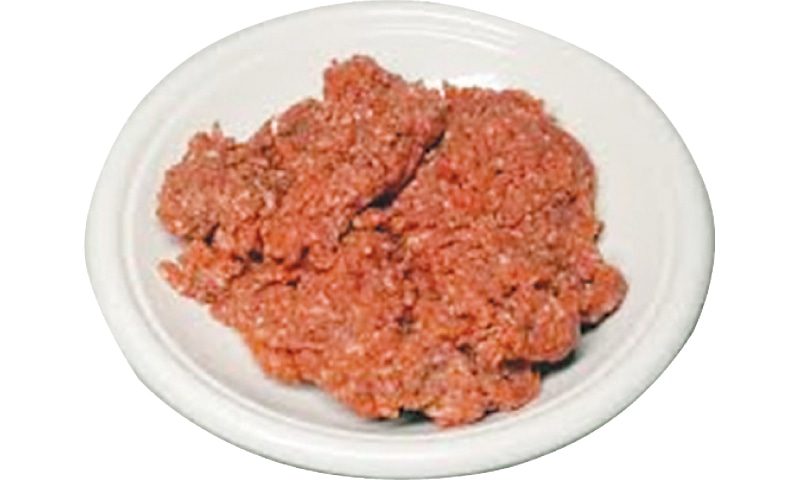
Yasin has been running his shop for almost two decades now. Over the years, he has seen a common complaint on Eid day. “Because makeshift butchers’ slaughter process is wrong, they often tend to crush the bones in. If that happens, the best and easiest way out is to make mince meat,” he says.
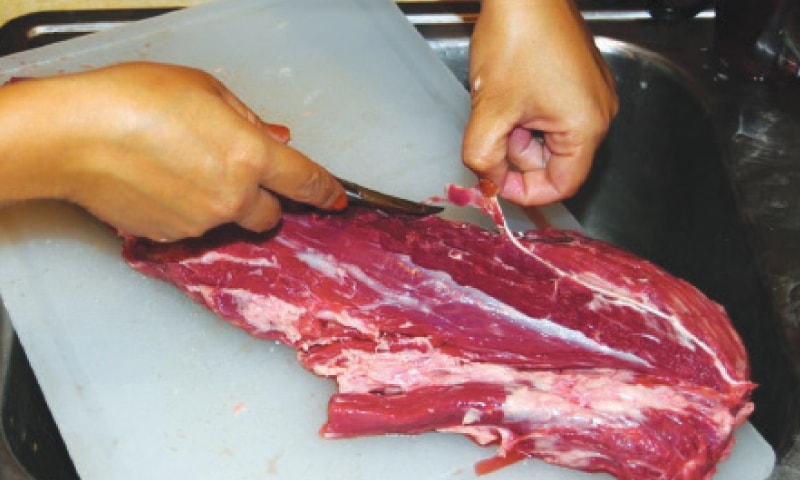
A few shops away from Yasin is Mohammad Rizwan, owner of his meat shop. He advises using any botched cuts for barbeque or steak. “The key is how you cut the meat after it is delivered to you. Don’t use a butcher’s knife, but use a sharp and heavy one that gives you both power and control,” he says.
Step this way if a makeshift butcher has botched your sacrificial meat cuts. That barbeque you’ve planned is still going to happen
Then there is the element of how the meat is cut before cooking. There are two ways of doing that: cutting with the grain or cutting parallel to the muscle fibre; or cutting against the grain, which means cutting perpendicular to the muscle fibre.
“I would say cut against the grain because that will help in the meat being cooked more tenderly,” says Rizwan. “This can apply for any cut; the key is in how you prepare the meat cut. If it is too thick, leave a layer of fat since that holds your cut together. But this is only ideal for barbeque cuts, since the meat will essentially cook in the fat that you haven’t removed.”
Salam Hasan, sitting next to Rizwan, offers another solution. “Even if your cut is misshapen, you can use them to cook rice dishes such as pulao, where you have to boil the meat to extract some stock. The meat content on the bone is not important here; it is the bone and bone marrow that matters more,” he says.
For larger cuts, all meat vendors advise letting the meat cool down in a refrigerator before using a sharp knife to cut it. With meat fibres now a little taut, it becomes easier to separate fat from the meat as well as carving out appropriate portions.
“Chops are a necessity on Eid; you’d see them everywhere you go. But makeshift butchers always tend to get them wrong, they make incisions in the bone that holds the chops together,” says Rizwan..
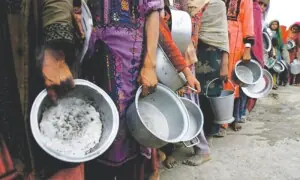
Of course, there is always the option of giving the meat away.
“For beef specially, nihari wallas will buy your botched cut of meat at a discounted rate. Or you could give it for charity; they never refuse meat,” concludes Yasin.
Published in Dawn, Sunday Magazine, September 25th, 2015
On a mobile phone? Get the Dawn Mobile App: Apple Store | Google Play