0
0

Non-Nato ally status
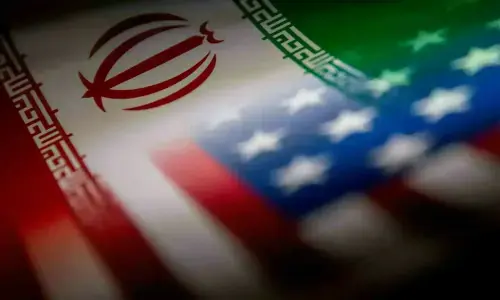
The US decision to give Pakistan the status of a "non-Nato ally" comes amidst this country's full-bodied participation in the 'war on terror' and will thus be seen in many quarters as a quid pro quo.
But the move means that the US, in the words of Secretary of State Colin Powell, is "committed to a long-term partnership" with Pakistan. More important, it will enable the two countries to strengthen their relationship in what Mr Powell called "strategic ways as we move forward".
The Bush administration has not yet sent the relevant notification to Congress, but given the bi-partisan unanimity that exists on Capitol Hill with regard to Pakistan's current role, the proposal will probably get through. Nevertheless, given the compulsions of American politics in an election year, it will be no surprise if it faces opposition from lobbies and groups known to be hostile to Pakistan.
As explained by Mr Powell, "non-Nato ally" status will enable Pakistan and the US to have opportunities for greater participation in economic, political and "military-to-military activities".
In fact, to quote the secretary, "there's no limit to what we can do together". One should also here take notice of the statement by the Chinese foreign office that Beijing's relations with Islamabad will remain unaffected by the American decision.
Whether or not Congress grants Pakistan this status, in Washington's eyes, no other country occupies as important a position as Pakistan in the Bush administration's war on terror.
In history, too, the two countries have a long tradition of close strategic cooperation. In the 50s, because of its unique location, Pakistan was sought out by the US to become a vital link in its world wide chain of anti-communist alliances - and Pakistan reciprocated because of its security concerns with India.
Thus, in addition to being part of Seato and Cento, Pakistan also came under America's military umbrella by adhering to the Eisenhower Doctrine. This way Pakistan became America's "most allied ally".
A chill developed in their relations after the US suspended military spares to Pakistan during the 1965 war with India and subsequently cut off all military aid. The situation changed dramatically when the USSR invaded Afghanistan in December 1979, and Pakistan became the favoured channel for the CIA's covert aid to the mujahideen for the anti-Soviet 'jihad'.
Islamabad also became a beneficiary of direct economic and military assistance worth billions of dollars. Once the Soviets withdrew, America washed its hands off Pakistan and Afghanistan. This was to have disastrous consequences for all sides, especially America. The latest decision means America will remain engaged with Pakistan and also help in the detente with India.
The traditional alliance with the US has not been without a cost. Pakistan suffered isolation among the non-aligned states and was alienated from the communist bloc.
Even in the Middle East, there was some suspicion because of America's ties with Israel. It took a toll also of political progression in Pakistan, with the military becoming America's favoured institution. However, in today's changed context, a more meaningful US-Pakistan relationship might serve to contribute to regional stability.
Situated in South Asia at the meeting place of central Asia, south-west Asia and the Gulf, Pakistan can make a positive contribution to the peace and stability of the region in which America has vital economic and geopolitical interests.
This way Pakistan is an asset to any state that seeks peace and economic development in the region. However, what we continue to need most is political openness and stability and a faster rate of economic development rather than complex strategic relationships.
Pakistan should be sought out as a friend and partner by virtue of its strength as a vibrant economy and as a politically dynamic, forward-looking society rather than for its location or military value alone.
Old vs new ID cards
The ruling by Chief Election Commissioner Justice Irshad Hasan Khan authorizing the EC staff to accept the now defunct national identity card as a valid document for by-elections does not come as a surprise.
The EC is within its legal authority to accept or reject an identity document as a prerequisite for casting one's vote. Its decision is based on complaints by a large number of eligible voters who have not yet acquired computerized ID cards - some attributing the delay to inefficiency in Nadra.
The decision puts aside the contention by both Nadra and the interior ministry that the cut-off date for the validity of old ID cards cannot be extended because a large number of bogus NICs are in circulation and the only way is to invalidate the old ones altogether.
Applicants for the new computerized ID cards have indeed had a tough time acquiring them. But, according to the interior ministry, their number is insignificant and easily manageable by Nadra through its offices spread across the country.
It is indeed regrettable that a seemingly simple matter should become a major irritant and cause undue hardship to the public. Complaints from the general public in the form of letters addressed to this newspaper have been on the rise since Jan 31, the cut-off date.
The interior ministry needs to look into the EC's observation - that the condition of having to present computerized ID cards for exercising one's right to vote will amount to disenfranchising a large number of voters and, for that reason, it must extend the validity of old ID cards.
If these are good enough for casting a vote then why should they not be acceptable as a valid document for opening a bank account, selling and buying property and getting a passport?
Doctor's death
The death of eminent gastroenterologist Dr Sarwar Zuberi from cerebral malaria has led to a controversy in medical circles, with some alleging that she had received infected blood following knee-replacement surgery.
While doctors at the hospital in Karachi where she was admitted say that she contracted the disease after being discharged, and that the blood she received had been screened, others have pointed out that only an infected transfusion could have caused the high parasite count in her blood.
Dr Zuberi's death is cause for sober reflection: if, with all her contacts in the medical world, she was indeed the victim of gross negligence by hospital authorities, then what can ordinary folk expect from the city's inadequate blood banking system? Fears on this score are compounded by the fact that only a small percentage of the city's more than 100 blood banks have registered with the Sindh Safe Blood Transfusion Authority.
Their reluctance to do so can only mean that they are not fully equipped to ensure that blood products are maintained properly and are free from infection. Indeed, the alarming rise of blood-borne diseases like Hepatitis C is indicative of the poor quality of blood being supplied to patients.
Also, in the absence of voluntary donations, most of the blood comes from professional donors, many of whom are drug addicts and whose use of shared needles renders them potential carriers of disease agents. Additionally, blood bank personnel are slack when it comes to verifying the medical background of donors.
While there is a law to ensure the proper functioning of blood banks, it appears that this is not being enforced with the urgency that the situation requires. Effective monitoring of blood banks is essential to safeguard blood products as is a culture of voluntary donations to discourage professional donors.
Finally, Dr Zuberi's death should serve as a wake-up call for both public and private hospitals, which should keep in mind that the slightest carelessness can result in tragic consequences.
There is need for a system of accountability in the medical sector, at both the individual and institutional levels, and the Pakistan Medical Association should take up this as a matter of highest priority.