Rubio warns of ‘chaos’ if Hormuz tolls imposed
• US rejects any tolls on shipping through the strait
• Secy of state extends security reassurances to Gulf allies
• Iran warns ships against crossing Hormuz without authorisation
• UN halts strait evacuation plan after ship reports attack
• Tehran slams Nato chief’s comments on US support in war
• Ghalibaf taunts US, says it ‘only exports GMO soya bean, broken promises and trash talk’
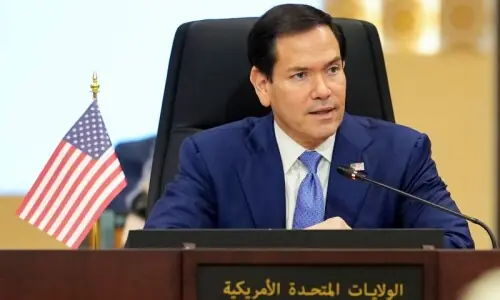
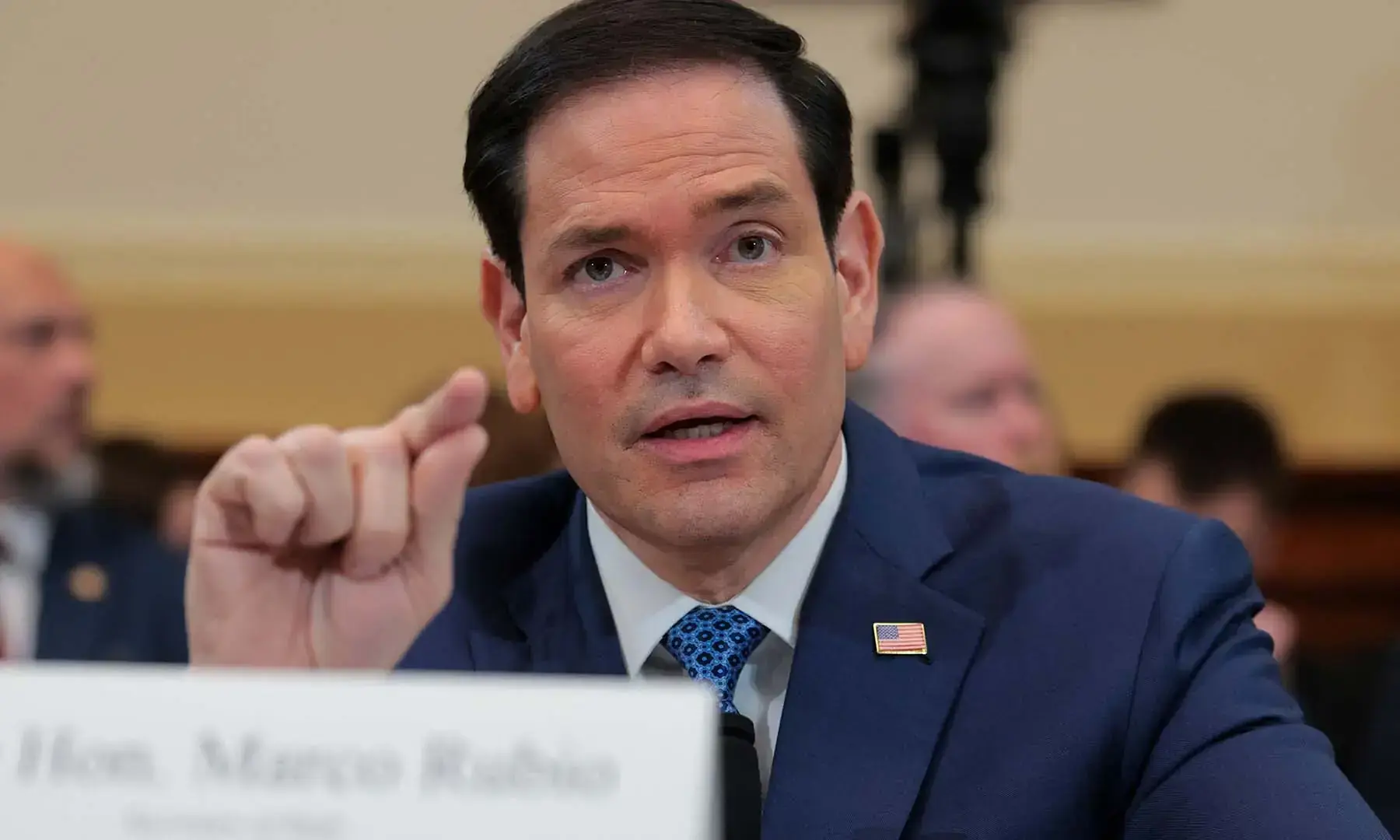
WASHINGTON / TEHRAN: US Secretary of State Marco Rubio warned on Thursday that Washington wanted a lasting deal with Iran but not “at any price”, as disputes over the Strait of Hormuz, possible transit fees and authorised shipping routes threatened to complicate negotiations between the two sides.
Rubio was in Bahrain as part of a regional tour of Gulf partners hit hard by Iran during the Middle East war, which began on Feb 28 with a massive US-Israeli campaign of strikes against Iran.
The United States and Iran have signed a preliminary deal to end the conflict and have embarked on negotiations expected to touch on thorny issues, including Tehran’s nuclear programme, sanctions relief and global energy flows through the Strait of Hormuz.
The Gulf states and Israel have long voiced concerns about Iran’s support for proxies in the region and its missile programme, but it remains unclear whether these issues will be addressed in the negotiations.
“While we want a deal, we don’t want a deal at any price,” Rubio told a Gulf Cooperation Council meeting in Bahrain.
“We want to ensure… that there is no part of this deal that’s undertaken that in any way undermines the security, the stability, or the prosperity of any of our partners in the Gulf region,” he said.
Hormuz toll row
Rubio also sought to reassure the energy-rich Gulf states that the Strait of Hormuz, which they have relied on for decades to export oil and liquefied natural gas, would remain toll-free.
Iran imposed a blockade of Hormuz during the war as part of its retaliation against the US-Israeli campaign, sparking a global economic shock.
It has since said it plans to introduce what it terms maritime service fees, while the United States and its allies have rejected the introduction of fees or tolls, arguing that Hormuz should be considered an international waterway and therefore not subject to charges.
“International waterways do not belong to any nation state. This is a foundational principle in the world today, without which the world would be in total chaos,” Rubio told the GCC meeting.
“If in fact we accepted that you can charge money to use an international waterway because it happens to be near your territorial space, well then this will spread throughout the world like a contagion,” he added.
Rubio said there was “zero support” among Gulf countries for Hormuz tolls.
“I mean, ultimately there’s not going to be any fees or tolls. They [Oman] were there in the meeting today and they said that they are not in favour of the tolling system,” he said.
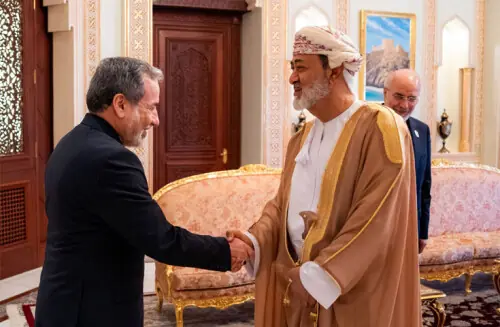
At Thursday’s Gulf meeting with Rubio, Oman’s top diplomat Badr Albusaidi said future arrangements regarding the strait “do not entail the imposition of any transit fees”, despite his government and Iran saying earlier that they were studying costs to be charged for services provided in the strait.
On Wednesday, Oman released a map of a new temporary shipping route running close to its coast. It said the path through the strait was coordinated with the International Maritime Organisation, a UN agency responsible for marine safety.
Iran later appeared to denounce the new corridor in a statement by the Revolutionary Guards, but did not refer to Oman specifically.
Iran warns ships
Iran’s Revolutionary Guards on Thursday warned against any crossings of the Strait of Hormuz without authorisation, saying vessels not complying “will be dealt with”.
“The only authorised route for passage through the Strait of Hormuz is the route announced by the Islamic Republic of Iran,” said the Guards.
Any crossing without authorisation was “unacceptable and extremely dangerous”, they warned in a statement.
They also denounced what they said was a new route through the waterway announced by “certain authorities”. The statement did not elaborate, but it appeared to be a response to Oman’s announcement of a temporary corridor.
The only route currently authorised by Iran runs through a corridor that follows the Iranian coast.
The foreign ministers of Iran and Oman also stressed the need for continued bilateral coordination on maritime traffic in the Strait of Hormuz during a phone call on Thursday, Iranian state media reported.
Iranian Foreign Minister Abbas Araghchi and his Omani counterpart Badr Albusaidi discussed recent regional developments, including maritime arrangements in the strait and temporary measures set for a 60-day period, according to a statement on Araghchi’s Telegram account.
The two sides also welcomed recent talks held in Muscat and agreed to continue diplomatic consultations and technical coordination on issues of mutual interest.
Shipping risks
Meanwhile, the evacuation of around 11,000 mariners stranded by the closure of the Strait of Hormuz was suspended on Thursday after an attack on a vessel in the Gulf of Oman, the International Maritime Organisation (IMO) said.
The UN’s maritime agency said earlier this week it would begin evacuating 600 ships and their crews that were trapped by the US-Iran war, after Washington and Tehran agreed a preliminary deal to end the conflict.
But a cargo ship was damaged by an unknown projectile off the Omani coast in the strategic strait on Thursday, prompting the IMO to halt the operation.
Traffic through the strait has increased sharply but remains at roughly half its peacetime level, officials said on Thursday as stranded sailors made their way out of the waterway.
Seventy confirmed crossings were recorded on Wednesday, according to analytics firm Kpler, marking the highest number of vessels in a day since Iran shut the Strait of Hormuz on March 1 in retaliation for US-Israeli strikes.
Iran hits back at Nato
Iran has emerged emboldened from the war, vowing not to relinquish control of Hormuz and calling its initial deal with Washington to stop the fighting “a declaration of America’s defeat”.
President Trump met Nato chief Mark Rutte at the White House on Wednesday and said the United States was “doing great” in the negotiations.
Trump also asked Congress for nearly $88bn in supplemental funding, mostly to cover the cost of the war, just a day after Congress called on him to end the conflict unless lawmakers explicitly authorised further military action.
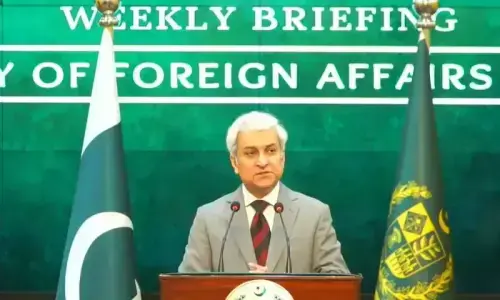
Iran slammed Nato on Thursday after Rutte noted its support for the US, with foreign ministry spokesman Esmaeil Baqaei accusing the transatlantic bloc of “complicity” in an “unlawful war”.
Iran’s top negotiator Mohammad Bagher Ghalibaf also rejected US claims that Iran would spend its unfrozen assets to buy US agricultural products.
“The US only exports GMO soya beans, broken promises and trash talks,” Ghalibaf said in a post on X.
US Treasury Secretary Scott Bessent echoed Trump on Wednesday and insisted that a large percentage of Iran’s unfrozen assets would be used to buy US foods and medicine, even as Iran says it would determine its spending.
Gulf concerns
The Gulf’s top diplomats said on Thursday that dealing with Iran’s proxies and missiles was key to lasting peace and that any trade and investment with Tehran would be reversible and contingent on it respecting its deal with the US.
“The ministers further emphasised that lasting regional peace and security requires addressing the full spectrum of Iran’s threats, including its ballistic missiles, drones, and support of proxies in the region,” they said in a joint statement.
Published in Dawn, June 26th, 2026