Karachi's Red Line suffers another blow as decision to cancel Mosamiyat-to-Numaish contract declared ‘invalid’
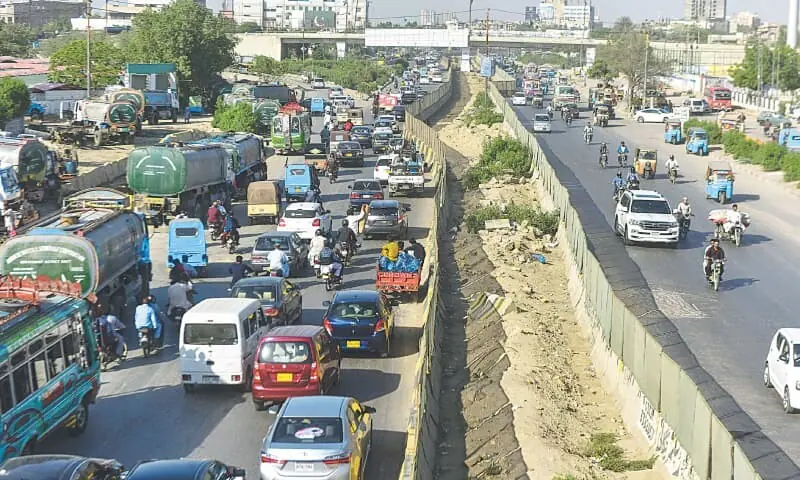


KARACHI: In a major blow to hopes of easing Karachi’s transportation crisis anytime soon, the Sindh government’s decision to cancel the Bus Rapid Transit (BRT) Red Line construction contract has been declared “unlawful, invalid, null and void”.
The ruling was delivered by the Dispute Resolution Board after the Sindh High Court asked the parties to approach the forum.
The Dispute Board’s decision also delivered an extraordinary indictment of the very agency entrusted with executing the project — TransKarachi — questioning its institutional capacity and pointing out its lack of experienced project management needed to administer a project of this magnitude and complexity.
The contract requires both the employer (TransKarachi/Sindh government) and the contractor to resolve the dispute through an independent Dispute Board before resorting to formal court lawsuits.
The Sindh government had announced termination of the BRT Red Line project’s key segment called Lot-2 from Mosamiyat to Numaish, over “lack of progress”. Immediately, the construction company, AM Associate, filed a constitutional petition in the Sindh High Court challenging the government’s decision and accused the provincial government of delaying the scheme.
Decision, in favour of contractor, by Dispute Resolution Board declares TransKarachi, the Sindh govt-owned implementation agency, lacked institutional capacity to manage the project
The High Court directed both parties to abide by their signed agreement and ordered the activation of the Dispute Board as pre-agreed contract terms.
After more than two months of hearings, the Dispute Board has declared the government’s cancellation of the contract unlawful and invalid. It said that decision was taken in haste, without considering the complexity of the project.
The board also declared that the government-owned company TransKarachi’s lacked institutional capacity to manage a project of this scale.
“The evidence indicates that the Employer [TransKarachi] lacked the institutional capacity and sufficiently experienced project management necessary to administer a project of this magnitude and complexity,” said the board’s in its detailed decision, a copy of which is available with Dawn.
The board’s verdict has now exposed a far more explosive reality that the problem is not simply with the contractor’s performance, but the project’s own implementing agency, Sindh government-owned TransKarachi, lacked the capacity to deliver the project.
It found that the TransKarachi had been unable to fulfil “several of its fundamental contractual obligations” at the commencement of the works.
The design had not been finalised, possession of the entire site free from encumbrances had not been provided, numerous physical obstructions remained and substantial payments due to the contractor were outstanding, it said.
According to the board, these matters “materially affected the Contractor’s ability to execute the works” and “substantially contributed to the delays encountered during the performance of the contract”.
The Dispute Board has pointed failures in fulfilling basic contractual obligations, deficiencies in project administration, repeated design revisions, inadequate coordination, delayed decision-making and a lack of evidence that available alternatives to termination were properly considered.
The shortcomings, it added, were compounded by deficiencies in the performance and coordination of the engineer and consultants, resulting in “ineffective contract administration and delayed decision-making throughout the Project”.
On the decision to terminate, the board said the Engineer and Consultants should have advised the Employer to pursue reasonable contractual alternatives, given the scale and complexity of the project and the practical constraints surrounding its execution.
“The board has seen no evidence that these, or any other less drastic measures, were meaningfully considered,” it added.
Instead, the board found that insufficient attention had been given to resolving outstanding issues.
“In the board’s view, effective and proactive contract management could reasonably have preserved the contract,” it said.
The board concluded that the evidence did not demonstrate that the decision to terminate the contract had been preceded by a genuine consideration of the contractual alternatives available. The termination, it therefore found, “was premature and was not a measure of last resort”.
Published in Dawn, August 9th, 2026