ON Sept 27 I received an email from my childhood friend Tariq Ahsan telling me that Dr Faheem Hussain was ill and in great pain.
“It distresses me to think that someone like Faheem should be in such pain,” wrote Tariq Ahsan. Then on Sept 29 came a message from Dr A.H. Nayyar “Faheem passed away 20 minutes ago!”
Later a few references were held by his friends in Islamabad, one by Sarwar Bari and the other at the physics department of Quaid-i-Azam University. Dr Ghulam Murtaza wrote a detailed obituary in the Friday Times (Oct 23-29). But, as expected, there was no word of condolence from those at the official level.
It was as if he had not served as an academic in the department of physics at QAU from 1968 till 1989 when he was a full professor. He was even the chairman of the department between 1975 and 1977 and, by all accounts, one of those who set high standards in this prestigious department. Towards the end of his life he served at the Lahore University of Management Sciences.
Here his stint was brief but he contributed to the setting up of the science faculty at LUMS. And yet there was no official mourning for him. The condolence meeting at the physics department of QAU was initiated by Dr Pervez Hoodbhoy, who was one of his friends. Perhaps but for him and a few other personal friends there would have been only silence. Why? Was he not an icon for many? Yes he was, and that is precisely why he was ignored by officialdom.
Being an icon of his kind — liberal, leftist and humanist — means that one goes against the mindset which has been carefully cultivated among young Pakistanis for about a quarter of a century. And this mindset cannot accept as a hero a liberal humanist or a left-leaning intellectual. While all icons defy the establishment from time to time, the defiance of the right is tolerable and that of the left is not. That is why much CD-burning violence was tolerated leading to the creation of such tremendous violence against the state itself that we are in a state of civil war right now.
But back to Faheem. When I asked Dr Hoodbhoy to sum up Faheem's life in a few words he said “I think he belonged to the genre of academic intellectuals who believe in changing the world for the better. His research and teaching were instruments of change.” And this hits the nail on the head. Those who saw him as an icon — and many did in the seventies and eighties even among QAU students — did so because they saw his sincerity, commitment to the notion of equity, egalitarianism and humanitarianism.
But when you have such ideals — Noam Chomsky, Edward Said and our own Eqbal Ahmed come to mind — you do annoy the establishment, which does not really believe in these ideals. So Faheem was distrusted for his ideas and iconoclastic sartorial style — clothes of different colour, informal attire, a Marxist-style beard. But those who met him on a daily basis were charmed by his spontaneity and warmth.
I met him only a few times but I was inspired by the three 'Sufis' (being bearded gentlemen at one time) of physics Faheem, Nayyar and Pervez. I was not in university then but was so impressed by the idea of a university that I looked up towards all academics with a certain awe. My friend Tariq Ahsan — who was jailed by Ziaul Haq and ruined for life — introduced me to the trio and I was much impressed by them, though I was aware of my own inadequacy of knowledge and formal qualifications.
Moreover when Tariq told me that all three believed in working for the interests of the poor and the underprivileged I was both inspired and put to shame. I had such aspirations too but had done nothing for anyone — and here were people who actually went to villages to help peasants. Moreover when I found them taking up humanist causes with courage and commitment my admiration increased.
Later, when I joined a university myself I discovered that one could pick up knowledge from books but moral action was another matter. Being an intellectual in the Chomskyan tradition like Faheem (and Tariq, Nayyar, Pervez, etc) was difficult. It required more courage and commitment than I possessed. However, even a cat may look at a king and so I keep looking up to intellectuals who have the courage to go against powerful interests and prejudices and do the right thing.
I also heard that Faheem's wife Jane, who was a feminist, helped organise a pro-women group in Islamabad. What a couple. I remember small incidents narrated to me like when Tariq told me
that Faheem put his (Tariq's) books in his car when Tariq was caught by the police. Just to be seen with Tariq at that time was dangerous as these were the draconian years of Ziaul Haq and yet here he was, along with others, helping Tariq. Tariq also told me about Faheem's advice to him on international relations and he says he found it very valuable.
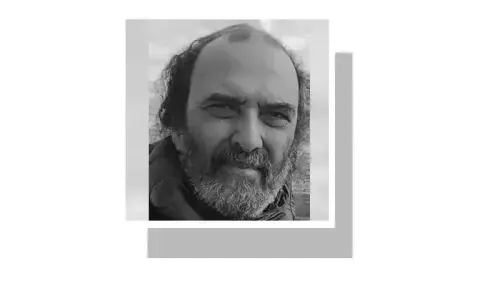
This brief homage to Faheem is part of my admiration for people like him. He is no more but he has left behind memories which inspire. His life tells us that it is possible to hope against hope, to aspire for the sky and yet to have one's legs firmly planted on this earth. Perhaps I did not know him well but I have my own image of him as an intellectual committed to making this world a better and happier place. Without this image one would not be able to survive. That is why it is so important to me.