0
0

ISLAMABAD, April 8: With elections merely a month away, the Awami National Party (ANP) presented its manifesto in a session titled ‘Relevance of a Manifesto in Political Dynamics of Pakistan’ organised by Sustainable Development Policy Institute (SDPI) on Monday.
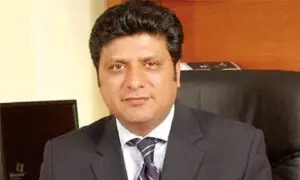
Presenting the manifesto, Senior Vice President Senator Haji Muhammad Adeel declared that resolving the energy crisis is one of the top priorities of ANP.
He said the ANP could help the Punjab government generate additional hydro-electricity from running water in Khyber Pakhtunkhwa, and that the government of KP will charge nominal rates for using the water.
Besides the energy crisis, Senator Adeel focused on some of the key themes that other parties have also highlighted in their election campaigns.
With regards to the security situation in Pakistan, he said: “Progress of the country is only possible in a peaceful and stable environment, and so a ‘Pur-Aman Pakistan’ is ANP’s slogan for 2013 elections.”
He stressed that the ANP is committed to evolving a national consensus on extremism with peace and non-violence as the basic guiding principles.
“ANP believes in conducting dialogue with those militants who recognise the constitution and the writ of the state, and renounce violence,” he added.
And as every party strives to show a renewed commitment to education, ANP also joined the ranks and declared that if elected, the ANP government would increase the education budget to six percent of GDP.
To show ANP’s commitment to furthering education, Senator Adeel cited its current efforts and said, “In the last five years of ANP’s government, nine new universities and campuses have been established in every district of the province. Additionally, the students are given free uniforms and textbooks, and a stipend of Rs 200.”
Touching another hot topic of today - tax reforms - he said the tax-GDP ratio will be improved to at least 15 percent from the current 9.8 percent.
He also informed the audience that the ANP government had initiated power projects with a total capacity of around 2200 MW.
He explained that in another three years, these projects would be able to help fulfil the energy needs of Khyber Pakthunkhwa.