Citizens in the area started sifting through the rubble themselves, and carrying out rescue operations without the aid of law enforcement agencies.
Soon enough, television channels started reporting that the reason behind this was Sharmila Farooqi’s engagement celebration dinner which was taking place at Mohatta palace, in the metropolis’ posh Old Clifton area.
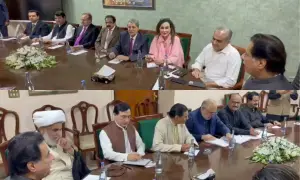
Outraged anchors said that prominent politicians, including the chief minister and the prime minister, were busy enjoying themselves at a high-profile celebration while in another section of the city, tragedy had struck. People also expressed shock and anger on various social media forums.
The connection between the two incidents, however, remains to be investigated. In a population of around 17 million, surely it must be an exaggeration that the entire police force were deployed to take care of jittery VIPs at a ceremony? Sharmila herself has already issued a clarification on Twitter.
Or is the balance of power so grossly skewed that Pakistan’s biggest politicians felt it necessary to use up over half of the city’s police personnel for its protection?
The reporting itself of the incident raises pertinent questions. Within an hour of the blast, TV channels reported that law enforcement personnel were deployed at Mohatta palace at the cost of security arrangement in Abbas Town. Little evidence, however, was provided of this – no statement from the IG police, for example.
However, even if the Sharmila Farooqi connection is tenuous, eye witness accounts indicate, significantly, that police officials were in fact missing from the scene for quite a while.
Even if it wasn’t because of Sharmila, this is a cause for serious concern.

The questions are still open: Was the police absence a result of heavy protection at the young politician’s engagement celebration dinner? If not, was the media unethical in reporting something irresponsibly or inaccurately at a moment when emotions were running high? Should politicians come forward to at least clarify what actually happened? And is debate on her engagement relevant when there are larger questions of who is to be held accountable for the scores of lives lost?