0
0
KARACHI, Dec 8: An intellectually stimulating session on the renowned short story writer Saadat Hasan Manto was the highlight of the former half of the penultimate day of the 5th International Urdu Conference at the Arts Council on Saturday.
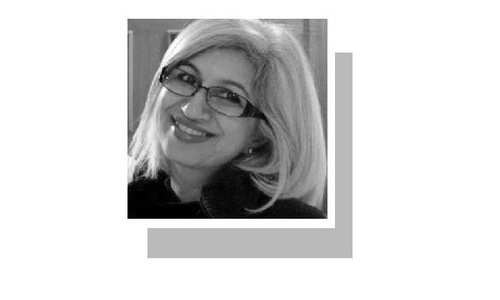
Writer and columnist Zahida Hina said that contrary to his reputation for being a writer who resorted to obscenity, Manto was a humanist. The partition of the subcontinent had shaken him up. It had made him ponder over the kind of barbarism that he witnessed when riots broke out in the region. Migrating to Pakistan, too, had had an impact on him because in Bombay he got a salary of Rs5,000, but in Pakistan he wrote a story for as paltry a sum as Rs10. She said Manto was our collective conscience and added that he had the ability to see ahead of his time, and as a proof of it quoted the content from one of his stories ‘Letters to Uncle Sam’ in which the writer had mentioned that the military and political leadership of the country wished to get hold of an atomic bomb.
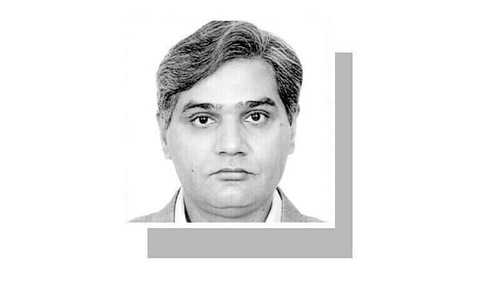
Writer and journalist Masood Ashar read out a very incisive piece and raised the question whether contemporary Pakistani society would accept Manto.
He said society in which Manto grew up was cognizant of the Ganga-Jamuna traditions. After partition that part of the subcontinent which became Pakistan became increasingly intolerant. There was a time when Parsis, Jews and Hindus lived in harmony. Not any more. The colourful aspect of Pakistani society began to fade after the Dhaka Fall and today most members of the minorities had left the country. Pakistanis were increasingly becoming one-dimensional which paved the way for an insular approach to life, and that led to extremism. “We have become bipolar, schizophrenic,” he remarked.
Indian scholar Prof Shamim Hanafi commenced his talk by suggesting that it was hard to analyse Manto’s works by confining him to the horrific events of 1947. The most powerful aspect of his creative endeavors was his humanism.
He said most of the 268 stories attributed to the writer were of high quality, whereas when he once tried to compile Premchand’s stories, he could find only 15 or 16 worth collecting in a book. Of the 268 stories, there were three in which Manto had used a different narrative technique.
Prof Hanafi told the audience that the storyteller lived in a golden period of fiction writing in which such writers as Ghulam Abbas and Bedi also emerged. He lamented that another writer who was equally good, Hayatullah Ansari, was never discussed in literary circles.
The professor, however, put two loaded questions which he said perturbed him: (1) Did Manto have a greater vision?, (2) Why did not the succeeding generation of writers get influenced by the way Manto wrote his stories?
Writer Intizar Husain said that like the triumvirate of Urdu poetry – Faiz, Rashid and Miraji – Manto was part of a fiction writers’ group which included Krishan Chander, Bedi, Ghulam Abbas and Ismat Chughtai. He said in the past Manto could not be discussed without bringing into focus Ismat Chughtai and Krishan Chander. These days it seemed as if Manto was born alone.
He argued that people tended to look at the post-1947 Manto, whereas the prior period must also be studied. He iterated that unless the entire era was understood, it would be difficult to ascertain Manto’s greatness.
Ziaul Hasan, Raees Fatima and M. Khalid Fayyaz also shed light on different facets of the writer.
An interesting session on the role of the media was held earlier.
Heated arguments were witnessed between a panel of speakers comprising Asif Jilani, Dr Mubarak Ali, Masood Ashar, Sarmad Sehbai, Ghazi Salahuddin, Ahmed Shah and Dr Fatima Hasan.
Mr Salahuddin asserted that the electronic media catered to the lowest common denominator and the number of people who read newspapers or books was so low that there was little room for quality press.
Fatima Hasan blamed the flaws in the media on military rules. This made theatre person Sarmad Sehbai react and said no matter the circumstances, art had its own counter-strategy. Mubarak Ali put emphasis on having a better education system whereas Masood Ashar criticised the way Urdu was used by the media.
Asif Jilani presented a well-researched paper on the genesis of Urdu journalism in the United Kingdom.