QUETTA has been plagued by continuous acts of violence for the past several months. On Thursday, a bomb exploded outside a madressah killing at least 16 people. Though relatives of a JUI-F leader were among the victims, with no group claiming responsibility it is unclear if a rival group was behind the blast as the police too remained in the dark; in fact a number of religious parties protested against the killings on Friday. Such acts of violence — along with regular targeted killings — in the provincial capital make it clear that Balochistan’s administration has failed to do its job. Of course, there are several shades of violence in the troubled province. While on one end security agencies are accused of killing Baloch activists and then dumping their bodies, separatists are also alleged to be committing atrocities. Among the victims of Quetta’s violence have been personnel of the Balochistan Levies as well as regular police officers, some of whom were investigating sectarian murders. Non-Baloch civilians have also been gunned down, while members of the Shia Hazara community are targeted on a regular basis. Some Sunni clerics have also been killed. Such is the tangled web of violence in Quetta.
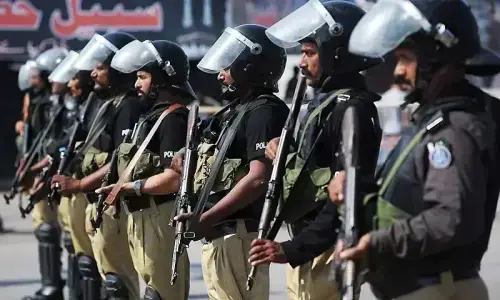
The Balochistan government often makes tall claims about initiating ‘operations’ against ‘terrorists’, yet these have failed to translate into reality as violence in Quetta keeps escalating. Even the prime minister’s recent visit to the provincial capital has had little effect on the situation. If the administration cannot maintain order in the provincial capital, we wonder how it would be able to do so in other militancy-hit areas in Balochistan. It is convenient for the rulers to blame ‘terrorists’ and ‘foreign agents’ for fomenting trouble in the province. But beyond the blame game solid action needs to be taken so that people’s lives are secure. The police as well as other provincial and federal law-enforcement agencies need to come up with a comprehensive plan to neutralise violent elements in the province and prevent further bloodshed. The writ of the state is largely absent from Balochistan. It is high time the authorities in Quetta and Islamabad took measures to change this.