2
2
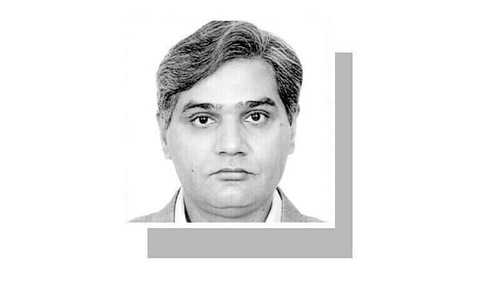
Nirad C. Chaudhuri (1897-1999), a renowned and prolific author of Bengali and English who wrote till his last days, became one of the oldest living writers when he published his work Three horsemen of the new Apocalypse in 1997. He was 100 at that time. In Urdu, Mehdi Ali Siddiqi became one of the oldest living authors when he began writing his autobiography Bila kam-o-kaast at the age of 90. He finished it at 93 and by the time it was published in 2002, he had turned almost 95. But it seems that Mohammad Ahmed Sabzwari, a scholar and prolific writer, has broken all records, at least when it comes to Urdu: he turned 99 this January and is still writing.
Writing is not everybody’s cup of tea and writing at such a ripe age as nineties is truly remarkable because it is an age when not only physical energies and mental faculties are on the wane but in some cases even simple tasks such as walking become overbearing. But Sabzwari Sahib is active both mentally and physically. One can read his pieces in newspapers and magazines and can see him enjoying the company of literati. For instance, a few months ago he was at Ghalib Library, meeting the writers and poets who had gathered there for an evening with a literary figure. The other day I met him at Frere Hall, where he had come to attend a programme organised by Anjuman Taraqqi-i-Urdu to pay homage to Ghalib. He was there till end though it was quite late in the evening.
Born in Bhopal on Jan 16, 1913, Sabzwari Sahib began writing at the age of 18 and his first article Junoon ki kahaniyan appeared in a 1931 issue of ‘Tehzeeb-i-niswan’, a prestigious magazine published from Lahore. He is still writing and his twice-monthly column titled Maeeshat ki jhalkiyan, appears in Jang. It means his writing career now spans over 80 years, a remarkable feat by any standard.
Sabzwari Sahib did his MA from Usmania University, Hyderabad (Deccan), in 1939 and began research work for his PhD. In 1940, he landed the post of Census officer and had to quit his research. After migrating to Pakistan in 1948, he joined government of Pakistan’s statistics department as statistics officer and was later selected for several training courses at American universities. He retired from the government service in 1976 but his writing career became even more prolific after retirement. His first book, based on economic research, had appeared in 1935. His book Hamare bank was one of the earliest works on banking in Urdu. Published in 1942 by Anjuman Taraqqi-i-Urdu, it was only the beginning and later Sabzwari Sahib penned many works on economics, finance and banking in Urdu. A large number of articles by him on financial and economic issues in Urdu and English are buried in the magazines and need to be collected and published in book form.
Translation is another domain in which he excels. His translated works on economics were part of Usmania University’s syllabus. He was the translator of the first report of the State Bank of Pakistan translated into Urdu. His Urdu translation of Dr Mehboob-ul-Haq’s Human development in South Asia was published by the Oxford University Press in 1997, not to mention his other works. Translating the financial and economic terms is another area that Sabzwari Sahib has been taking interest in. In 1951, his book Istelahaat-i-bankari, an English-Urdu glossary of banking terms, was published. He has worked, either individually or as a team member, in 11 lexicographic projects, mostly concerning the translations of financial, economic and banking terms into Urdu.
Sabzwari Sahib is a reviewer, too, and has been reviewing books for long, especially for literary journals Afkaar and Qaumi zaban. It seems he is more of a writer and scholar than a statistician or economist as he began his literary and editorial career quite early. He was the editor of a school magazine and a college magazine, too. Later, he worked with Maulvi Abdul Haq on the editorial team of monthly Muashiyaat, published by Anjuman Taraqqi-i-Urdu. His editorial credentials include the monthly Statistical Bulletin as well, a publication of the government of Pakistan.
He believes he owes his longevity to good dietary habits that includes complete refrain from smoking and drinking. He spends most of his time reading and writing. Looking at his good health and his healthy contribution to Urdu’s financial and literary writings, one hopes that his long innings goes on and we will be celebrating his century in January next.
drraufparekh@yahoo.com