0
0

NEW DELHI: Rights campaigners and politicians on Wednesday condemned a video showing women from a protected and primitive tribe dancing for tourists reportedly in exchange for food on India’s Andaman Islands.
British newspaper The Observer released the undated video showing Jarawa tribal women — some of them naked — being lured to dance and sing after a bribe was allegedly paid to a policeman to produce them.
Under Indian laws designed to protect ancient tribal groups susceptible to outside influence and disease, photographing or coming into contact with the Jarawa and some of the Andaman aborigines is banned.
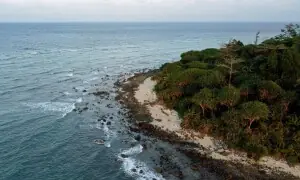
The tribe, thought to have been among the first people to migrate successfully from Africa to Asia, lives a nomadic existence in the lush, tropical forests of the Andamans in the Indian Ocean.
India’s Tribal Affairs Minister V. Kishore Chandra Deo on Wednesday promised to take action over the footage, terming it “disgusting”, and the home ministry has sought a report.
Survival International, which lobbies on behalf of tribal groups worldwide, said the video showed tourists apparently enjoying “human zoos.” “Quite clearly, some people’s attitudes towards tribal peoples haven’t moved on a jot. The Jarawa are not circus ponies bound to dance at anyone’s bidding,” said Stephen Corry, the group’s director, in a press release.
But state anthropologist A. Justin, who works on the Andaman islands, questioned whether the scenes were out of date.
“Before the 2004 tsunami, people might have forced them to dance and there may have been some much smaller violations since then,” Justin said by telephone from the capital Port Blair.
“Since the tsunami, a policy of maximum autonomy with minimum intervention has been put in place. Things are being taken care of these days. There is a lot of (security) coverage there now.” Justin said the video appeared to be several years old, while police in Port Blair also suggested it was taken some time ago.
“The video appears to be six to seven years old when Jarawas remained unclothed but now they wear dresses in public,” Director-General of Police Samsher Deol said.
“Nonetheless we have launched a probe because we want to know who is the videographer who has committed an offence and we also want to know who bribed and who has been bribed,” Deol said.
The Observer report said its journalist had recently seen tourists throw bananas and biscuits to tribespeople on the roadside, and had been told by local traders how much to bribe the police to spend a day out with the Jarawa. In June last year, Survival International accused eight Indian travel companies of running “human safari tours” so tourists could see and photograph the Jarawa.
The London-based group called for tourists to boycott the road used to enter the reserve of the Jarawa tribe, who number just 403 and are in danger of dying out.
The Andaman and Nicobar tropical island chain is home to four other rare tribes — Onge, the Great Andamanese, the Sentinelese and the Shompens — each numbering fewer than 350 members.—AFP