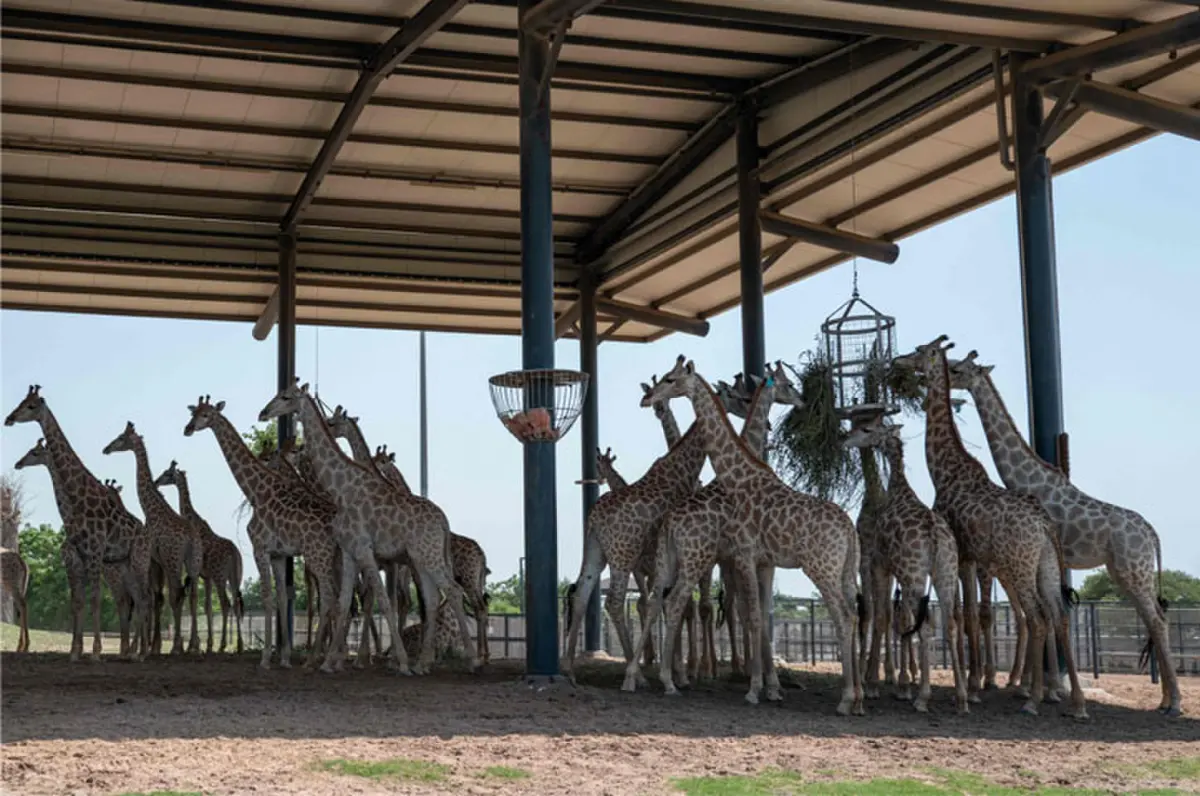
JAMNAGAR: Behind guarded gates resembling a maharajah’s palace are hundreds of elephants and big cats, giraffes grazing in a mock savannah, and chimpanzees and orangutans swinging from ropes.
This is Vantara: billed as the world’s biggest animal rescue centre, but also the target of persistent criticism over how it amassed an unprecedented collection, including critically endangered animals.
After years of scrutiny, including a Supreme Court-ordered probe in its favour, the Indian centre has pledged a reset, saying it has halted imports, hired global experts, and shifted towards helping wildlife in its natural habitat.
“Vantara has pivoted,” CEO Vivaan Karani said. “Wherever animals can be effectively supported in their own countries, we increasingly believe our resources should travel, rather than the animals.”
The centre at Jamnagar, in Gujarat state, is closed to the public. Its expansive glass-fronted enclosures house some 200 lions, 200 cheetahs and 150 tigers.
Meaning “Star of the Forest”, Vantara pledged in August to “respond to criticism through dialogue, transparency and evidence — not litigation”.
The centre is the vision of 31-year-old Anant Ambani, youngest son of one of Asia’s richest men Mukesh Ambani, chairman of retail-to-refining giant Reliance Industries.
It spans 3,500 acres (1,416 hectares) across multiple sites — around 2,000 football pitches — alongside a Reliance oil refinery, the world’s biggest. Vantara says it houses more than 150,000 animals from over 2,000 species, brought from 30 countries. But annual reports record far lower totals, among the opaque details activists wanted clarified.
Its acquisitions have drawn the attention of CITES, the international treaty regulating wildlife trade. Last year, CITES said it “considers that a number of specimens traded as ‘captive-bred’… may not be”. It urged reforms to ensure Vantara did “not inadvertently become a driver of illegal harvest of wild animals”.
Published in Dawn, October 31st, 2026