With the Khyber Pukhtunkhwa government finding it difficult to foot the growing bill of its irrigation tube-wells, the farmers depending on this source for water are suffering across the province.
These tube-wells serve as economic lifeline for thousands of farmers in the agriculture-rich Peshawar, Charsadda, Dir, and many other areas of the province where there is no canal-based irrigation system.
Since most of these tube-wells installed over 25 years back have lost their efficiency. They cannot work continuously for long hours. This has led to increase in the cost of their maintenance and repair, making it difficult for the provincial government to keep them operational. In scores of cases, these tube-wells have become non-functional either because the underground water level has gone down or the wells have dried up.
According to Zahirullah, a barani (rain-fed) area farmer from Charsadda, two irrigation tube-wells in his Naisatta rural area have been non-functional since 1994. The water pumps have gone missing along with the transformers installed to operate the pumps. About 450 acres have suffered. Now the farmers rely on rains alone and get only one crop per year. “Once the harvest season is over, most of the farmers go to Rawalpindi, Peshawar, or Lahore to earn their livelihood,” Zahirullah says.
A superintendent engineer of the KP irrigation department says there are over 350 irrigation tube-wells and some other 606 tube-wells that were set up for salinity control. Several tube-wells are non-functional because of old machinery or due to insufficient funds to carry out their maintenance. The official says these irrigation tube-wells cover less area now than 10 years back. On an average, the irrigation department’s tube-wells cover 150 acres if the discharge is one cusec. “ But not many of our tube-wells have one cusec discharge,” says an executive engineer of the irrigation department.
Zahirullah says the three other tube-wells in his village are functioning with the help of privately-run power generators. Local farmers, he adds, started using generators after the government stopped paying the monthly electricity bills, causing the disconnection of electricity supply by the power distribution company.
“Now, every farmer brings diesel as per his requirements to operate the generator for irrigating his land,” he says. The arrangement has escalated the production costs as they pay the costs of diesel and maintenance of generators from their pocket.
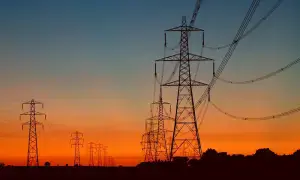
The frequent power outages have added to farmers’ and irrigation department’s woes. Farmers have no alternative but to use diesel to run the generators which increases the irrigation costs.
The problem due to loadshedding is more severe in rural areas than in urban centes. Many rural areas suffer power outages for more than 15 hours a-day.
The KP government has allocated Rs30 million for the maintenance and repair of the 356 irrigation tube-wells and 606 salinity control tube-wells in the current financial year.
The irrigation department officials consider this money insufficient for the routine maintenance and repair of the machinery because of growing expenditures due to constant electricity fluctuations and malfunctioning of machinery.
Apart from power outages, piled-up electricity dues payable against the provincial government irrigation tube-wells is ruining the lives of farmers.
Altaf Hussain, a barani area farmer from Dir, complains that the staff of a power distribution company visited their area – Adeenzai – to disconnect the five irrigation tube-wells. The power company claims Rs3.5 million dues against these tube-wells, which, Altaf says, are the only source of irrigation water to his area.
After the farmers resisted the disconnection, the power company staff left with a warning to disconnect the power supply if the bills were not paid. A delegation of farmers from Adeenzai will call on the executive engineer of the irrigation department for the clearance of the dues.
With a rising maintenance and operational cost, these tube-wells have become a pain in the neck for both the provincial government and the farmers. But their utility for the rain-fed area’s farming community and the KP’s feeble agriculture sector has made them an irreplaceable feature for the people carrying out subsistence farming.
“The provincial finance managers had tried to dispose of these tube-wells, asking the rural farming communities to take them over. “However, no one came forward,” said a senior revenue collector of the irrigation department. The provincial government has no choice, but to run these aging irrigation water resources, he says. “Their indirect economic benefits are tremendous,” the revenue collector says.
“The revenue collected from these irrigation tube-wells is nominal. The government has a responsibility to subsidise these tube-wells to help the farmers remain involved income-generating activities,” says the officer.
In Dir, according to Altaf, the local farmers have set up an organisation to help themselves by maintaining the tube-wells. The farmers, he says, repair the faulty machines from the organisation’s fund.
Later they send the bill to the irrigation department to retrieve the money from its account. “This arrangement is working amicably, but we don’t have Rs3.5 million to clear the electricity dues,” says Altaf.