0
0

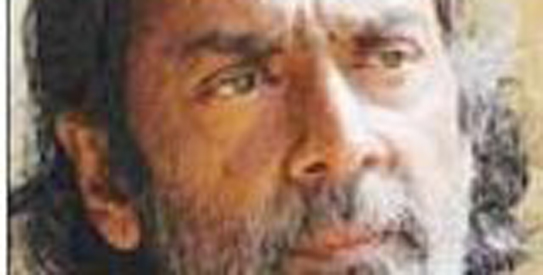
Noted fiction writer and playwright, Tariq Alam, who passed away after renal complications on Tuesday, was awaiting government assistance for his expensive treatment. Reports say that an amount of Rs700,000 had been granted by the government of Sindh for this purpose, but remained unutilised due to his death.
He was known for his literary contribution in Sindhi literature. He was 53.Tariq was born on April 10, 1958, into Abro family of Larkana, known for its association with art and education. In 1960s, his family migrated to Hyderabad where he received early education. He had his Masters from Sindh University.
He began writing in the early 1978. Starting with short story he later took up writing TV plays and novels.
His first play “Chand raheen tho door” (Moon you live so away) was aired from PTV Karachi centre in 1979.
He wrote short stories which appeared in various literary magazines. His first anthology of short stories “Raat saant aeen sochoon” (Night, Silence and Thoughts) appeared in 1981, followed by a novel “Rehji viyal manzar” (unseen scenes) in 1984 and collection of short stories “Sunjarrap ji gola” (Search of identity) in 1998.
In all he has more than 20 teleplays to his credit which all appeared on television.
He was identified with his lucid style of writing and taking his characters into the mythical world of unknown. He painted his stories with explicit depiction of the intricacies of life making it more attractive and lively.
In 1989 he joined Sindhi Adabi Board as an assistant to the editor of Mehran quarterly where his main task was to select and edit fiction. After the expiry of the tenure of the former editor of Mehran Nafis Ahmad Nashad, he was promoted as editor of the magazine in 2010. During his tenure he attempted to bring changes in the format of the magazine.
Owing to his falling health, he sought premature retirement and was relieved on May 1, 2011. Sindhi Adabi Board contributed Rs500,000 for his medical treatment.
In 1987 his kidney failure was detected and he was advised to take treatment abroad. With the assistance of the Sindh government, he was sent to England where transplant of his kidney was undertaken.
In 2010 he again felt malfunctioning of the kidneys and underwent treatment of Dr Adeeb Razvi who advised him to go abroad for treatment.
A medical board was constituted to advice the government on his medication. The department of culture released Rs1.5 million, however, he needed Rs6 million for treatment in India.
He was put on dialysis and other treatment and went into coma on Tuesday and died on Saturday evening.