0
0

PAKISTAN is stated to be a democratic country with a sovereign parliament to oversee the governance and to make all the important decisions. No one really knows what our sovereign parliament has been doing concerning matters of national security and independence.
It is also claimed that our parliament, as the sole legislative body, enacts laws that govern the country. This is despite the fact that we still have laws dating back to the 19th century.
One does not need to go far and deep in the past. While glancing at the record of the present parliament, it becomes abundantly clear that even resolutions of ordinary nature passed by the parliament were ignored by the executive authority without assigning any reason.
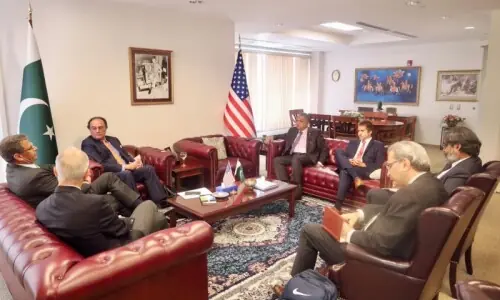
The point in question at this moment is the visit of US Senator John Kerry. He came here, dictated orders and got firm assurances of implementation. He said in unequivocal terms what the Pakistani leadership was expected to do.
The senator met the president, the prime minister and the army chief. They assured the visiting ‘dignitary’ of full compliance.
The senator was assured that action would be taken against militants’ sanctuaries in the tribal region.
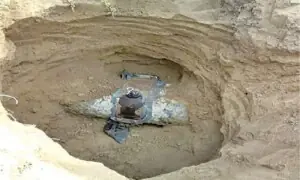
The visitor also wanted return of the wreckage of the helicopter which had malfunctioned during the May 2 raid in Abbottabad. The troika agreed to that effect too.
The US senator should have been told by Pakistani officials of his level that the country had a sovereign parliament and that a decision could only be taken by it.
Similarly, Interior Minister Rehman Malik told the media on his own and without consulting the proper forums that ‘if asked by the US’, they would be given access to the widows of Osama bin Laden, now in Pakistan’s custody. This is called an answer much before the question is asked.
Perhaps, Mr Malik too did not know that the country had a sovereign parliament of 442 members and those issues were required to be discussed and debated at that forum.
One does not need to cite examples of the supremacy of parliaments in the world’s leading democracies.
Turkey is a Nato ally. When Nato forces sought permission from the Turkish government to open its air space to let fly Nato troops and equipment, the Turkish parliament put its foot down and refused to give permission.
In our country, it seems to be the other way round. Foreign forces were allowed to operate in Pakistan’s territory and airports, and thousands of acres were leased out or sold to foreign buyers without bringing the matter even to the knowledge of the parliament.
With such things happening, what should this so-called sovereign body be called if not a ‘rubber stamp’ parliament?
BUSHRA SIDDIQUI Islamabad