The growth of the textile industry the world over is due to a large extent to the development of processing machinery for textile fibres. The hand spindles or 'churkha' gave birth to spinning and the handloom to weaving. The advent of the electric- powered machinery led to the development of the present day spinning, weaving, dyeing, printing and finishing machinery.
Textile machinery production began when mills started the maintenance work of their textile machines in their factory workshop. They later began actual engineering works and subsequently severed their connections with spinning and weaving mills. These independent undertakings gave rise to separate textile machinery manufacturing workshops.
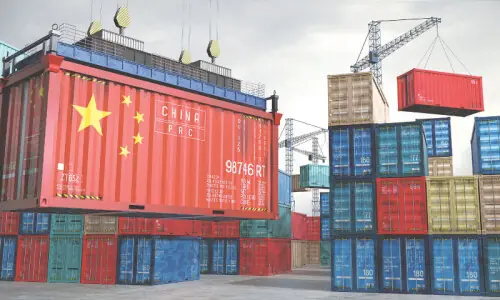
The developing countries are large producers of textile fibres. They sell fibres to the developed countries and buy machinery from them. The developed countries which are producers of textile machines want to sell their machinery and in turn buy the textile fibres and textile products made in the developing countries.
While the price of machinery has been increasing from year to year, the prices of fibres and textile manufactures have not. In developing countries exports are subsidized and imports are done at a premium. This way the grower and the producer suffer from two sides, they get less for his produce and have to pay for high priced imported goods.
No doubt modern textile machines have played an important role in the development of the textile industry, but they are made by the traditional maker only and the developing countries can hardly hope to enter this field. Even if they make the machinery they will only be able to do so out of borrowed technology or through collaboration.
Borrowed technology: The textile machinery that the developing countries have to buy for establishing textile mills consume 60 per cent of project cost. Besides, these machines are paid for by spending foreign exchange or by high rated foreign loans.
Thus in places like Pakistan, although the fibres for textile are available and labour is cheap yet textile goods are priced higher. This is due to the high cost of machinery, interest charges, high power rates and high overheads.
On the other hand the developed countries produce cheaper textile goods due to the fact that raw materials imported by them are cheaper in their currency and machinery that they produce is readily available to them.
Higher efficiency, use of automation and better management also make their goods more competitive. This way they can also provide textile products more competitively thus out pricing the developing countries.
The new trend in textile machinery production is the increasing use of electronics and development of automation and robotics which does not carry much significance to the textile industries of the developing countries.
The labour in these countries look upon the textile industry to provide greater employment and if the newer machines bring something contrary to this then they are not of much use. Moreover, the new machines are priced higher and here too the developing countries are at a disadvantage for they cannot afford such costly machines.
Developments in textile machinery production: Advances in the textile industry are synonymous with the strides made in the development and improvement brought about in the 20th century.
Modern high performance machinery and rational operating methods enable more products of better quality to be turned out with less labour and operation costs.
Textile manufacturing units have found that to stay in business they have no choice but to modernize their workhouse. The progress in textile machinery production has been mainly confined to the traditional countries commanding a lead in technological and scientific advances.
Countries where major development of textile machinery have taken place are Britain, Germany, Switzerland, Czech Republic, Italy, US, and Japan. The trend in the production of new and better machines has been towards greater production with less labour.
The western countries who are crippled with labour shortage have benefited by this development. But the Asian countries are in need of machinery which can employ extensive labour.
The growing population of Asia are now looking towards the industries to provide employment to the increasing population and it is obvious that for quite sometime labour intensive machinery will fulfill this requirement.
Electronic and electrical controls in textile machinery have been widely introduced in the new textile machines. This has resulted in the automation of spinning machines, winding machines and weaving looms.
Mills are now installing machines having electronic controls rather then manual. Use of computers is made largely in storing machine data and also in producing designs and in devising colour schemes.
Computers are used by the machinery makers in tabulating and analysis of mechanical and production data. It has also helped the manufacturers in the West in the designing of new and better machines.
It is reported that computer experts are even aiming for a completely automated mill which is run with the help of computers. Automatic control equipment are now being made to meet the requirement of modern automatic spinning mills. The automatic control equipment consists of measuring heads, electronic unit, and electrically influenced gear box.
These equipment effectively check the yarn count and count variation. When something goes wrong with machines, they stop automatically and the control panel show what is wrong and where.
How old is weaving: Weaving is the method by which threads are interlaced to make cloth. The principles of weaving have not changed through the ages. Modern textile mills do quickly on machines what ancient peoples did slowly by hand.
Cavemen, who lived about 30,000 years ago, learned how to weave. They used straw, stalks of reed, or other materials to weave baskets, nets for fishing and the capture of game were also woven by man in prehistoric times.
What these ancient peoples did not realize was that cords which are really yarn could be interlaced to make soft fabrics or cloths. The idea of weaving cloth seems to have developed in certain particular places and then spread to all over the world.
The most ancient woven cloths that are on records are in the Near East, about 5000 B.C. Egypt about 4000 B.C. central Europe, about 2500 B.C. China about 1200 B.C. and Peruvian coast of South America about 1500 B.C.
The use of different fibres for weaving development in various places according to what was available, wool, was first used when the sheep was domesticated about 1600 B.C. Cotton was first used in India and spread there through Asia and finally to Europe.
Silk fibres were first used in China and on the other side of the world, in ancient Peru, the cotton plant in ilamas and alpacas were providing material for making cloth.
Since men and women always like to have colourful clothing, it is interesting to know that the ancient Peruvians had already found ways to have more than 150 tints and shades on their cloths. Today of course most weaving is done in mills. But in many cases the weaving of rugs and tapestries is still done by hand by skillful artists.
How did clothes develop: Man has always wanted to improve his appearance. Early, man put on animal skins had hung strings of beads and stones around his neck. Bark, leaves, straw, feathers or whatever material was closest at hand were turned into clothing.
For early man, clothing may also have had magical qualities. By wrapping himself in a certain skin, he may have been trying to keep away evil spirits. During the ice ages people had to wear animal furs to keep warm. The hides were first scraped, then holes were pierced in the skins.
Strips of leather or animal tendons were drawn through the holes to tie the pieces of fur together and to help keep the garment on the body. Gradually man learned to make the skins softer and suppler.
About factory, some 5000 years ago the needle was invented, it became a key tool for making cloths. Later man learned how to twist wool and animal hair into long strands. The Egyptians wove light fabric out of the flax and cotton that grew in the Nile Valley.
Wool was spun into yarn for robes and tunics by other ancient peoples. In colder climates, clothes covered all of the body as a protection against the elements. Because of cold weather the clothes that were developed were close fitting types. So trousers tunics, and warm protective cloaks came from these area.
As communication improved between the sections of the globe clothing styles from different regions began to influence each other. But different social groups wore different types of clothing. The clothes of the lower classes were looser and easier to work in.