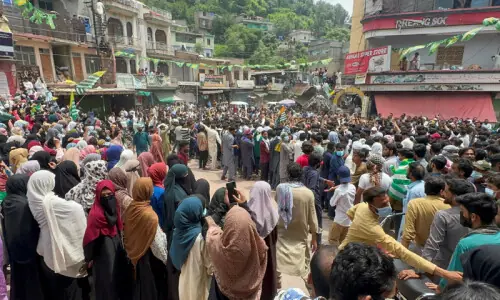
ISLAMABAD, Oct 31: Shot in documentary style, Da Bajaur Guloona or Homeless at Home chronicles little known stories of innocent civilians who have been forced to live as refugees.
The 17 minutes long film highlights the impact of military operations and US strikes in Bajaur on the lives of women and children. The aim of the short documentary is to expose the human dimension of the operation by showing the experiences of the internally displaced people (IDPs) of Bajaur. The brief film also brings forth moving stories shared by the refugees who arrived in the camp near Peshawar.
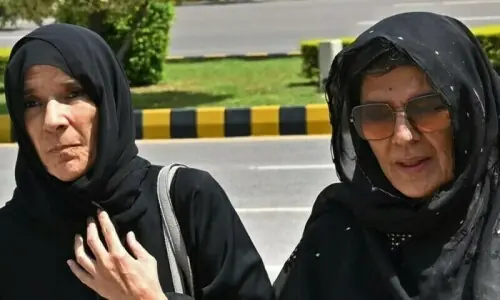
Filmed and conceptualised by Samar Minallah, a philanthropist, and director of Ethnomedia, an NGO, to show the real face of displacement, Da Bajaur Guloona captures the sadness and misery on the faces of the people so brutally driven away from their hearths and homes. From tent to tent, faces stare at you with the same fixed expression.
Shown at the office of Human Rights Commission of Pakistan here on Friday, the film questions what path will the children take in their lives and what future holds for them when they experience the silence and insensitivity of the outside world towards their agony and plight? The film also questions why international laws that protected human rights were being ignored in Bajaur.
The documentary combines film and stills with interviews of several displaced persons who tell the story of their exile.
“The hillsides of Bajaur bloom all year long. They are sweet as a rose, where even the bees are happy. But today our children grieve away from home, no longer able to wander about freely without a care,” said an old man, Sharif Khan.
Rahim Shah also an IDP said, “every kind of bomb imaginable has been used against us – on civilians, leaving behind the stench of death and separation of families.
Shukurullah in his interview recalled rushing out of the house with his family. “Our neighbour’s house was bombed. I saw the father, his wife and daughters blown to pieces,” he said.
The documentary includes comments of the caretakers of the Pir Pia camp. Sub-Inspector of Police, Ms Nisar, said, “the care free people of Bajaur were forced to flee after they experienced terror. Many were relieved to be reunited with their loved ones at the camp but their joy cannot make up for the grief of leaving behind their homes.”
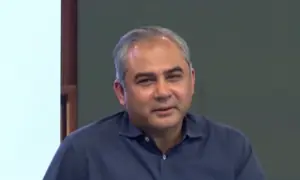
Speaking about the documentary, Samar Minallah recalled living in Bajaur for two years. “In my memory, Bajaur was where women exchanged stories while washing clothes at streams, sang joyous wedding songs. Despite their poverty, they symbolised hope. What I did not realise was that the reason behind their hope was the unconditional love they felt for their homeland. As their homes were lost, the smiles faded too.”
She said that conflict in Bajaur was getting worse. “When it comes to war against terror, international laws are far from being observed.
The displaced refugees have indeed themselves become victims of terror, hopelessness and uncertainty. Today these displaced victims of war in the name of terror wait for the world to come to their help instead of watching the scene like silent spectators,” she said.