ISLAMABAD, June 25: A high-level meeting on Wednesday took stock of the deteriorating security situation in the North West Frontier Province and progress in the ‘war on terror’, declaring that the Chief of the Army Staff would be “the principal for application of military effort” in this regard.
An official announcement said that “although the Frontier Corps, NWFP, and the law enforcement agencies would be the instruments of the governor and the chief minister in their respective jurisdictions for law and order, they would fall under his (COAS’s) command for military operations”.
The participants resolved that Pakistan would not allow its territory to be used against other countries, especially Afghanistan, and under no circumstances would foreign troops be allowed to operate inside Pakistan.
The meeting was chaired by Prime Minister Syed Yousuf Raza Gilani.
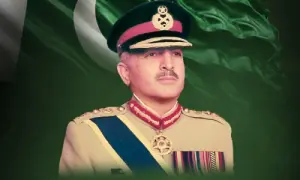
Army chief Gen Ashfaq Parvez Kayani and Inter-Services Intelligence (ISI) Director-General Maj-Gen Nadeem Taj attended the meeting.
The Governor of NWFP, Owais Ahmed Ghani, Chief Minister Amir Haider Khan Hoti, Foreign Minister Makhdoom Shah Mehmood Qureshi, Environment Minister Hameedullah Jan Afridi, Minister for States and Frontier Regions Najamuddin Khan, Prime Minister’s National Security Adviser Mahmud Ali Durrani and Adviser on Interior Affairs Rehman Malik were also present.
The participants were unanimous in concluding that “terrorism and extremism are the gravest challenge to Pakistan’s national security”.
They decided to meet the challenge by “political engagement of the people through their elected representatives, tribal elders and local influentials”.
In addition to the political process, the participants agreed that “large-scale development, economic empowerment and selective use of military force will be the other prongs of the strategy”.
However, the army chief will have the authority “to decide on the quantum, composition and positioning of military efforts”.
The meeting took place in the backdrop of reports of a gradual loss of territory to the Taliban, kidnapping of Christians from the biggest teaching hospital in Peshawar and speculations that declaration of a state of red alert in Peshawar was on the cards.
It was decided that a broad objective of the strategy would be to bring about peace, reconciliation and normality and marginalise hardcore terrorists, militants and criminal elements so that the country’s national interest reigned supreme.
The meeting decided to ensure that local tribal customs and traditions were respected by all representatives of the government, including the military and law enforcement agencies, and that all foreign fighters were expelled from the country.
While the provincial governments would be responsible for their jurisdictions, the NWFP governor would be the chief coordinator for all activities in the Federally Administered Tribal Areas and he would maintain liaison with the federal and provincial governments, important political leaders and the military commander concerned.
The governor, in consultation with the federal and provincial governments, would be responsible for planning, execution and coordination of a comprehensive development plan in Fata.
The governor would lead all reconciliatory efforts, making sure that any political agreement made with the tribes was based on mutual respect and trust.
The tribes have been entrusted with the expulsion of foreign fighters and they would be held accountable for the presence as well as actions of all such elements.
All agreements with the tribes in the region will be backed by a robust enforcement mechanism.
The tribes will also be responsible for stopping cross-border movement of militants from their areas.
The tribes have been told not to fight or target the Army, Frontier Crops and other law enforcement agencies in their areas. Use of force by the military would be justified if there was a breach of trust, they were told.
It was agreed that the principle of use of minimum force and avoiding collateral damage would be kept in focus and swift operations based on actionable intelligence would be launched to eliminate terrorists and stop hostile movement across the border for operations against western forces in Afghanistan.