0
0
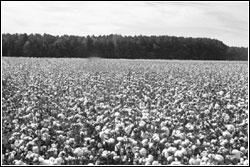 THE textile industry would suffer a serious set back in the backdrop of shortage of cotton lint owing to gross mismanagement regarding supply of quality seed and recommended pesticides, pest scouting and replacement of cotton crop with sugarcane. It is likelihood that the size of cotton crop would be less by at least two million bales against the target of 14.14 million bales for the year 2007-08 and therefore actual harvest may not go beyond 12.14 million bales.
One of the factors attributed to the reduction of cotton yield is the use of poor quality seed. Adverse effects of poor quality seed are not new to the farmers. On one hand, it trims down plant population while on the other increases pest attack. There is a severe attack of pests such as mealy bug and leaf curl virus on the standing crop in the southern Punjab and upper Sindh that has created panic among the farming community as well as the textile industry.
Of the total area under cotton crop (around eight million acres), about 25 per cent is said to be seriously damaged by pest attack. The mealy bug has inflicted more damage to the crop this year compared to leaf curl virus. The government is, therefore, duty-bound to ensure supply of high quality seed to farmers since no other agency is capable of supplying good quality seed. Rules prescribed by the International Testing Seed Agency (ISTA) have not been observed strictly by the seed producing agencies so far in the country, an important reason of low seed germination. Therefore, compliance of rules prescribed by the International Seed Testing Agency (ISTA) of Geneva regarding quality, germination and purity of seed offered for sale needs to be observed in letter and in spirit.
Timely intervention of the government especially the plant protection departments and Ministry of Food, Agriculture and Livestock (Minfal) was indispensable to deal with the menace at an early stage. However, no such efforts were being made in this regard. Recommended pesticides were not available to the farmers and the skyrocketing prices have prevented the timely use of essentials to contain the pests. Importantly, if the provision of recommended pesticides is not ensured, the pest will inflict serious damage to other crops also such as red chilies and corn.
Rightly, the farmers from southern Punjab have demanded the formation of an enquiry commission to probe into, what they called, “emerging cotton crisis”. Nevertheless, the enquiry commission may expose the factors responsible for the predictable crisis but may not be able to come up with solution except proposals for import of cotton to bridge the widening gap between demand and supply. The country would have to import at least three million bales to meet the requirements of the domestic textile industry.
It is worth mentioning that reduction in yield of two million bales would cost the country Rs60 billion, hit the textile as well as edible oil industries badly and aggravate the socio-economic conditions of the cotton growers. A considerable quantity of edible oil is extracted from cottonseed and reduction in lint production would reduce the supply of cottonseed by at least 100,000 tons to the edible oil industry that would add to the gap between demand and supply of edible oil. To add to this, the country will have to spend Rs10 billion more on the import of edible oil. Already, the import of edible oil has been costing around Rs45 billion to the national exchequer.
Needless to say that textile is one of the largest sectors of our economy because a major chunk of our exports comes from this sector. The domestic textile industry needs at least 15 million bales to meet its export and local requirements. Demand for raw cotton has been on increase at a rate of four per cent per annum from the last one and a half decades. A year back, the All Pakistan Textile Mills Association (Aptma) estimated that the country would need around 20.10 million bales of raw cotton by the year 2015 comprising 66 per cent medium staple, 26 per cent long staple and eight per cent extra-long staple. On the other side, lint production has been hovering around 12 million bales on an average since the initiation of this decade. To fulfill increasing demand of the textile industry, it is imperative to adopt all measures to increase per hectare yield of cotton crop.