0
0
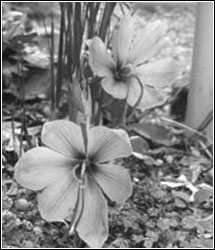 SAFFRON is the most expensive of all the spices, has vast curative value and is extensively used in confectioneries for dyeing food preparations and elegant perfumes.
Medicinally it is carminative and promotes perspiration when taken as infusion. The Greeks and Romans would strew saffron on floors of public meeting places to scent the air, and its tea was drunk to invigorate the spirits.
Pure saffron has spicy, aromatic, pungent and slightly bitter taste with penetrating characteristic fragrance. A very little quantity is required to colour and flavour food preparations. It contains riboflavin and the pigment crocin which is very strong. It can be drunk warm as a most stimulating tea adding just a pinch (4gm) of it to 20 fluid ounces of boiling water.
Saffron has its origin from the Asia Minor from where it spread far and wide to Iran, China, Russia, Turkey, Spain, Holland and England. However, Indian-held Kashmir is well known for its cultivation and quality of product. Pure saffron is contained in orange red stigmas of crocus flower.
The stigmas are picked by hand when flowers are not yet open, which may be dried in shade. It approximately requires 70,000 flowers to achieve half kilo gram avoirdupois of saffron. The cost of production is very high because of low production, labour and cost intensive bulbs.
Saffron is botanically called Crocus sativus from the family Iridaceae. It is a perennial plant, has lilac colour flowers, with narrow ribbed leaves grown from bulbs known as corm. The stigmas are the real saffron, which are bright orange-red grows in three threads like open end tubes from style of the flower. Of all the finest saffron comes from south eastern Spain.
Its corm grows best in rich sandy well-drained sheltered soil. Each acre sowing requires at least 80,000 to 90,000 corms which require a lot of investment.
Therefore, the government may subsidise initially and the interested grower may venture from a modest area of one kanal or so. Soil should neither be sandy or hard clay nor have high salt contents. In order to improve soil fertility, structure, water holding capacity and enhancing microbial activities well rotten farm yard manure may be added in adequate quantities. The land may be prepared so as to be free of weeds.
Although our soils are often deficient in two nutrients; nitrogen and phosphorous (N&P), yet it will be advisable to get the soil analysed for micro and macro nutrients. Usually potash is available in abundance in most of our soils. A part of nitrogen and full dose of phosphorous may be applied at sowing. First irrigation may be applied at sowing. Rest of N may be supplied in instalments during the growing period. First irrigation may be applied right away just after sowing of bulbs.
The planting may be carried out by the end of September or beginning of October. The plant is propagated either by division of bulbs or seed. However, the crop raised from seed takes about three years to bear flowers. The stem is short, measuring six inches or so in height. The bulb is wrapped in brownish thin sheaths. During growing season the main bulb develops a number of daughter corms on its sides, the young corms start bearing flowers as they mature. The corms sprout in autumn and dries after spring.
The bulbs can be dug out when in dried state or its remains alive in the soil for subsequent crop. A two to three years old bulb starts bearing flower and good crop can be obtained for five or six years from the same plantation. Since the bulbs remain dormant in the soil in off season, therefore, water may not be allowed to stand in the field, which may otherwise decompose them. The yield of dried saffron varies from four to 10 kg per hectare; which primarily depends upon the management practices followed also the climatic conditions. The price of product very much depends on the quality of the produce, which may fetch as high price as $1,000 per kg. The leading saffron exporting countries are Spain, Iran, India and Turkey.
Half hearted efforts were made for introduction into the country. If successful shall bring prosperity to the farming community, when one hectare of crop may fetch Rs300,000 to Rs500,000, which is indeed very high return compared to any conventional or non conventional crop. It is interesting to note that an agricultural scientist in Faisalabad, more than a decade ago, had successfully grown saffron in his backyard. It is firmly believed that it can be introduced in some cooler parts of Punjab, NWFP, Balochistan or Kashmir.
To start basic material be introduced from various countries of different ecological regions, which be tried in different parts of the country to determine aptness under varied agro climatic systems. The hybridisation of appropriate introductions along with application of bio technology as an additional tool possibly will lead to wide range of variation so as to select desirable changes of hybrid material best suited to our environment for higher production above and beyond improved quality of product.
Although it is like finding a needle in hay stack, yet, however, exposure to low irradiation may cause desirable changes.