0
0
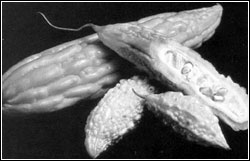 BITTER gourd is a member of the Cucurbitaceous family, and a relative of squash, watermelon, muskmelon, and cucumber. It is considered as an ancient vegetable and is a native of the tropics. It is an annual plant of climbing or trilling nature and is cultivated through out the country. During 2003 to 2004 bitter gourd was grown over an area 5459 hectares, and its production was 51,217 ton. Bitter gourd skin is bright green in colour, the flesh inside is white, and the seeds are small and tender. The vegetable is ridged, and the skin is pebbly in texture.
This vegetable is mostly used as food as well as medicine. The fruit of this plant lives up to its name--its taste is very bitter. Although its seeds, leaves, and vines can be used, the fruit is the safest and most prevalent part of the plant used medicinally.
Bitter gourd is traditionally used for an array of conditions by people in tropical regions. Numerous infections, cancer and diabetes are among the most common conditions it was purported to improve. The leaves and fruit have both been used to make tea and alcoholic drink.
Bitter gourd contains essential vitamins and minerals; its regular use helps to prevent many complications such as hypertension, eye complications, neuritis and defective metabolism of carbohydrates. It is highly beneficial in the treatment of blood disorders like blood boils, scabies, itching, psoriasis, ring-worm and other fungal diseases.
Fresh juice of leaves of bitter gourd is also an effective medicine in early stages of cholera and other types of diarrhoea during summer. Leaf juice is beneficial in the treatment of alcoholism. It has also been reported that bitter gourd may help in the treatment of HIV. The extract of bitter gourd may be effective in slowing the growth or spread of some types of cancer, particularly breast cancer and useful as an anathematic, in jaundice, and piles.
The plant has medicinal properties. A compound known as 'charantin' present in the bitter gourd is used in the treatment of diabetes to lower blood sugar levels. The plant also has a rich amount of Vitamin -A, vitamin- C, iron, phosphorus and carbohydrates.
As for its medicinal value, at least three different constituents have been reported to have hypo-glycemic (blood sugar lowering) or other actions of potential benefit in diabetes mellitus.
Two bitter melon proteins have been shown to inhibit the AIDS virus and an as yet unidentified constituent in bitter melon may benefit people with psoriasis. There are several varieties available, having fruits 3-4 inches to even 12inches in length.
To prepare bitter gourd for cooking, wash thoroughly, then cut in half lengthwise and scour out the seeds with a sharp spoon or corer and remove. Cut or slice as called for in your recipe, and blanch for 3-4 minutes in boiling water to which a little salt has been added drain.
The plant has a slender hairy stem with numerous branches and dense foliage. The plant grows up to six feet tall and develops small, yellow flowers both male and female, on the same plant. The fruits are green usually oblong, has an irregular surface with warts and 8-10 vertical ridges.
When ripe, the fruits turn yellowish orange in colour. It is a warm season plant; bitter gourd thrives in hot and humid climates. Propagation is through direct seeding and transplanting. The best medium for the seed is a fertile, well drained soil with a pH ranging from 5.5 to 6.7, enriched with organic matter, such as compost or dried manure. But it will tolerate any soil that provides a good drainage system. The soil must be prepared well by adding organic matter before planting four to five kg seed/acre.
Two or three seeds can be sown together in a pit 1/2 inch deep. Water lightly for better results soak the seeds in water 24 hours before sowing. The seeds will germinate in 2-3 days. The germinated seeds can be replanted on raised beds 18-20 inches apart. Transplant should be done in such a way as to avoid disturbance to the root system. As the plants grow, place poles 2m.high and give wire or twine supports in rows across the poles.
Forty to 50 cartloads of well-rotten FYM is applied one month before sowing, one bag of DAP is applied before the preparation of raised beds and mixed with soil completely. One bag of urea should be applied at the time of flowering. Weekly irrigation should be given to the crop in hot weather and in cool season the period can be increased up to 10 days.
There are two varieties of bitter gourd. The large kind is long, oblong and pale green in colour. The other kind is small, little oval and dark green. Both types are bitter in taste.
Mature fruits are ready to be picked within three months from planting and they will be light green and juicy with white flesh but bitter. Pick the fruits every 2-3 days when they are still at the tender stage.
Regular picking is important as fruits will become bitterer as they mature and it can also hamper the growth of new fruits. Young and tender fruits are picked on every alternate day and are supplied in the market. The harvested fruits should be kept under shade in cool place. The average yield is about 4000 to 6000 kg/acre.
Bitter gourd is susceptible to many diseases and insect pests. It is susceptible to watermelon mosaic virus, other cucurbit viruses and powdery mildew, which can be controlled by sulphur dust. Rust disease is controlled by spraying foliage with oxy-carboxin.
The fruits are subject to attack by various fruit flies and fruit rots. Pests attack on fruits can be prevented by wrapping fruits with newspapers, when they are about a few centimetres long.