0
0

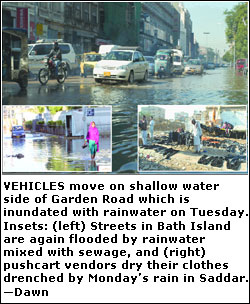 KARACHI, Dec 5: Suddenly Karachi is once again enmeshed in the same situation as it was a few months ago, and nothing seems to cut ice with the authorities concerned. It’s the same old pattern: it rains cats and dogs, rainwater accumulates on every sidewalk, pathway and thoroughfare; roads and pavements get damaged; potholes and puddles pockmark the cityscape; and traffic congestion gets worse, making commuters marooned for hours in the middle of nowhere. Yet, no concrete step to make Karachiites’ lives less miserable is taken. And yes, the first thing that the downpour hits before raining on the denizens is the feeble electricity wires and cables network, taking the city back to the Stone Age, when campfire was the best way to see things at night. The same happens in other parts of the country, but they’re not Karachiites, so they live in peace.
One completely fails to understand how a natural phenomenon can become such a worrisome issue in the 21st century. While it would be hard to dispute the fact that Karachi is demographically the largest city of the country and spreading horizontally as well as vertically at a breakneck speed – making civic issues difficult to handle – lessons may be learnt from past experiences. It was on August 17, 2006 that one of the heaviest rainfalls in the history of Karachi was recorded, paralysing many parts of the city. It took no less than a week to bring life to normalcy, but by then a lot of damage had already been done.
One such damaging occurrence was the recent outbreak of the dengue virus, which some people suggest was caused by the water that got accumulated on many a place in the megapolis and wasn’t cleared or dried out for quite some time.
Now things are more serious. Winter has set in. The people who get, or will get, stranded in the middle of nowhere because of traffic jams can catch (God forbid) diseases other than the dangerous dengue fever. It will get nippier and chillier by the day. The authorities concerned should try and take measures that can prevent rainwater from submerging the city, helping Karachiites lead a normal life.