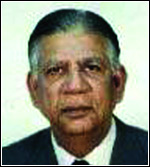
 KARACHI, Aug 11: Former chief justice Mohammad Haleem died of renal failure at his DHA residence here on Friday morning. He was 81.
He is survived by his son, Advocate Akmal Wasim, and wife, Begum Uzma Haleem.
He was funeral was held after Asr prayers on Friday. Soyem would be held between Asr and Maghreb prayers on Saturday at his residence at 17-A/II, Street ‘C’, Khayaban-i-Tanzeem, DHA.
Son of Mohammad Wasim, Pakistan’s first advocate-general (as the principal law officer was known under the 1935 Government of India Act), Justice Haleem graduated in law from Lucknow University in 1946. He remained a reservist in the navy for a couple of years but resigned when he was commissioned in 1954 and joined the legal profession.
He was appointed assistant advocate-general in 1963 and was elevated to the bench as a judge of the West Pakistan High Court early in 1969. After the dissolution of One Unit, he was assigned to the Sindh-Balochistan High Court.
Justice Haleem became a judge of the Supreme Court in 1977, assumed the office of chief justice of Pakistan in March 1981 when Justice Anwarul Haq was relieved and relinquished it on his retirement in December 1989.
As a judge of the Supreme Court, Justice Haleem acquitted Zulfikar Ali Bhutto on all counts in the Nawab Mohammad Ahmed Khan murder case in appeal. Directing in his dissenting judgment that the appellant be set at liberty, he said an approver’s evidence could not sustain conviction.
One of his landmark judgments was prompted by PPP chairperson Benazir Bhutto’s petition against amendments in the Political Parties Act in 1988. Admitting the petition, he said Article 183 (4) of the Constitution, which empowered the Supreme Court to entertain public interest litigation in its original jurisdiction, was open-ended and wide in scope.
Striking down the impugned provisions of the Political Parties Act at the head of an 11-member full court, he declared that the interpretative approach must receive inspiration from the triad of provisions that saturate and invigorate the entire Constitution, namely the Objectives Resolution, the Fundamental Rights and the Directive Principles of State Policy, so as to achieve democracy, tolerance, equality and social justice.
A firm believer in the judicial code of ethics and conduct during his tenure, Justice Haleem lived the life of a recluse after his retirement.