I don’t know the city I knew, and the city I knew no longer knows me.
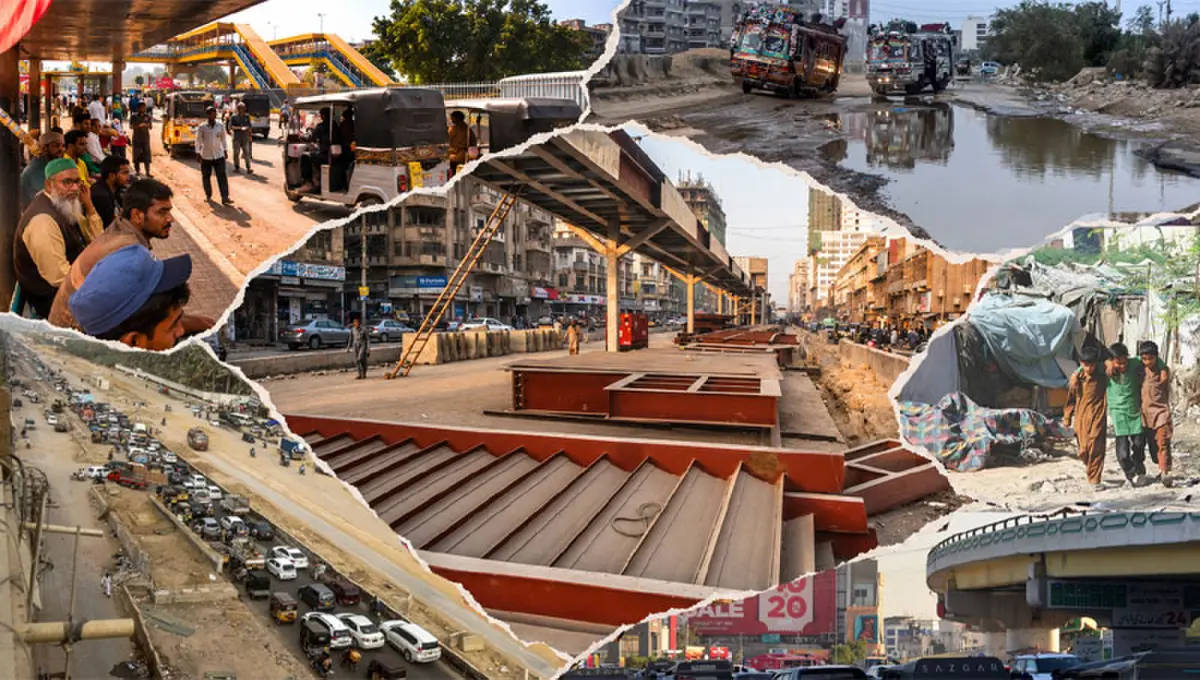
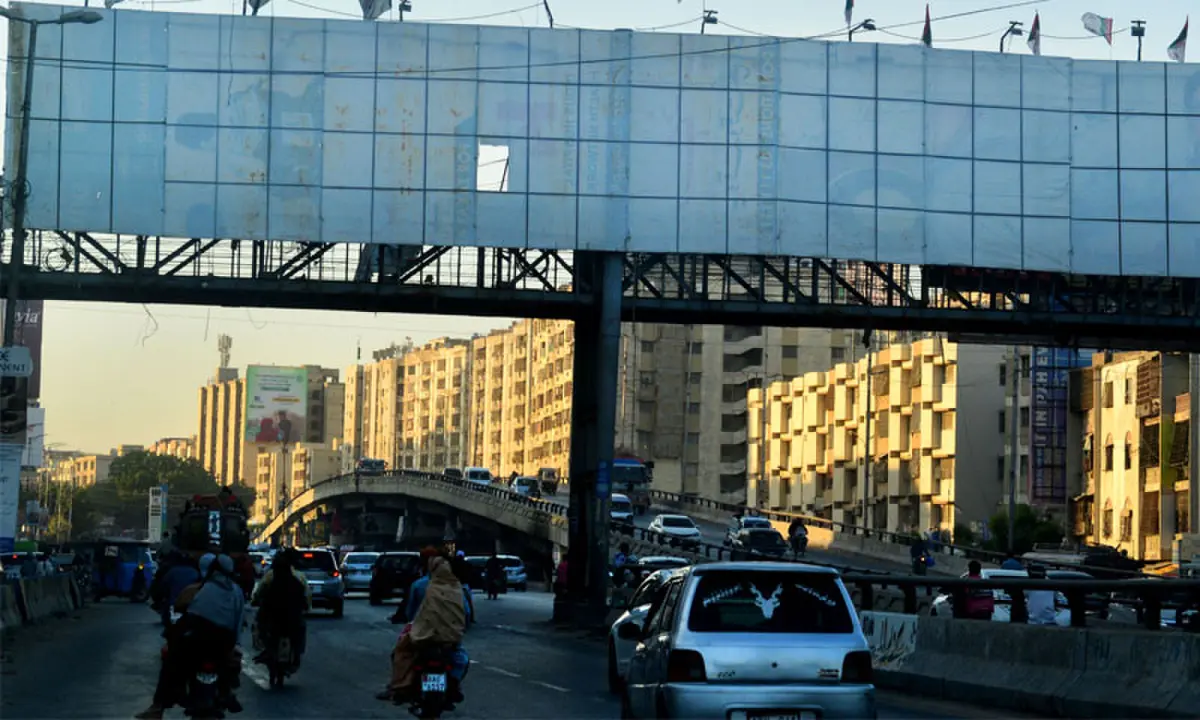
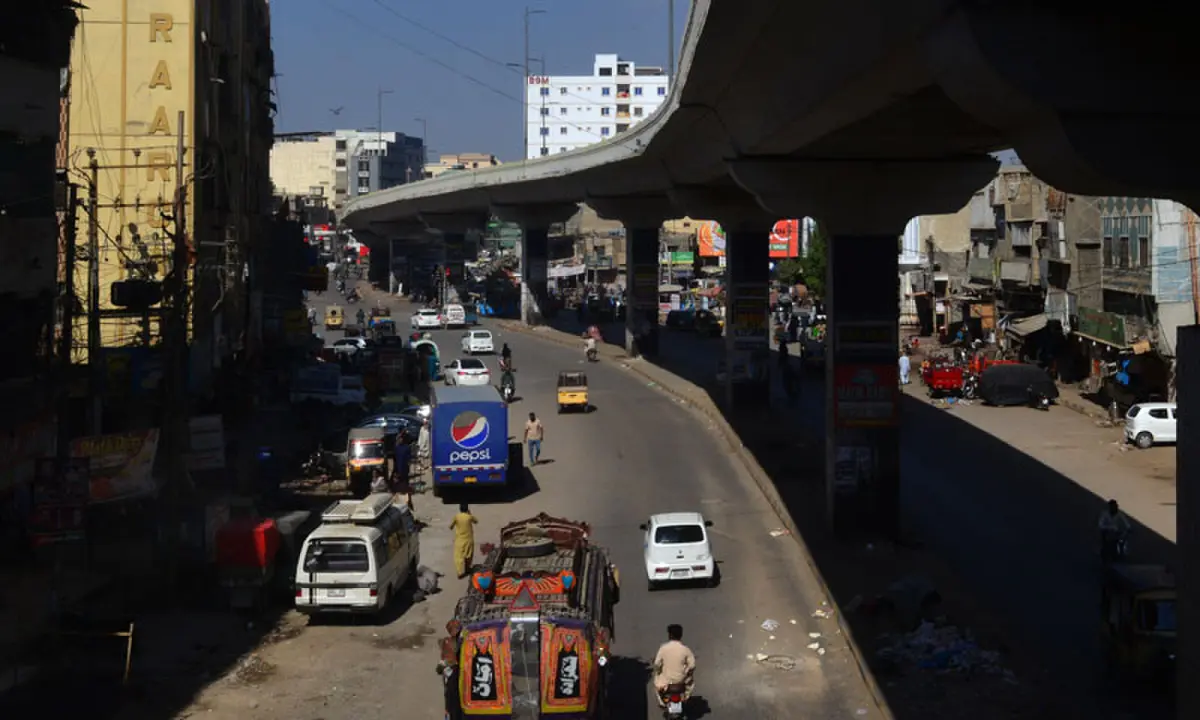
There are many reasons for this: the city’s architecture is hidden and barely visible, especially in its most important locations. It is lost in a maze of flyovers, pedestrian bridges, and underpasses. Flyovers and underpasses are covered with giant-sized advertisements. The railings on either side of the pedestrian bridges are also covered with advertisements. So what happens on the pedestrian bridges is no longer visible, creating ideal conditions for harassment — especially of women — rape and muggings. This is why women seldom use these bridges after maghrib.
While the flyovers are covered with large advertisements, the walls of the underpasses also have advertisements on them, graffiti of various kinds, and not-too-attractive geometric and floral designs. Both the flyover advertisements and the underpass graffiti and floral designs are a distraction for the motorist and perhaps a potential cause of accidents.
Looking at the design of some of the flyovers, I feel that they promote accidents rather than solve traffic problems. This is especially true of the Shaheed-i-Millat/ Jail Road flyover and the flyover from Drigh Road Railway Station to Millennium Mall. One of the people involved in the decision pertaining to the design of the Millennium Mall flyover informed me that they had made a mistake. Furthermore, many flyovers have no signage, so one is lost. Then there are flyovers whose signage misdirects you, because the signage has not been maintained.
There are laws that regulate the size and locations of the advertisements, and there are also Supreme Court judgments on the subject. But they cannot be implemented because of the power of the various pro-advertisement commercial lobbies and the culture of corruption in officialdom.
Having worked for over 50 years as an architect, urban planner, researcher, teacher and development consultant, Arif Hasan casts a panoramic eye over the megalopolis of Karachi, its various most visible issues and what has changed in this time. In particular, why has the planning process consistently failed the city and its residents?
THE QUALITY OF ARCHITECTURE
My friend Jamshed says that it is just as well that the flyovers and advertisements hide the architecture of the city, for the architecture is not all that great. The reason for this, he says, is that those who teach architecture are incapable of producing good architects.
But there is another point of view that has been put forward to me for the last 50 years by young practising architects. Many of them work in offices run by ruthless developers who, the young architects say, are not interested in good architecture or in the city as a whole — they are only interested in extracting the maximum value out of land. So the young professional is frustrated and unhappy, and his or her growth as an architect is stunted.
As I look around, I see that apartment architecture in Karachi has improved over the last decade. The elevations are much better, and so are the colour schemes. However, my ex-student, who does not wish to be named, says that all this is copied from promotional real estate literature and magazines from Thailand, Singapore, Seoul, or Hong Kong. And that, before passing judgement, we should wait and see how these buildings weather with time, and if they can be accessed from the corridor on which they are located when the roads flood. I have observed many new apartment buildings whose access has been completely blocked due to heavy rainfall.
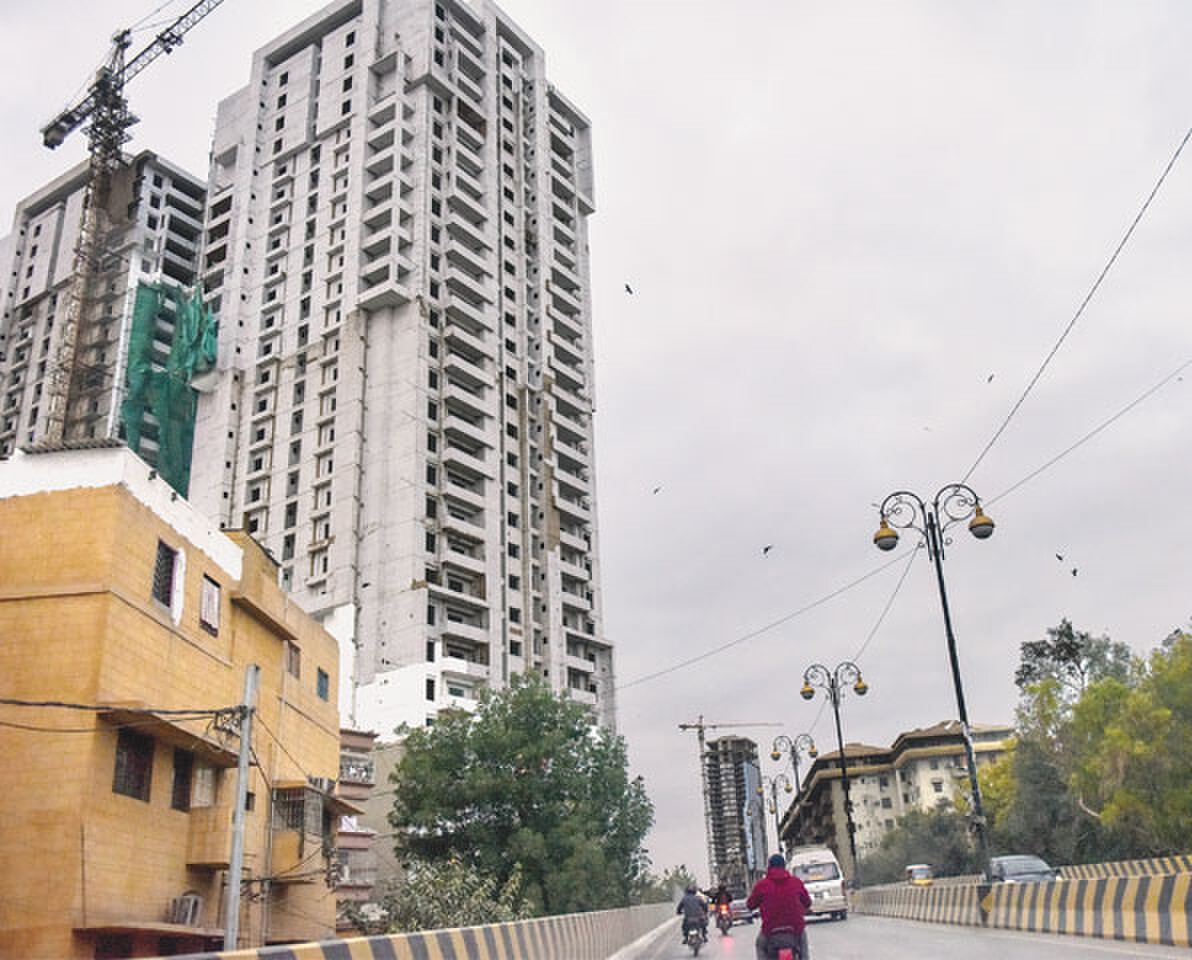
Coming back to the issue of extracting maximum value, another observation is that the height of buildings is also increasing. Thirty-storey heights are becoming common, and these high-rises are in clusters or on important corridors of movement. Where will all the children who live there play?
I asked a resident mother this question during a study many years ago. “Uncle, seerrhiyon par kheltay hain ya landings par [Uncle, they either play on the stairs or the landings],” she told me. But this is when they are kids; what do they do when they become adolescents? “Badmaashi [Make trouble],” is the answer of Feroz, a chowkidaar of the building complex, and this is also the concern of the parents.
But old people are also a part of the population. They need to relax, enjoy greenery and flowers, listen to the chirping of birds, and feel the breath of cool air. Architects and their patrons do not cater to these needs because they lack social aesthetics and fail to articulate them in physical terms.
THE PREJUDICES OF ARCHITECTS
As far as the katchi abadis — informal settlements — are concerned, the informal sector has done a better job than government agencies. They have built 1.7 million housing units since Independence, accommodating 64 percent of Karachi’s population, without a single penny of subsidy from government agencies.
These houses require ventilation, insulation, and retrofitting to become healthier and more comfortable to live in. But, above all, their residents require security from eviction, so that they do not become homeless at the whim of judgments passed by the courts of law and the land hunger of developers and government agencies supported by powerful bureaucrats and politicians.
The bureaucrat-developer-politician nexus, backed by colonial laws, is the main deterrent to improving low-income settlements and protecting their inhabitants from eviction. These laws and their process of implementation have an inborn prejudice against the poor, which is activated in policymaking and the illegal evictions of entire settlements from their homes.
In my experience, this prejudice is shared by society as a whole, including certain groups in academia, including most students who bring these prejudices to their classrooms. I have found that the law is not justice but an instrument of bullying and coercion that promotes the deprivation of jobs, education, homes, and fundamental human rights.
Many practising architects, especially those who studied at Karachi’s Dawood College in the 1980s and 1990s, were exposed to the concept of “socially responsive architecture”, which was promoted by architect Kauser Bashir Ahmed, who was the dean of the Department of Architecture and Planning at Dawood College, and a great humanist. Some of his students today are well-known both nationally and internationally. But my question has always been: responsive to whom?
Naturally, architects have to be responsive to their clients, who employ them. They have to cater to the clients’ requirements and to the image they have of themselves. But what if the requirements and ethos of clients are in conflict with the concept of equity and the ethics of human ecology? A difficult question — except for the utopians.
Architects must also respond to the site’s environment by conserving water, placing wet area windows on external facades, and prioritising energy efficiency amid Pakistan’s energy crisis. Crucially, this requires developing affordable wall and roof insulation for low-income housing, promoting cross-ventilation, and designing around mature trees to preserve them for posterity.
But more important than that is supporting the development of an institution that can “talk and listen to people” and an academia that can make these elements part of its educational system. However, this calls for a culture of continuous learning and not one for simply passing exams and acquiring degrees.
ECO-FRIENDLY CONSTRUCTION
There are also issues related to the manner of using construction materials and the lack of concern among developers and many architects regarding environmental and economic issues pertaining to them.
For example, there are many large office buildings, rapidly increasing in number, with huge glass facades and aluminium surfaces. The glass facades started multiplying in the 1990s. The glass heated the interior, especially when it faced southwest, where the Karachi sun is strongest. This created an extremely uncomfortable interior and excessively high air-conditioning costs.
To overcome this problem, many buildings pasted thermopole on the inside surface of the glass, but it was only marginally effective and negated the “aesthetic” reasons for which glass had been used. So something new was introduced: heat-proof glass, which prevents heat from passing through it. This glass can cost up to Rs2,450 per square foot.
Large surfaces of this glass can hardly be considered a response to Karachi’s climatic conditions. “But we have no option but to design in this manner,” says a not-so-young architect who worked in my office not so long ago. “The boss wants it, his clients want it.”
When I designed the offices of the Sindh Rural Development Organisation in Sukkur with small window openings and large, blank, brick surfaces on the exterior, an unfavourable comment that I received when I made a presentation was, “It looks like Mohenjo Daro.” However, this ‘Mohenjo Daro’ has proved to be remarkably responsive in climatic terms.
HERITAGE AND CONSERVATION
Perhaps the most complex relationship of the built environment is with tangible and intangible heritage and culture as a whole. This is something we have not really sorted out in the design and conservation processes we have practised in Karachi.
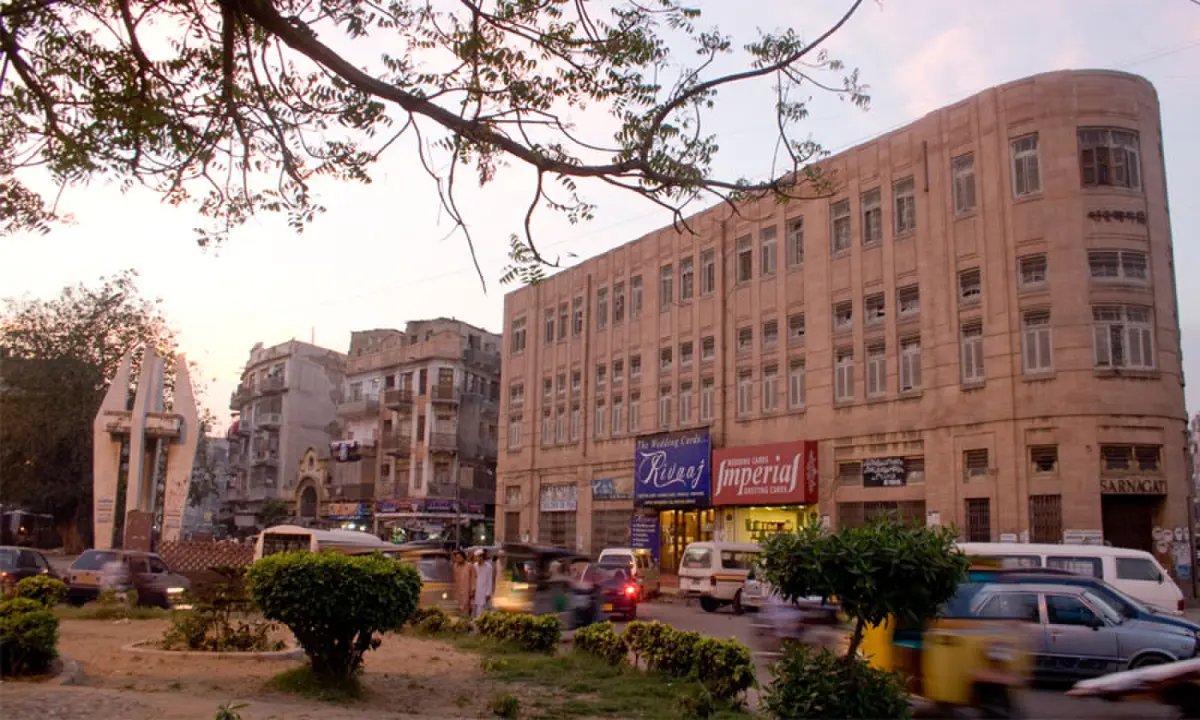
Where heritage properties are located, land costs are exceptionally high, and so the owners prefer to demolish the building and sell the land for development, and city developers are only too happy to purchase this land. Building bye-laws and zoning regulations permit a much higher land-to-area ratio than exists in most areas where heritage is located. This is a further incentive for the owner of the heritage building to demolish it. But the official custodians of heritage wish to preserve some aspect of the past “glory” of the city, so the facade remains, and a 20-floor building is located behind it.
So, how do you deal with an owner who wishes to maximise earnings from his property, a developer who has the money and connections to turn heritage properties into mere facades, and government agencies that are willing to oblige and have the means to ignore the concerns of academia and citizens on the subject?
Some aspects are clear, as architect and conservationist Yasmeen Cheema has often told me: “We must move from thinking in terms of buildings to area conservation.” She also feels that, without the establishment of conservation faculties at universities, along with the training of conservation technicians, we will continue to carry out uninformed experimentation and deface our heritage and our history along with it.
There is no doubt that area conservation will create a new way of looking at the city, for heritage will become a part of a larger planning exercise, hopefully serving the majority who live in the “area”, promoting intangible culture, activists and communities, and protecting the area, if not the city as a whole, from insensitive projects.
NED University’s Department of Architecture and Planning had initiated an area conservation project at Karachi’s Khori Garden. It yielded a lot of knowledge and understanding regarding conservation-related issues in a dense area of the city. Unfortunately, it had to be stopped due to Covid and was never resurrected. However, it showed that the bazaar and its lower- and middle-income communities were interested in heritage and its conservation matters. This has been made obvious by architect Marvi Mazhar’s Pakistan Chowk project. Architects, because of their class bias, normally do not believe this.
But there is another important issue that needs to be mentioned here. Most of our heritage buildings and areas are subject to major ownership disputes within the families who own the properties. And then much of the ownership is through the pagrri [tenancy-cum-informal ownership] system. These issues have to be resolved to initiate a conservation process, and this, given Pakistan’s judicial system, takes time, effort and money.
The heritage issue needs to be discussed between those who have practised it and those who have been its beneficiaries or victims. Here, what should be decided is what should not be done, rather than what should be done and how.
UNDERSTANDING PUBLIC SPACE
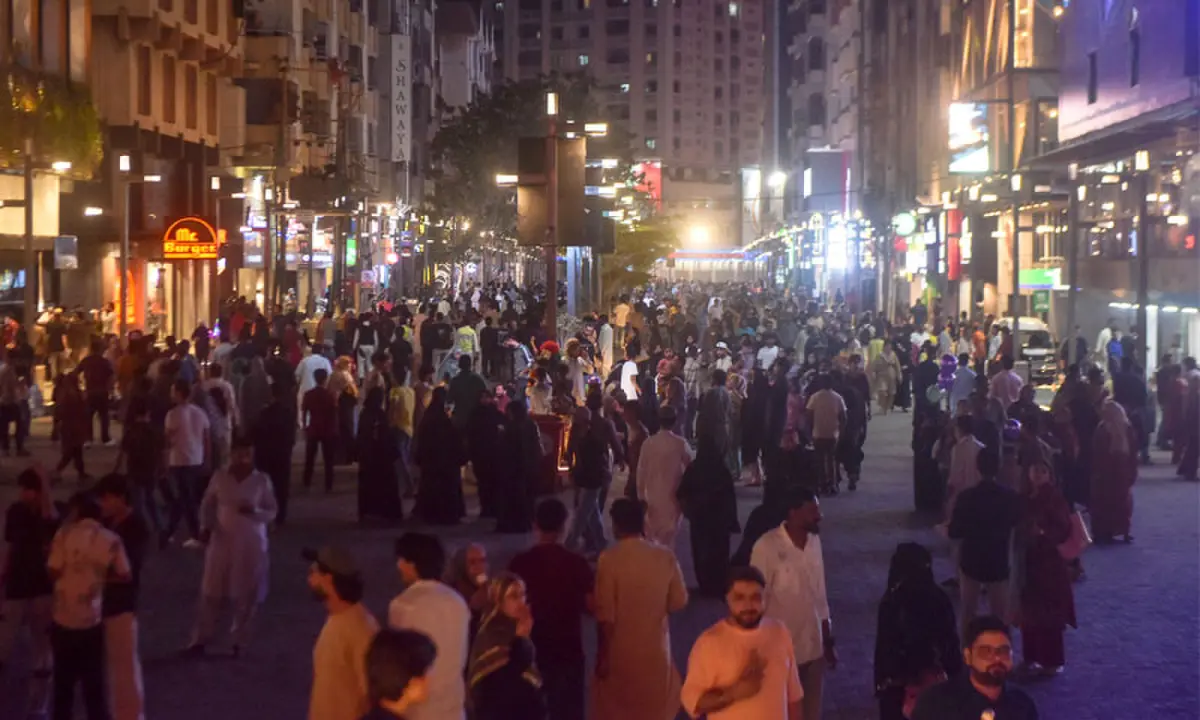
This brings me to the issue of pedestrianisation of public space. When I first proposed the pedestrianisation of Saddar, there was no reaction. Later, my colleagues Cristoph Polak and Asiya Sadiq worked with me to produce the book Hawkers of Saddar Bazar (2008), which was all about pedestrianisation. The ideas in it interested former Karachi mayor Naimatullah Khan, the Karachi Development Authority Engineering Bureau chief Zahir ul Islam, and students and teachers of architecture, but it did not become a subject for serious discussion, let alone its acceptance.
But now pedestrianisation is supported both by officialdom and by the architectural and planning professions. So Burne’s Road was pedestrianised, then de-pedestrianised, and is now being pedestrianised again. A conservation project (tangible and intangible) can be a part of this pedestrianisation process, but it requires considerable research and love and respect for the people who live there, their businesses, their way of life, and their aspirations. You have to get to know the people through a process of osmosis and not only through questionnaires and surveys.
But pedestrianisation also needs pavements. Karachi’s pavements have broken surfaces, making it difficult to walk on them. There are trees and billboards by the hundreds on them, forcing people to walk on the roads. In many cases, sidewalks are a foot or even higher than the road surfaces.
Why is this so? The answers I have received are interesting. I have been told there is no need to make pavements, since Karachiites, in any case, walk on the roads, and the pavements are a foot high so that motorcycles find it difficult to get on to them and use them as ‘’roads’’. I asked a building contractor who was building pavements how children or elderly persons would get on to the pavements to use them, and he replied, “Koi na koi jugaarr kar hi laingey [They will improvise somehow].”
This is also the attitude of those who plan and govern Karachi, as a result of which Karachi remains a city of dirt tracks, garbage-filled open spaces, and unmapped parks that are the refuge of drug addicts, while young men and women are deprived of spaces for sports and recreation.
ENTERTAINMENT AND RECREATION
Karachi is a big city, with millions of people, so something has to be done to serve their need for creativity and their longing for entertainment and recreation, which state culture in Pakistan has disapproved of since the end of the Zulfikar Ali Bhutto era.
With Ahmed Shah sahib as director of the Arts Council Pakistan Karachi and also as a former minister of culture, an attempt to change this has been made. But the Arts Council is an organised culture that the vast majority of young people in Karachi cannot access. Entrepreneurship has found a solution.
In Defence Housing Society’s Phase 8, you have a number of open-air chai and paratha dhabas [roadside cafes], which are usually full of young men and women sitting and conversing, moving around, changing venues, and all dolled up. The show begins in the early evening and continues till 1 am. Some of these open-air cafes are considered illegal, but function all the same. There are also indoor cafes that, apart from coffee, have pool tables, book club meetings, small crafts workshops, and mini community get-togethers.
In the Nazimabad area, and in almost all middle- and lower-income settlements, a culture of sitting out has emerged, so pavements are full of people sitting, having tea, smoking shisha (which is officially banned), and conversing. But this is an entirely male affair, and it is only now that you occasionally find women sitting outside in open spaces and on pavements.
There are also mushairas [poetry recitals], musical evenings, Muharram majlises, milaads and lectures. But these are usually private affairs, though many of them are held in public spaces. The trend is growing, and so is the world of sports. Observations and studies tell us that women are becoming a part of them, especially in the field of cricket. Matches between women’s teams are also held. In certain studies that I was involved in, young women from katchi abadis desired a space to play cricket, practise yoga, and train in martial arts. A new world is being born.
A change in gender relations and family structures is taking place around us. Are Karachi’s planners, academia, and civil society willing to cater to and position these realities and aspirations? If not, Karachi will remain in a state of social conflict, and the desire of its young people to migrate to other countries will grow.
A CHANGING CITY
So, I don’t know the city. But the city does not know me either. For 40 years I worked in various low-income and lower-middle-income settlements of the city, and on the housing and land use changes that have taken place. I have recorded the processes by which this has happened and, in the process, developed numerous contacts that I have tried to keep alive. But since people of my age keep dying, there is no way that you can maintain contact with them.
Residents of low-income settlements have been my teachers; I have learned to see their problems, their settlements and their social and political culture through their eyes. For instance, the Orangi Pilot Project had three outstanding social organisers, whom its founder, Akhtar Hameed Khan, had trained. Saifee was a plumber, Ramzan was a small-time contractor, and Hafeez Arain was a political activist who earned a living by driving a rickshaw. They were not only my teachers but the teachers of a whole generation of social activists and community organisations all over Pakistan.
Then there was Parveen Rehman, who had been my student and who worked with me for 30 years. I saw her grow from someone who had no relationship or understanding of katchi abadis to one who mastered the art and science of their upgrading. She was shot dead. All these people have now gone, including some who have been killed because of their land-related activism. Because of their departure and my old age, knowledge regarding evolving community conditions and processes has become difficult to acquire firsthand.
But society has also changed, and the major change has been around women. At a meeting of Orangi residents, major differences around personal and social values emerged. The majority of the younger generation were unmarried, and they were not interested in getting married because they did not want to get married to those their parents wanted them to. They did not wish to live with their parents, but they could not afford a house of their own.
Their parents, on the other hand, find it very difficult in today’s expensive world to arrange a marriage function without borrowing money. ‘So how will you get married?’ I asked the young people in the gathering. “TikTok par kar laingey [We will do it on TikTok],” responded one, followed by much laughter and, later, serious discussions about the pros and cons of TikTok’s role in creating relationships and information.
Studies also show that the demand for educated women is increasing in the new world of retailing, especially in department stores and malls. This leads to an opening of the mind, public exposure and interaction, and hence a new confidence that can be passed on to younger generations.
There can be no equitable planning without catering to the needs and aspirations of women in the new Pakistan that is being born. But we must know what they are aspiring to or urgently need — such as clean, decent public toilets adjacent to every market and every office.
My experiences, books and papers that inform this essay are in no way conclusive. But the main factor that has emerged is that Karachi, for many decades, has been planned (directly or indirectly) and managed by uncultured mobs who have no sense of aesthetics and social values. They have no love and respect for the citizens of the city, its history, and no concept of well-being for its future generations. Everything is “chalta hai” [it’ll do] and “do minute mein ho jaega” [It’ll be done in two minutes].
Some changes are visible, but to challenge and change such a firmly established culture and system will require not only effort but a lot of time, and people with ethics who can place the well-being of the city and its inhabitants over themselves, their clans and ethnicities. But I still feel happy when I travel along the road where the walls between the open spaces and the roads have been removed by our mayor. There is a sense of openness, freedom, and a feeling of well-being.
I am horrified by cramped high-rises lacking play space, frustrated young architects, and money-driven professionals. Master plans and studies reveal a persistent clash between reality and planners/politicians, leading to flawed assumptions that misguide planning decisions.
I see wrong assumptions and misread context determining the shape of planning. Even in elite areas, parks and open spaces, which elite privileges have created, are being taken over illegally by real estate developers. As in the case of the commercialisation of the Nehr-i-Khayyam in Clifton. There is also the case of the KPT-Malir expressway, an elevated transitway that will pass through the heart of Defence Society, the most elite area of the city, destroying not only Defence Society but the entire city of Karachi.
So, the elite are now protesting, though they have seldom protested against the injustice that the lower- and lower-middle-income residents have had to suffer. Maybe it is time for a larger movement against a planning process that perpetuates a violation of the city’s ecology and results in the suffering of its people.
The writer is an architect and urban planner.
He can be reached at arifhasan37@gmail.com
and through the website www.arifhasan.org
Published in Dawn, EOS, November 15th, 2026