HISTORY: THE LEGACY OF DR ZIAUDDIN AHMED
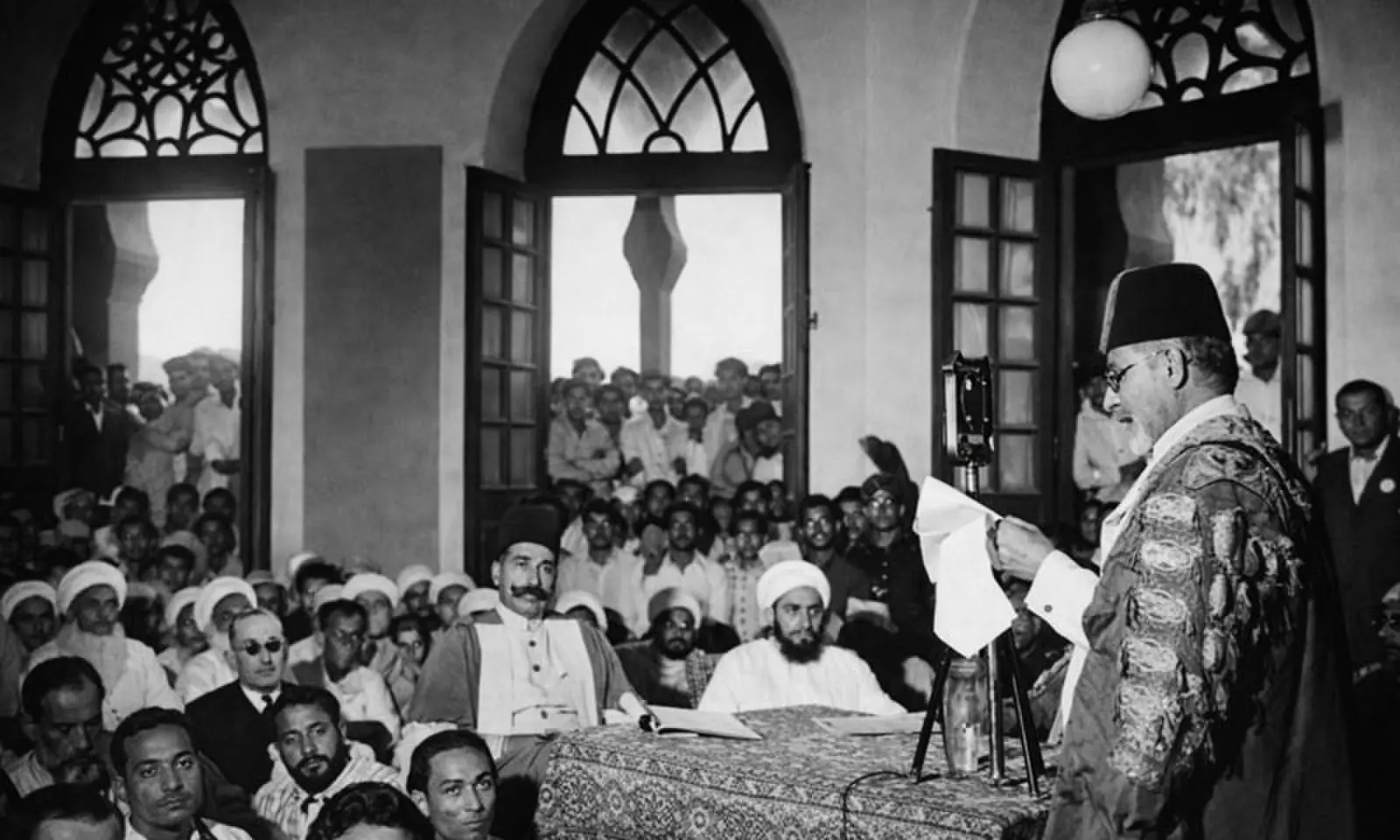
Almost everyone in Karachi is aware of Dr Ziauddin Ahmed Road, where the Dawn offices are located. Yet few know the man after whom the former Kachehri Road is named or what he contributed to the Subcontinent. Those familiar with his name generally know him as a Muslim scholar and the vice chancellor of Aligarh Muslim University (AMU) during the pre-Partition era.
Few, however, know that he was also a close confidant of Quaid-i-Azam Mohammad Ali Jinnah. It was at his house in 1935 that Muslim parliamentarians in the Indian Legislative Council, including Jinnah, gathered and formed a group that would later become the Parliamentary Muslim League Party. Dr Ahmed subsequently served as its parliamentary secretary and was among those who championed the demand for Pakistan long before its creation.
Even less widely known is his association with Sindh, where he played an instrumental role in laying the foundation of Sindh’s higher education sector. He also served as the guardian and custodian of the two young sons of Pir Pagara VI, Syed Sibghatullah Shah Rashdi, following the latter’s execution by the British in 1943.
Best known as a scholar and former vice chancellor of Aligarh Muslim University, the mathematician and parliamentarian also helped shape higher education in Sindh and became guardian to the young sons of Pir Pagara
SCHOLAR AND PARLIAMENTARIAN
Dr Ahmed was born into the Zubairi family in Meerut on February 13, 1873. After attending a local madressah, he enrolled in the school section of Sir Syed Ahmed Khan’s Mohammadan Anglo-Oriental (MAO) College. He later joined a local college before returning to MAO College to pursue a bachelor’s degree in mathematics. He graduated with the first position and received the coveted Strachey Medal. He went on to earn an MA from Calcutta University and, in 1901, a DSc in mathematics from Allahabad University. Throughout this period, he continued to return to his alma mater as a teacher.
With mathematics teachers in short supply, Sir Syed asked him to sign a five-year bond committing him to serve the college. Dr Ahmed reportedly replied that a man retained only through a contract was not worth keeping and that he intended to serve the institution for life. As the story goes, Sir Syed tore up the contract. Dr Ahmed subsequently won prestigious scholarships that enabled him to pursue advanced studies in Europe. He enrolled at Trinity College, Cambridge, and in 1904 became the first Indian to receive the Sir Isaac Newton Scholarship. In 1906, he completed his PhD in mathematics at the University of Göttingen in Germany.
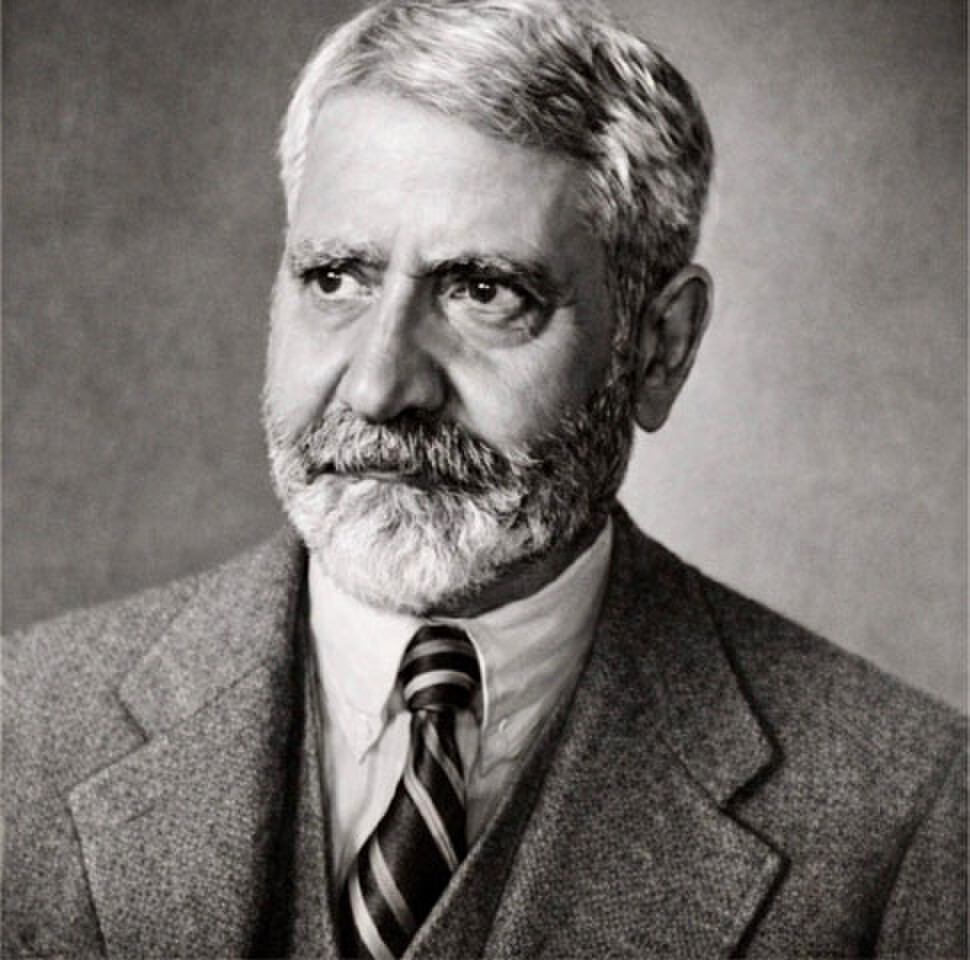
On his return, he rejoined the faculty of MAO College, turning down many other tempting offers. He fulfilled his promise to Sir Syed, serving the institution for 50 years and witnessing its transformation from a college into the famed Aligarh University. During this period, he held several positions, including professor, principal, pro-vice chancellor, vice-chancellor and rector. So revered was he that, following his death in December 1947, he was buried beside Sir Syed Ahmed Khan at AMU.
Aligarh University has also published Sir Ziauddin Ahmad: Life and Works, by Mohammad Haris Bin Mansoor, which documents his contribution to the institution, placing him among its most distinguished figures after Sir Syed Ahmed Khan.
Dr Ahmed also had a parliamentary career spanning more than three decades, across various legislatures of British India. His legislative career began on December 18, 1919, when he was sworn in as a member of the Legislative Council of the United Provinces of Agra and Oudh. In February 1930, he was elected to the Indian Legislative Assembly through a by-election from the United Provinces. He was re-elected in 1931 and 1935, and for a fourth time in 1946, remaining a member of the Assembly until the eve of Partition.
Combining scholarship with political engagement, he delivered detailed speeches on a wide range of subjects, including finance, education, society, law and governance. His speeches have been compiled in a four-volume work, Parliamentary Speeches of Dr Sir Ziauddin Ahmed, by researcher Aamir Ali Mugheri.
THE SINDH CONNECTION
Dr Ahmed’s most significant contribution to Sindh was his role in laying the foundations of higher education in the province. Until the 1940s, Sindh had no university of its own, and its colleges were affiliated with the University of Bombay (now Mumbai). When a proposal sponsored by Muslim legislators to establish a university came before the Sindh Assembly, it faced opposition, including from non-Muslim legislators.
Sindh’s education minister, Pir Illahi Bakhsh, subsequently travelled to Aligarh to seek Dr Ahmed’s guidance on the proposed university. Dr Ahmed recommended his deputy, Prof Abu Bakar Ahmad Haleem, who had served under him for 25 years, for the position of vice chancellor. Prof Haleem was then AMU’s pro-vice chancellor. Dr Ahmed persuaded him to take charge of the newly established Sindh University in Karachi as its first vice chancellor. Prof Haleem assumed his new office in April 1947.
In 1951, when the University of Karachi (KU) was established and the government decided to move Sindh University to Hyderabad, Prof Haleem was appointed KU’s vice chancellor. Prof Haleem headed KU until 1957, having served as the founding vice chancellor of both pioneering universities in Sindh. When Dr Ahmed died in December 1947, Prof Haleem, then vice chancellor of Sindh University, paid tribute to his mentor and recalled their long association.
Through his recommendation of Prof Haleem, Dr Ahmed helped shape the early development of higher education in Sindh, a contribution that continued through his protégé for another decade.
GUARDIAN TO THE YOUNG PIRS
Dr Ahmed’s other significant association with Sindh emerged in the aftermath of the Hur uprising of the 1940s. Pir Sibghatullah Shah Rashdi, then Pir Pagara, was arrested in 1941 and sentenced to death by a British military court. He was executed in March 1943. His two young sons, Sikandar Shah — later Pir Pagara Shah Mardan Shah II — and Nadir Shah, were taken into custody and kept in isolation in Sindh, amid the colonial administration’s hostility towards the family.
Dr Ahmed approached the government, arguing that the boys should be given an education at AMU rather than kept in isolation. The government eventually agreed, and the boys were sent to Aligarh in January 1944. They were formally placed in Dr Ahmed’s care, with instructions that they should not associate with students from Sindh.
Dr Ahmed personally supervised the boys and allowed them to interact with others, including Sindhi students. Among those who met them discreetly was the Sindhi scholar Dr N.A. Baloch. This irked government officials, who grew increasingly frustrated as Dr Ahmed refused to restrict the boys’ interactions or submit reports on their activities.
The boys remained at Dr Ziauddin’s residence for two and a half years, until June 1946, when the government decided, in consultation with him, to send them to England for further education. Dr Ahmed arranged for Dr Qayoom Pasha of AMU to accompany the boys to England and help them settle there.
Dr Ahmed’s legacy extends beyond the road named after him, the two universities he helped shape in Pakistan, and the dental college and hostel associated with him in India. It also lives on in the thousands of students he taught and mentored, and in the political struggle for an independent Pakistan, to which he devoted much of his parliamentary career.
The writer is a development professional and a university vice chancellor. He may be reached at drshaikhma@gmail.com
Published in Dawn, EOS, November 15th, 2026