I still remember the day in 2010 when a friend and I boarded a bus from Hasan Square to Malir Halt in Karachi. At the end of the route, we got off and began walking. It was a cloudy Sunday with a light drizzle.
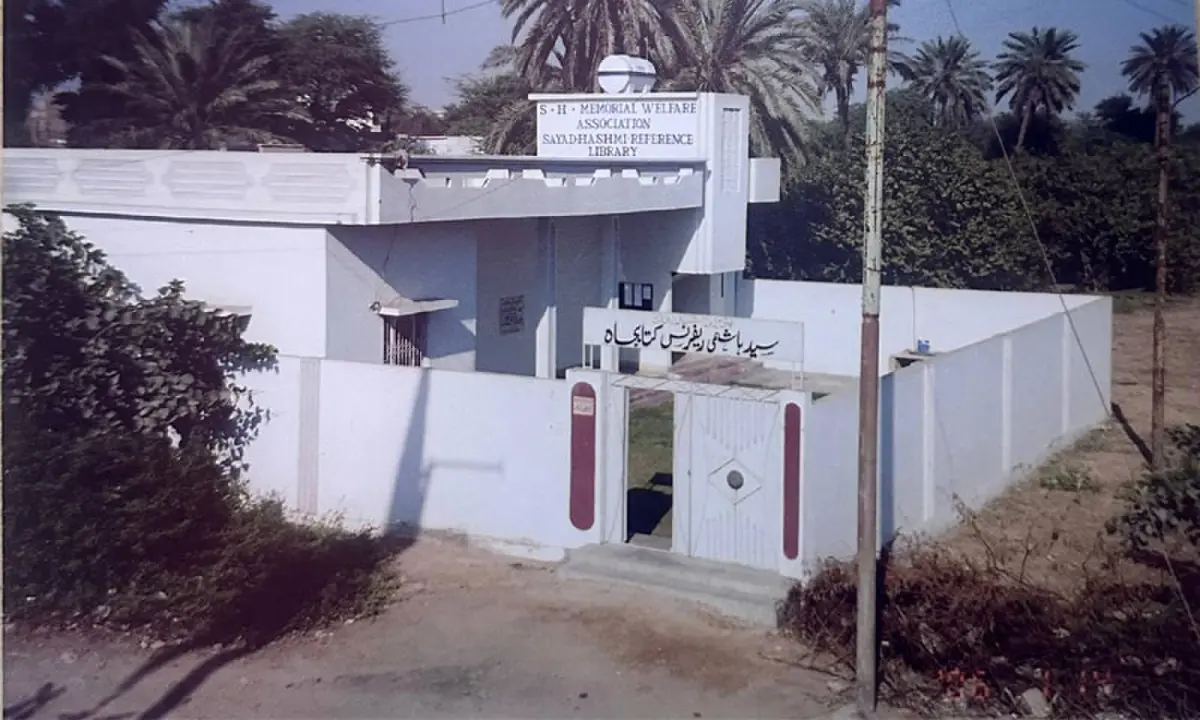
A short distance from Malir Halt, we turned left beneath the Quaidabad flyover. We walked along a dusty, uneven road, partly hidden by thorny bushes. A short walk brought us to a modest building: the Sayad Hashmi Reference Library.
Surrounded by trees, olive plants and lush green fields, the library stood in stark contrast to Karachi’s noise and congestion. Though modest in size, it housed thousands of books and periodicals in Balochi, Urdu, English, Persian and Arabic, neatly arranged on shelves. For researchers, it was a treasure trove of Balochi literature. For Baloch students like me, who had come to Karachi to study, it also provided a link to home.
The library was open even on Sundays. It was on one such Sunday, while preparing for the Central Superior Services exams, that my friend and I visited it for the first time.
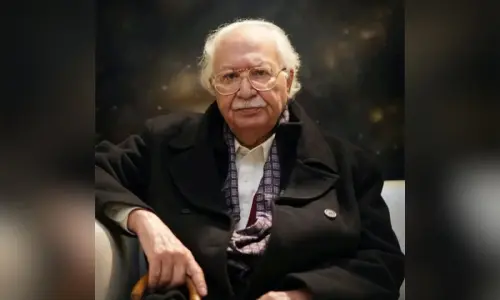
Prof Saba Dashtiari was a Baloch scholar, author, researcher and poet who was brutally gunned down in 2011. But the library he established in Karachi continues to serve the language and literary tradition he spent his life defending
A LIBRARY AND ITS GUARDIAN
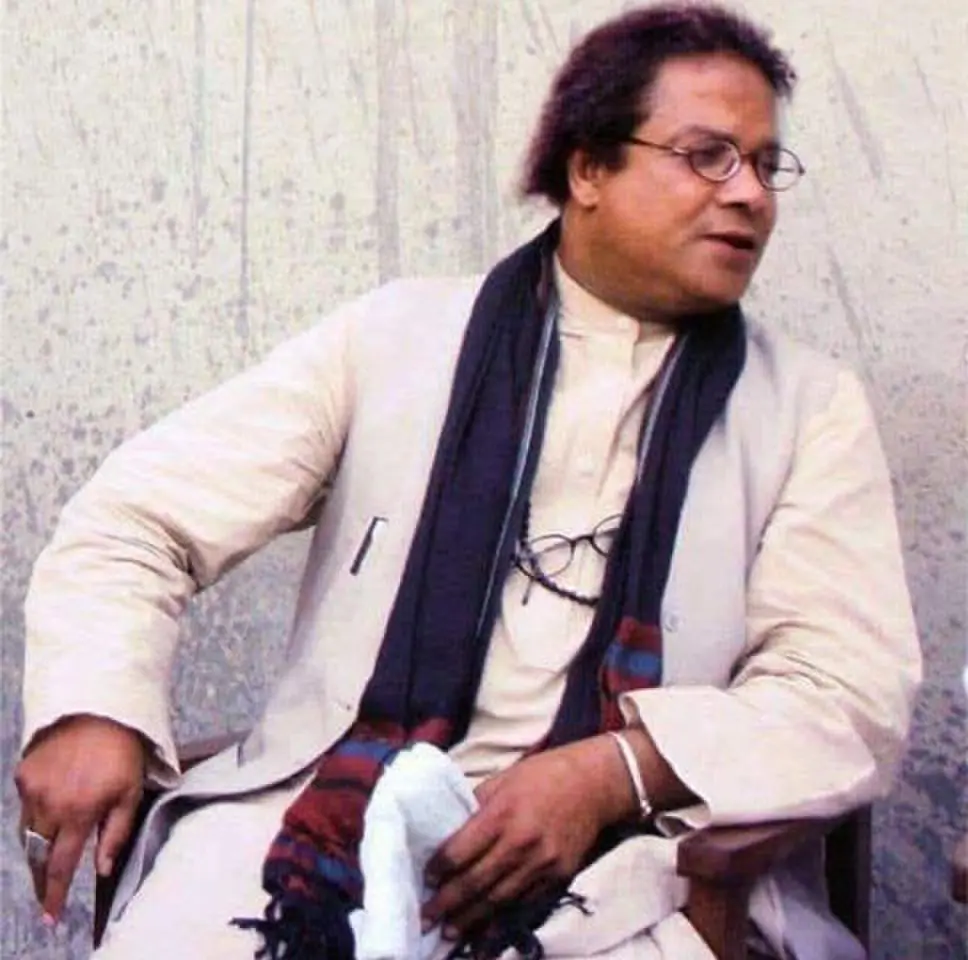
As we entered the library, a man sat quietly near the reading room. He had thick, medium-length, dark reddish hair and wore thin-framed rectangular glasses.
Clean-shaven and dressed simply in a kurta shalwar, he carried himself with quiet dignity. A traditional black Balochi scarf was draped around his neck and he wore a dervish-style ring on his left hand. That man was the late Prof Saba Dashtiari.
Widely considered one of the most influential figures in modern Balochi literature, Prof Dashtiari taught Islamic Studies at the University of Balochistan in Quetta. In the evenings, he offered sessions on Balochi literature and language to interested students.
Prof Dashtiari was born in Karachi’s Lyari neighbourhood in 1953 and belonged to the Sheedi community, whose members have African and local ancestry. He received his early education in the city and went on to earn a master’s degree in Philosophy and Islamic Studies. He later moved to Quetta to teach but continued to visit his hometown frequently.
His trips were not just to see his parents and siblings — Prof Dashtiari never married — but also to follow efforts to establish the Sayad Hashmi Reference Library, which was inaugurated in 2005.
What struck me most was his unwavering commitment to the library. Before allowing us to sit and study, he insisted that we register as members and pay the prescribed fee. As students with limited means, we tried to explain that we needed the library for only one day because our examination was near. He listened patiently but remained firm. Rules, he believed, applied equally to everyone.
At the time, I found his insistence unnecessarily rigid. Later, I came to understand that it stemmed from a deep sense of responsibility towards an institution he had built through years of hard work and sacrifice.
The library was more than a collection of books to him. It was a cultural trust. During his lifetime, he donated his personal collection of books to the library. He reportedly contributed a significant portion of his salary towards its upkeep. Prof Dashtiari also sought financial assistance from friends, colleagues and community members to keep the institution running without compromising its autonomy.
It has been over 15 years since Prof Dashtiari was gunned down. On June 1, 2011, while taking his usual evening walk in Quetta, he was shot dead near Sanjarani Street. He was 58 years old. His murder, unsolved to this day, shocked literary circles across Balochistan and beyond.
Prof Dashtiari was not the only Baloch scholar to be killed in such circumstances. Several academics and intellectuals have been targeted over the years, with observers often linking the attacks to their nationalist views. But Prof Dashtiari’s life and work deserve to be remembered for much more than the circumstances of his death.
A SCHOLAR BEYOND BORDERS
Prof Dashtiari was a writer, poet, researcher, and language activist whose work enriched Balochi literature in many forms. He authored several books in Balochi, including Balochi Zuban-i-Akebth [The Future of the Balochi Language], which is regarded as one of his most important contributions.
Prof Dashtiari also wrote short fiction and prose, marked by simplicity, depth and subtle symbolism. Themes of memory, silence, mystery and human experience frequently appeared in his writing. His poetry, meanwhile, blended intellectual reflection with romantic lyricism.
Prof Dashtiari drew inspiration from Baloch literary pioneers such as Abdullah Jan Jamaldini and Syed Zahoor Shah Hashmi. Although deeply rooted in Balochi language and culture, he was proficient in Urdu and English and also knew Persian and Arabic. His command of several languages exposed him to a wider intellectual tradition while reinforcing his commitment to Balochi.
Within Baloch literary circles, Prof Dashtiari continues to command considerable respect. Beyond his literary work, he was a dedicated researcher of the Balochi language. As a person, he was soft-spoken, compassionate, humble and dervish-like in temperament. One of his favourite expressions was the Balochi phrase, “Balochi mey wati shadn zubn e”, meaning “Balochi is our honeyed language.” In those few words lay his affection for the language and his belief in its beauty and endurance.
I had only a few conversations with him, with our discussions mainly centred on humanity, literature, politics and philosophy. His knowledge of world literature was extensive. I particularly remember our discussions about Fyodor Dostoevsky’s psychological novels Crime and Punishment and The Brothers Karamazov, as well as Aldous Huxley’s Brave New World and Island.
KEEPING A LANGUAGE ALIVE
Among Prof Dashtiari’s many achievements, the establishment of the Sayad Hashmi Reference Library remains perhaps the most enduring. Realising this vision required years of work and personal sacrifice. He understood that people preserve their identity not only through politics and history, but also through books, language and memory.
Regional languages and their literary traditions continue to receive limited attention in Pakistan’s mainstream literary landscape. Although deeply respected within Baloch literary circles, Prof Dashtiari remains relatively unknown to readers elsewhere in the country. His writings and contributions deserve greater recognition beyond Baloch literary circles.
The Sayad Hashmi Reference Library remains a living reminder of his commitment to knowledge, culture and language. Through its shelves and his writings, Prof Dashtiari’s intellectual legacy continues to reach new generations.
The writer is a literary enthusiast interested in culture, language and history. He can be reached at masoodhameed916@gmail.com
Published in Dawn, EOS, November 8th, 2026