Artists are tool for intercultural dialogue, moot told
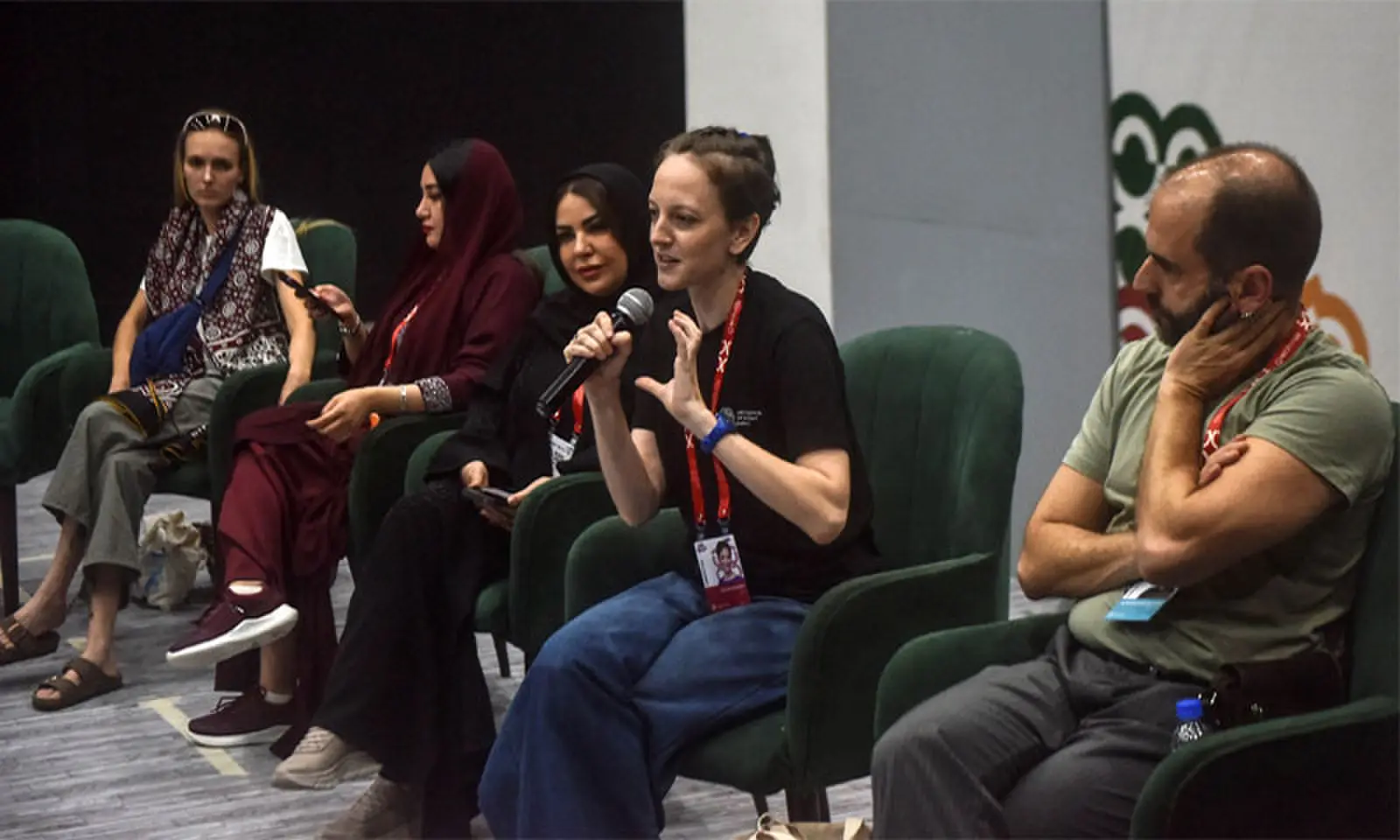
KARACHI: An exceedingly thought-provoking panel discussion on ‘Art in the time of conflict’ was the highlight of the third day of the World Culture Festival 2026 organised by the Arts Council of Pakistan, Karachi, on Saturday.
Moderated by Absa Komal, there were more than two dozen international artists who expressed their views on the topic.
Speaking on the occasion, Aleksandar Lipovan from Serbia said, “Art doesn’t exist in the system of liberal capitalism having true value because culture and art are drawn towards the market. When you draw art as per the market, you’re not competitive anymore. The role of art and culture is to create awareness for the people. We need to fully democratise society where art is equally represented as a tool for social change.”
He added, “It’s not up to artists to fight wars, but they are a powerful tool for intercultural dialogue and soft power to raise awareness.”
American artist Gillian Rhodes, who lives in Dubai, said she was in Dubai when the Iran war started. That day she was applying to be a clown for a project. She was at her home when the war began and she saw the first interception. Then everything shut down and she spent a month in her flat doing research for the project. “So some of us live [conflict] direct and some of us indirectly. But we are living it. Some of us will say it directly and some of us in other ways.”
Discussion held on art in the time of conflict at World Culture Festival
Faeza Mohammad from the UAE said art can create something beautiful. This is what this festival (WCF) in Karachi is doing [creating something beautiful]. “Art without borders can connect cultures together.”
Tina Zubovic from Croatia, who works in Kuwait, said, “I believe it can cut both ways. It’s up to an individual artist to give commentary on the current situation… At the same time, art should give hope and educate us, and draw our attention to what’s important. Art should also serve the purpose of beauty.”
Niharika Momtaz from Bangladesh said, “There can be no specific approach. In 2024, in Bangladesh, there was a student movement. That movement was significant as in how the students used art, poetry, graffiti and slogans to express their feelings and put forward their demands. Anything can be possible through art. All our streets had become a canvas at the time.”
Seulki Lee from South Korea said, “Korea was ruled by Japan (1910-1945). One of the things that they tried to take from us was language. Many fought for our language because once you lose your language, you lose your identity, you lose yourself. That’s why art is important. What you’re doing here in Karachi is absolutely important as well.”
Also on Saturday, the first film screened at WCF 2026 was the Pakistani movie Zombied directed by Nabeel Quraishi, starring Fahad Mustafa and Mehwish Hayat. It was a full house in no time.
Earlier, the second day began with an impressive workshop on calligraphy conducted by Fatemah Houseyn (Iran, UAE).
A decent number of art students took part in the live activity, which was also watched by those interested in the art of calligraphy.
Published in Dawn, November 1st, 2026