From protests to power: How Serbia's students triumphed
Published Updated
0
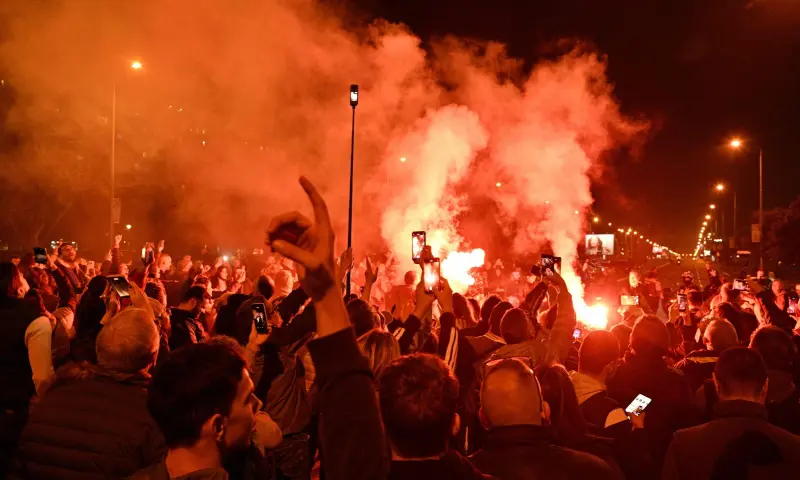
Supporters of the Students’ List celebrate their victory in the Serbian parliamentary elections, in downtown Belgrade on October 25, 2026. — AFP
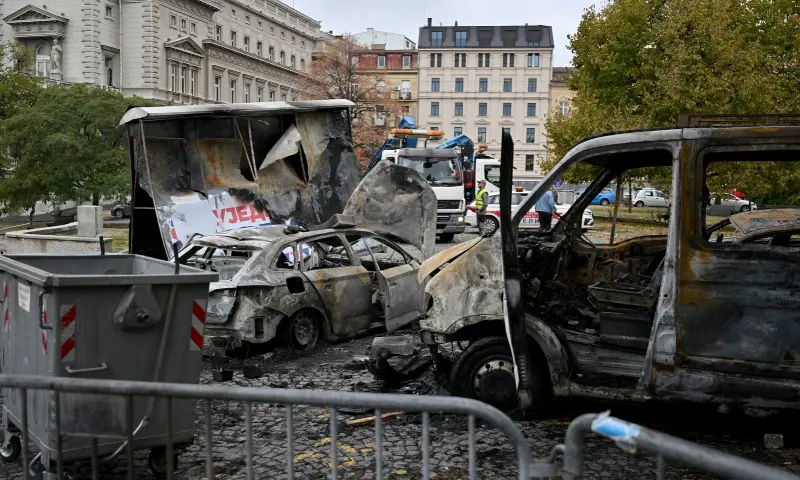
The charred remains of a pro-government encampment are pictured in a park opposite the Serbian Parliament in Belgrade on October 26, 2026, after crowds celebrating election results entered the site the previous night and dismantled tents that had occupied the area for months, setting them alight along with a number of cars. — AFP
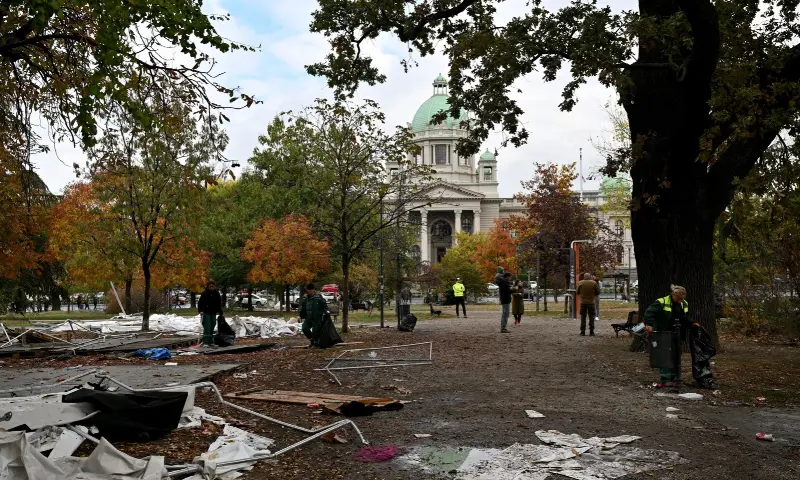
Street cleaning workers clear away the remains of tents and rubbish from a pro-government encampment in a park opposite the Serbian Parliament in Belgrade on Oct 26, 2026, after crowds celebrating election results entered the site the previous night and dismantled tents that had occupied the area for months, setting them alight along with a number of cars. — AFP

Serbia’s long-running student protest movement celebrated a historic win in the country’s election, ending 14 years of rule by the country’s right-wing populist leader Aleksandar Vucic.

Born out of nearly two years of anti-corruption protests sparked by a deadly railway station canopy collapse, the Students’ List is now eyeing a majority.

Here some key points about Serbia’s student-led movement as its candidates prepare to form government.

How did Serbia’s student movement start?

On Nov 1, 2024, a concrete awning at the entrance to Novi Sad train station collapsed, killing 16 people and sparking outcry over the tragedy at the newly renovated station.

Demanding a swift investigation, peaceful protests grew over months into some of the largest demonstrations recorded since the fall of strongman Slobodan Milosevic in 2000.

From the start, university students led the protests, blockading faculties and organising nationwide rallies.

The movement is deliberately leaderless and built around collective decision-making.

Just over a month before the second anniversary of the disaster, Vucic announced early elections, and the students assembled an electoral list drawn largely from academia and professional circles.

They are all deliberately outside any major political party.
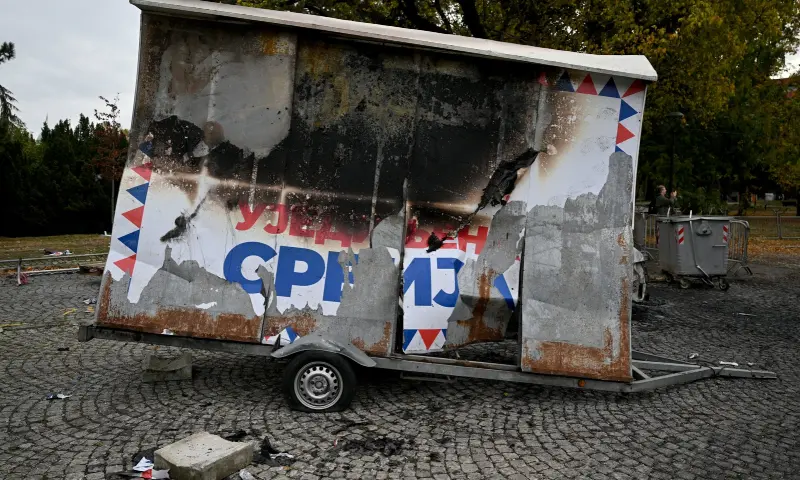
A burned election campaign banner of the Serbian Progressive Party (SNS) is pictured at a pro-government encampment in a park opposite the Serbian Parliament in Belgrade on Oct 26, 2026, after crowds celebrating election results entered the site the previous night and dismantled tents that had occupied the area for months, setting them alight along with a number of cars. — AFP

How did it win?

The movement built its campaign around opposing Vucic, setting aside issues that could divide its supporters.

“In order to win an election, the students needed the support of both groups of voters: those who are pro-European and those who are Eurosceptic,” political analyst Dusan Vucicevic told AFP.

Its campaign focused on corruption, the rule of law and attacks on press freedom.

Its collective decision-making, developed during the protests, continued into the campaign.

Who will lead?

The movement has repeatedly called for an end to the “cult of personality” that has dominated the country’s political system for decades.

The movement has not said who would be prime minister, leaving open who will lead the government, Vucicevic said.

Leading figures include Ilija Srdanovic, a cardiologist who headed the electoral list, and Radomir Saicic, a chemistry professor prominent in the campaign.

But Vucicevic stressed that Serbia’s prime minister does not have to be a member of parliament.

“So they have other people available whom they could bring into the government. We will have to wait and see.”
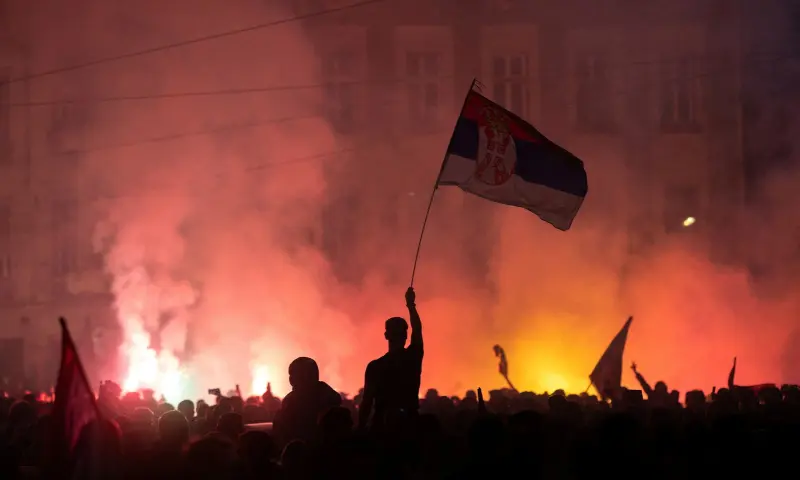
Supporters of the electoral list “Student List — Students Win” celebrate after Aleksandar Vucic, Serbian Progressive Party (SNS) prime ministerial candidate, conceded defeat in the parliamentary election in Belgrade, Serbia, on October 26, 2026. — Reuters

What are the key policies?

The candidates will need to adapt quickly to deliver on their broad reform platform, with the fight against corruption at its centre.

On foreign policy, the movement has offered fewer details. It previously said it would maintain Serbia’s refusal to impose sanctions on Russia over its invasion of Ukraine.

In a country still heavily dependent on cheap Russian gas but also supported by large European Union (EU) loans, the students will likely inherit Vucic’s political balancing act.

For now, the students’ focus will remain largely domestic, as they continue with their electoral strategy of uniting an “anti-regime electorate” and setting aside differences, Vucicevic said.

But he said the movement’s proposed reforms would likely bring Serbia closer to the EU.

“If the students do what they have announced, they will take much more significant steps towards EU membership for Serbian society than they would by simply draping themselves in European flags.”
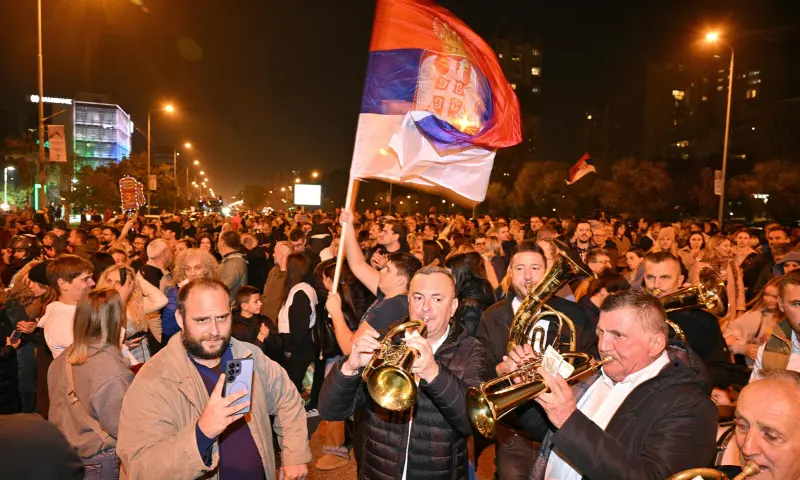
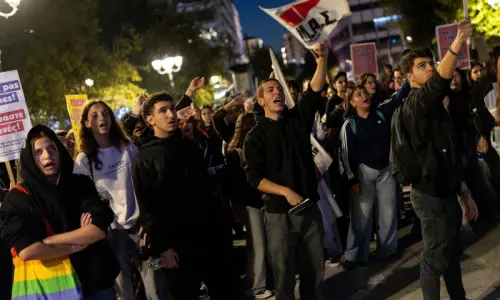
Supporters of the Students’ List wave a giant Serbian flag as they celebrate their victory in the Serbian parliamentary elections, in downtown Belgrade on October 25, 2026. — AFP

What will happen to Vucic?

A deputy prime minister from 2012, then prime minister and finally president, Vucic is “politically dead”, according to Vucicevic.

He resigned ahead of the elections to run as prime minister, while his Serbian Progressive Party (SNS) won over 100 seats in the country’s parliament.

Presidential elections are due soon, but Vucic is ineligible to run, and the SNS has no obvious candidate.

The question of possible prosecutions remains and will depend on the students’ ability to restore the rule of law.

Opinion

Editorial

Wheat price dilemma
Updated 26 Oct, 2026

Wheat price dilemma

A price no buyer is obliged or financially equipped to pay is only a number. Growers seem to have grasped this before the government did.
Encounter culture
Updated 26 Oct, 2026

Encounter culture

Whether police actions in "encounters" were legitimate or unlawful can only be established through credible investigations.
Recognising distress
26 Oct, 2026

Recognising distress

THE deaths of two families in Karachi, being investigated as suspected murder-suicides, raise disturbing questions...
Prudent warning
Updated 25 Oct, 2026

Prudent warning

Muslim countries have warned against a new conflict. But will the war lobbies in Washington and Tel Aviv listen?
Party of one
25 Oct, 2026

Party of one

IT ill behoves a political party that claims to be the biggest and most popular in the country to be so mired in...
Reckless driving
25 Oct, 2026

Reckless driving

THERE is a lack of official data documenting the crisis, but even by the most conservative estimates, over a dozen...