Central Development Working Party refers 3 KP infrastructure projects worth Rs100bn to Ecnec
ISLAMABAD: The federal government on Monday cleared three major infrastructure projects worth Rs100 billion in Khyber Pakhtunkhwa, recommending them to the Executive Committee of the National Economic Council (Ecnec) for formal approval.
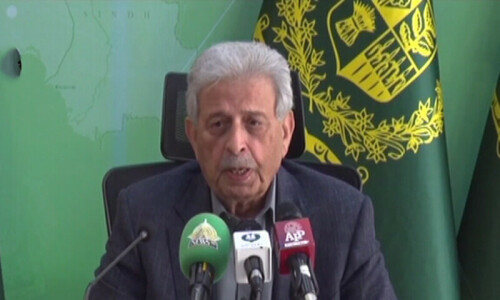
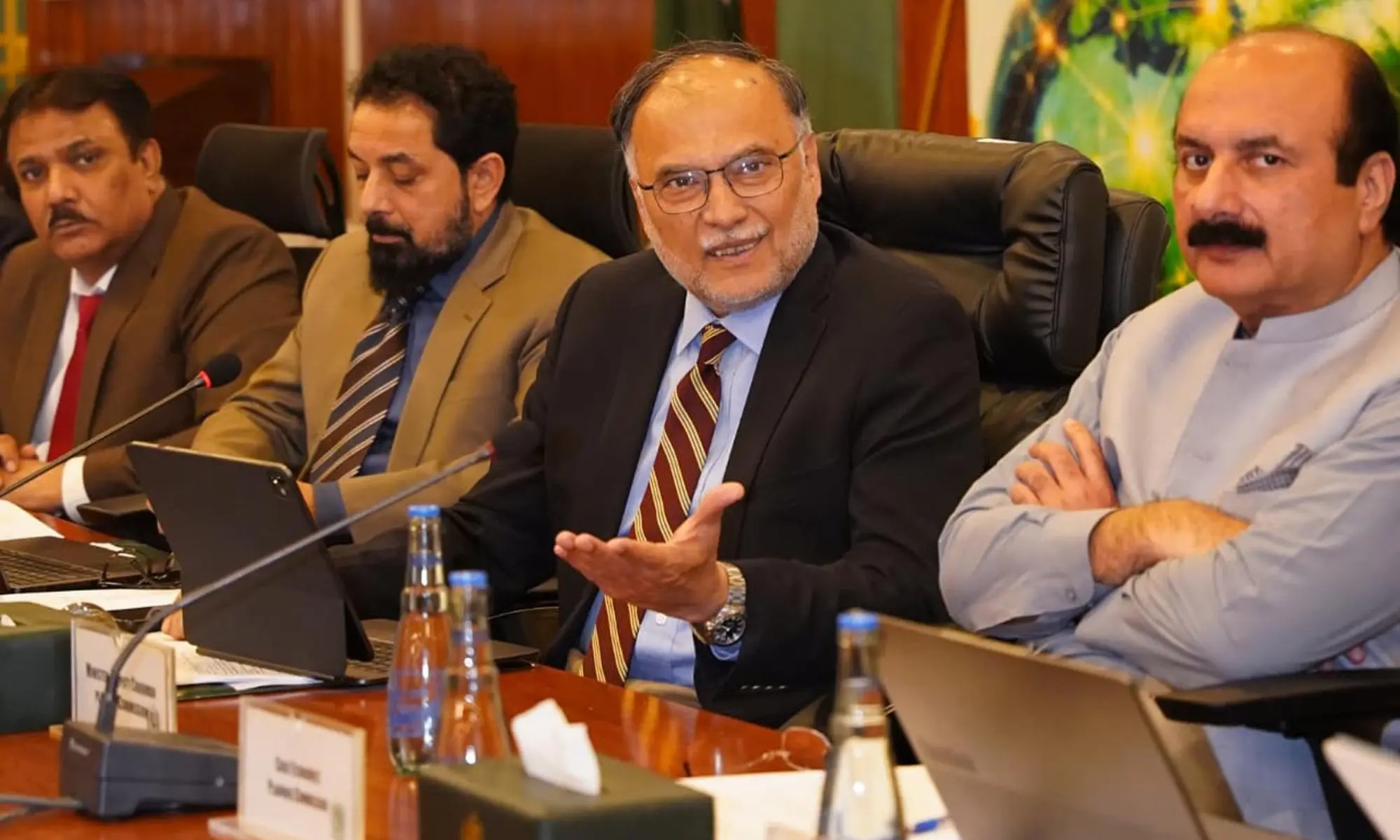
The decision was taken at a meeting of the Central Development Working Party (CDWP) presided over by Minister for Planning, Development and Special Initiatives Ahsan Iqbal.
“Federal government reaffirms commitment to KP’s development,” said Iqbal, referring to CDWP’s recommendation for a Rs69.89bn irrigation project to boost agriculture and rural livelihoods in the province.
Since the imposition of emergency and governor’s rule in KP, the Centre has pledged to work on the province’s development and progress, besides its top priority of combatting terrorism.
The CDWP meeting also cleared another 11 projects throughout the country with an estimated investment of nearly Rs126.50bn, including a mega project worth Rs85.34bn in Punjab.
This brought the total number of projects cleared by CDWP to 14, with an estimated cost of Rs226.48bn.
Of them, Rs40.9bn worth of 10 smaller projects were approved by the CDWP, while four other larger projects were recommended to Ecnec for formal approval.
Under financial rules, CDWP can itself approve projects costing up to Rs7.5bn, while it technically clears larger projects for approval by Ecnec.
The projects, including two mega water and agriculture sector projects worth around $550 million in KP and Punjab, would also unlock around $460m in foreign loans from the Asian Development Bank (ADB).
In the water resources sector, two mega climate-resilient infrastructure projects were recommended to Ecnec for approval.
These included the Khyber Pakhtunkhwa Resilient Irrigated Agriculture Livelihoods Development Project valued at Rs69.89bn. It would be co-financed by the ADB, which would contribute Rs56.133bn ($200m), while the KP government would provide Rs11.69bn with land acquisition.
The project aims to rehabilitate the Pehur Main Canal, construct the Mulkhow Irrigation Distribution System, and extend the Pehur High Level Canal.
The second mega project recommended to Ecnec was the Integrated Hill Torrent Management (Chachar-Mithawan) project in Dera Ghazi Khan and Rajanpur districts, worth Rs85.34bn.
Manila-based ADB would also be co-financing this project with a Rs73.06bn ($260m) share, while the Punjab government will be contributing Rs12.28bn.
The initiative seeks to implement modern spate irrigation, flood protection channels, telemetry systems, and centralised Supervisory Control and Data Acquisition (Scada) monitoring to strengthen regional water security.
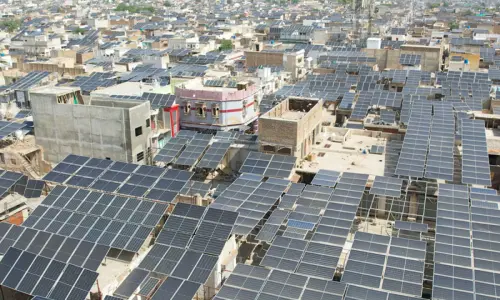
The meeting also cleared Rs13.32bn Prime Minister’s Solar Scheme for Newly Merged Districts (NMDs) and referred it to Ecnec to provide off-grid solar energy solutions to households in merged districts.
After the imposition of emergency in KP, the merged districts are among 12 districts run by the newly formed Area Representative and Development Council.
In the transport and communications sector, the CDWP recommended a project for the improvement and widening of the 39-kilometre Chakdara-Timergara section of N-45, costing Rs17.01bn to Ecnec.
To be financed through foreign funding via Exim Bank, the project will upgrade a vital transport corridor linking Chakdara, Timergara, Dir, and Chitral, significantly boosting trade, road safety, and tourism across the Kalash, Shandur, and Kumrat valleys.
Approved projects
The CDWP itself approved a total of 10 projects.
The first one, pertaining to the construction of an eight-lane overhead bridge at Imamia Colony Railway Crossing, Shahdara (N-5)-Lahore, was approved at an estimated cost of Rs7.49bn.
This includes construction and rehabilitation of connecting link roads to alleviate urban congestion in Lahore’s Shahdara Town.
In the education and training sector, the CDWP approved in principle three initiatives to expand quality educational access.
It approved in principle the establishment of Daanish Schools across Azad Jammu and Kashmir, Gilgit-Baltistan, Balochistan, KP, and Sindh, with the preparation estimated at Rs122.4m.
Similarly, the establishment of a Daanish School in Islamabad’s Kuri, costing Rs7.36bn was approved in principle to expand educational infrastructure in the federal capital.
Additionally, the establishment of a Daanish School in Kan Mehterzai of Balochistan’s Qila Saifullah district, valued at Rs4.53bn was approved in principle, subject to a technical review by a committee led by the member for infrastructure.
In the higher education sector, four key youth development initiatives were processed.
The PM’s Youth Development Centres project, valued at Rs4.15bn was approved in principle, incorporating third-party validation and structured monitoring frameworks to ensure effective resource utilisation.
The forum also approved the PM’s Talent Hunt Youth Sports League (Phase-I), worth Rs3.99bn, where a steering committee under the Pakistan Sports Board will coordinate efforts across all provinces and regions.
The CDWP also approved Rs1.97bn worth of PM’s National Innovation Award and the establishment of PM’s Youth Programme Sports Academies (High Performance and Resource Centre) and Youth Olympics, worth Rs2.956bn, to foster talent and modern sports infrastructure.
Furthermore, the meeting approved in principle the revamping of Pakistan Television Corporation at an estimated cost of Rs3.96bn.
The project seeks to modernise public broadcasting through digital transformation, international asset commercialisation, and long-term financial sustainability.
The CDWP also evaluated two energy initiatives in the power sector. It approved in principle the installation of a pilot Battery Energy Storage System at the 220 kV Jhimpir-I Grid Station at an estimated cost of Rs4.40bn, to support grid stabilisation and renewable integration.