Federal cabinet gives nod to imposition of emergency in KP; summary sent to president
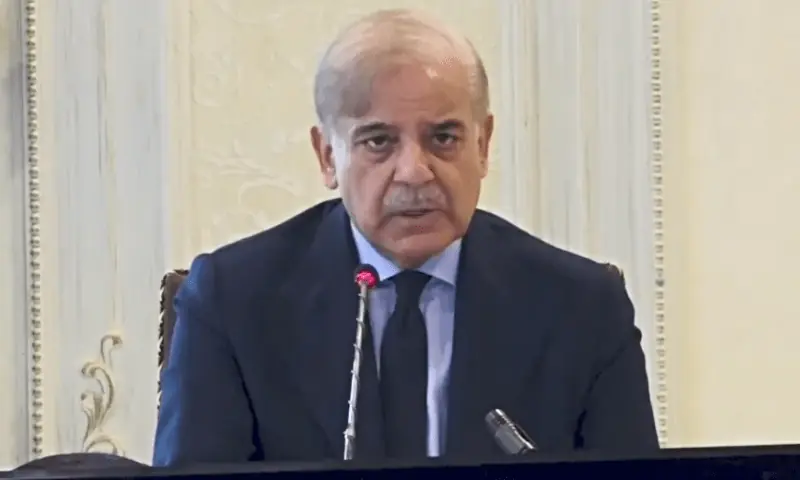
The Prime Minister’s Office (PMO) said on Sunday it sent a summary to the President House for final approval to impose an emergency in Khyber Pakhtunkhwa on the federal cabinet’s recommendation.
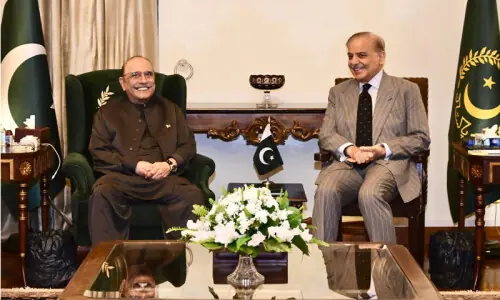
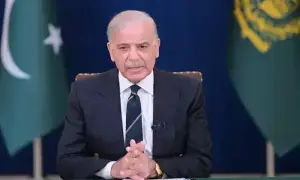
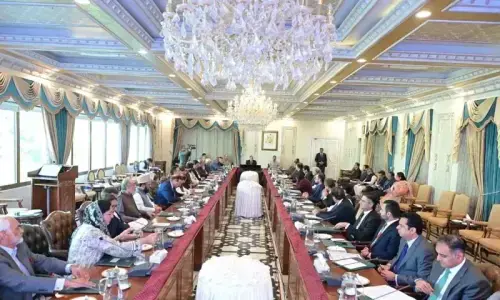
The decision came during an emergency meeting of the federal cabinet held on Sunday, where Prime Minister Shehbaz Sharif was briefed on the security situation in KP.
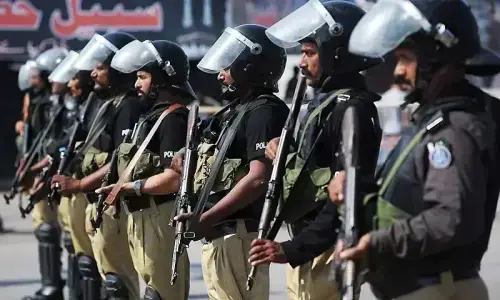
According to a statement by the PMO, cabinet members reviewed the situation and took note of the “provincial government’s deliberate disengagement from the fight against terrorism”.
The members proposed, given the “gravity” of the situation, that the PM advise the president to exercise “his constitutional authority and impose an emergency in the province under Articles 232 and 234 of the Constitution”.
Constitutional provisions
Article 232 of the Constitution provides for the proclamation of emergency in a province.
It says, “If the President is satisfied that a grave emergency exists in which the security of Pakistan, or any part thereof, is threatened by war or external aggression, or by internal disturbance beyond the power of a provincial government to control, he may issue a Proclamation of Emergency.”
However, invoking of this article requires a resolution from the provincial assembly of that province.
“Provided further that if the President acts on his own, the Proclamation of Emergency shall be placed before both Houses of Majlis-e-Shoora (Parliament) for approval by each House within 10 days,” it says. According to this provision, parliament “shall have power to make laws for a province, or any part thereof, with respect to any matter not enumerated in the Federal Legislative List” during the time of the proclamation of an emergency.
Article 233 provides powers to the president to suspend certain fundamental rights during emergency period.
On the other hand, Article 234 deals with the imposition of the governor’s rule “in case of failure of constitutional machinery in a province”. For imposition of the governor’s rule, the president simply requires a request from the provincial governor, it says.
Cannot allow PTI to destabilise the economy: PM tells cabinet
Addressing the cabinet meeting, the premier said the PTI-led KP government cannot be allowed to derail the stabilising economy amid tensions between the two sides.
“I will not allow them (PTI) to destabilise the economy,” he said during the meeting.
On terrorism in KP and Balochistan, the premier said, “The way common citizens are being martyred, the way police officials and security officials, children and mothers [..] there can be nothing more heart-wrenching.”
He recalled that Pakistan has repeatedly urged neighbouring Afghanistan to rein in the terrorist elements; however, “they still do not understand it”.
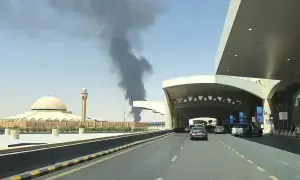
PM Shehbaz also reiterated his condemnation of the recent deadly Houthi attack on Saudi Arabia, noting the long-standing fraternal ties between Saudi Arabia and Pakistan.
“Our only goal is that peace should be restored in the region,” he said.
“Pakistan expresses solidarity with Saudi Arabia and stands with it. We will not tolerate any aggression against Saudi Arabia,” he said, adding that it was a “red line” for Pakistan.
During his address, PM Shehbaz also spoke of the recent staff-level agreement reached with the International Monetary Fund (IMF).
“It is hoped that we will unlock the $1.2 billion tranche within this year,” he said, recalling a meeting with the IMF’s Managing Director Kristalina Georgieva at the sidelines of the United Nations General Assembly (UNGA) last month.
He commended the political and military leadership for “working together day and night” in bringing fiscal discipline to Pakistan.
The premier recalled his visit to London last month, where he had met with senior executives from leading global financial institutions.
He also spoke of Pakistan’s diplomatic efforts in the international community, taking note of the appreciation Pakistan has received for mediation in the Middle East conflict.
“Pakistan continues to play its role with hard work and sincerity,” he said, particularly lauding the role of the Chief of Defence Forces and Chief of the Army Staff Field Marshal Asim Munir.
More to follow.