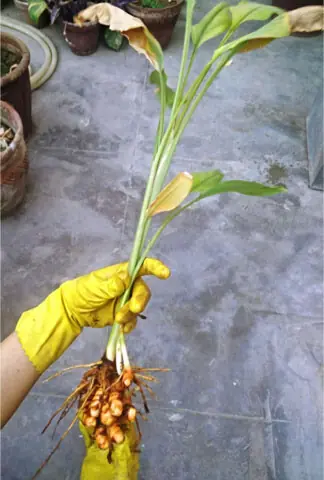
Like many households in Pakistan, we compile a monthly grocery list. The list would always include a dozen or so herbs and spices, including a small packet of turmeric powder. Not anymore.
Turmeric, or haldi as it is locally known, is one of the most widely used spices in Subcontinental culture. Traditionally, it is used as a remedy for a range of ailments, including cold and flu-like symptoms and gives popular local dishes such as karrhi pakorra [fritters in creamy yogurt sauce] and taheri [yellow rice dish with potatoes] their characteristic yellow colour.
It is also applied to a young woman’s skin to make it ‘glow’ before her wedding and is traditionally served to the groom mixed with milk. Turmeric’s rhizome has compounds like curcumin and essential oils that have been studied for their anti-inflammatory and antioxidant properties.
What surprised me the most was that I could grow it at home. It happened by accident the first time, the result of an experiment in a broken water tub. The strong aroma of the turmeric harvest was enough to convince my mother to remove it from her grocery list. It also prompted her to make her sons, including me, grow turmeric rhizomes, so she could process the rhizomes into powder for cooking.
Widely used in South Asian cooking and traditional practices, turmeric is also an uncomplicated crop to grow at home
Scientifically known as Curcuma longa, turmeric — with its bright yellow rhizomes — belongs to the ginger family (Zingiberaceae). It is a perennial plant native to the Indian Subcontinent and Southeast Asia.
Growing turmeric from rhizomes is relatively easy for any kitchen gardener, compared with other spices and herbs used in local cuisine. The only drawback is that the underground rhizome spreads horizontally, requiring adequate space in the ground or the container.
At first glance, the harvested turmeric rhizome may look much like ginger. However, ginger has a pale beige tone, while turmeric tends toward yellowish orange. Turmeric rhizomes are generally smaller and stubby, with rougher skin and fewer branches, while ginger rhizomes tend to be larger, smoother and more branched.
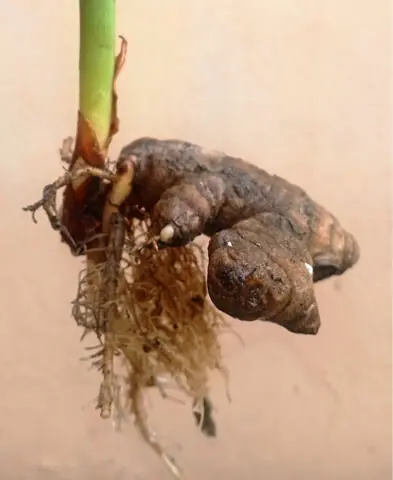
Turmeric is propagated by planting rhizomes, and grows best in warm conditions. The ideal temperature for planting turmeric rhizomes is between 20 and 30 degrees Celsius, especially in humid conditions. In warmer parts of Pakistan, rhizomes can be planted earlier, while cooler regions require a later start. While rhizomes can be planted from January till September, for ideal results, they should be planted during spring.
The climate in Karachi is suited to growing turmeric, and those living in Karachi can plant it earlier than gardeners in northern areas of Pakistan. In Karachi, the ideal planting window is roughly from late January to mid-March. Planting earlier gives the plant a longer growing season and, consequently, the potential for a better harvest.
Ideally, choose a turmeric rhizome that is about two to three inches long. Like ginger, turmeric rhizomes have ‘eyes’ — small buds on its outer skin from which new growth can emerge. If temperatures fall outside the ideal range, planting the rhizome too early can hinder its growth.

When the temperature is low, the turmeric rhizome can be kept in shade for a few days before planting. If the temperature is exceeding the 30-degree Celsius mark, then keep the rhizome in a refrigerator. Plant it in a potting mix once the temperature gets in the desired range.
To ensure healthy, strong rhizomes, there are a few things to keep in mind when selecting planting material. Always select a fresh turmeric rhizome for planting. Ensure the outer skin is free of cuts, bruises or fungus.
Please send your queries and emails to doctree101@hotmail.com. The writer is a physician and a host for the YouTube channel ‘DocTree Gardening’ promoting organic kitchen gardening
Published in Dawn, EOS, October 11th, 2026