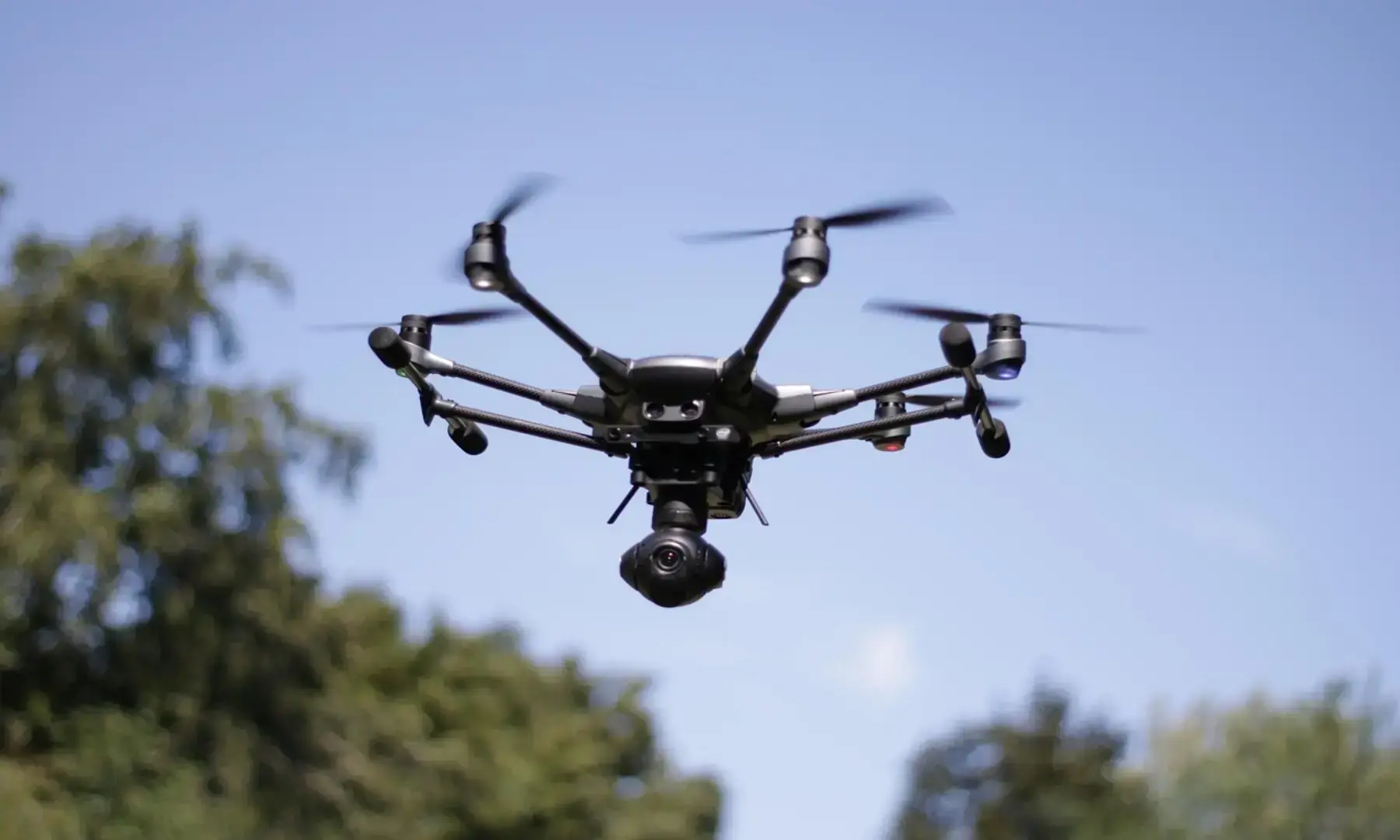

Over the years, I have seen many photographs of conflict and violence from Khyber Pakhtunkhwa: blast sites, funerals and walls marked by gunfire. One recent image has stayed with me more than most. It shows a police station with white netting stretched across its front. The netting is meant to entangle a quadcopter’s rotors, or to catch the mortar round it drops before it reaches the policemen on duty below.
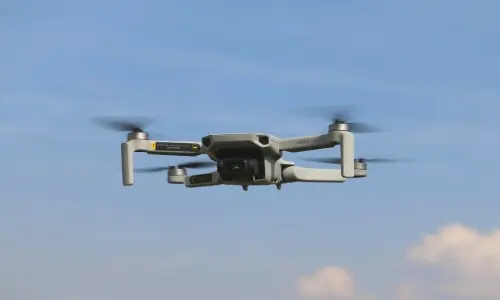
In recent years, drones have become a regular feature of militant violence in the province. Pakistani security forces faced at least 405 quadcopter attacks last year, and KP Police say they foiled 341 in the first six months of this year. In July, a drone struck a house in Bajaur and killed three members of one family. The youngest, Muneeba, was five years old.
“Pakistan’s police have extensive counterterrorism experience, but drones are a totally new dimension,” Aamir Zulfiqar Khan, former Inspector General of Police, Punjab, who also served in the province’s Counter Terrorism Department, said in an interview.
This raises two questions: where do these drones come from, and who allows them to be launched? The evidence increasingly points to a direct link between the TTP’s drone campaign and the Afghan Taliban, the TTA, who host the group.
Covert and overt support
The UN Security Council’s monitoring team, in its latest report, states that the Taliban authorities have continued their support for the TTP, and that this is one of the major reasons for the rise in attacks by the terror outfit in Pakistan. The report records that Kabul relocated around 2,000 TTP terrorists and their families away from the border. It also notes that the Taliban leader, Hibatullah Akhundzada, warned the TTP leadership, through back channels, to halt attacks on Pakistan or risk losing Taliban support. Such a warning is meaningful only if that support exists.
Ambassador Asif Durrani, Pakistan’s former Special Representative for Afghanistan, dealt with the Taliban directly on this issue. In an interview, he said Kabul had once offered to relocate TTP cadres away from the border, provided Pakistan paid for it. Pakistan agreed, but no plan was ever produced. Instead, there were repeated assurances.
“They would assure us that you will see a difference soon,” Ambassador Durrani said. “When I would ask them how soon, they would say three or four months. But after three or four months, we would witness more TTP attacks along our border posts.”
He was told each time that the Taliban would “go whole hog” and bring the terror group under control. “But that never happened.” The UN report’s assessment that 2,000 terrorists have now been moved shows that Kabul had the ability to act. It chose not to.
Drone expertise
The drones themselves tell a similar story. Research published by the Global Network on Extremism and Technology found that the TTP buys Chinese commercial drones in Kabul and other Afghan cities; other studies suggest it recruits technicians and students to fit them with explosives. It is difficult to accept that such activity goes unnoticed by the authorities in Kabul.
Converting a commercial quadcopter into a weapon requires handling mortar fuses, 3D-printing release brackets and operating through electronic jamming. An analysis published by South Asian Voices in June concluded that the TTP was unlikely to have developed this capability on its own.
Researchers at Singapore’s S. Rajaratnam School of International Studies go further. They report that the Taliban have been developing a covert drone programme in repurposed US and NATO facilities in Afghanistan, and that the TTP and its ally, Ittehadul Mujahideen, have drawn on the same technical expertise and facilities. In their assessment, the TTP’s ability to turn commercial quadcopters into weapons has been aided by the sanctuary the Taliban provide.
The method closely follows the Taliban’s own. According to Ahmad Zia Saraj, Afghanistan’s former intelligence chief, the Taliban built their drone capability by buying commercial drones on the open market and adapting them for military use. Moreover, Afghanistan International reported that a Taliban team, comprising engineering students from Kabul’s universities, has been modifying drone designs since 2021.
The parallel with the TTP’s recruitment of students and technicians is striking. The two outfits also use the same terminology: the TTP announced its own “Air Force” last December, and the Taliban describe their drone strikes on Pakistan as “air force missions”.
Ambassador Durrani traces the relationship to its roots: the Taliban “enjoyed TTP’s hospitality while the American forces were in Afghanistan,” he said. “It is payback time for the Afghan Taliban to accommodate the TTP. The Afghan Taliban and the TTP are ideological cousins.”
Evidence of collusion
Events the past month have made the link harder to deny. On September 18, a suicide bomber struck a mosque at Kohat’s Old Police Lines during Friday prayers, and gunmen then stormed the compound. At least 23 people were killed, 17 of them policemen. The attack was claimed by Ittehadul Mujahideen, the alliance led by the Afghanistan-based Hafiz Gul Bahadur, which works closely with the TTP.
In response, Pakistan struck militant hideouts across the border on September 21. Two days later, instead of restraining the militants, Kabul launched eight drones of its own towards Torkham and Kohat.
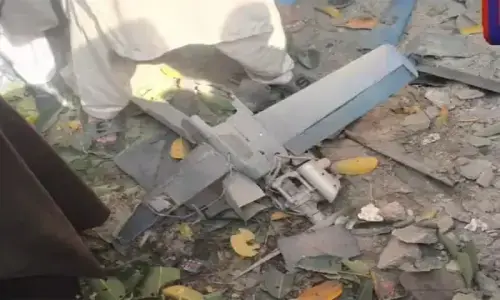
This was not the first such incursion. Security forces had shot down Taliban drones over Qila Abdullah and Chagai in June, and four more over Balochistan in July. On September 23, Pakistan’s air defences brought down all eight, two of them by electronic jamming about seven kilometres from Kohat city. When Pakistan then struck 10 sites inside Afghanistan, Information Minister Attaullah Tarar said the targets were linked both to terrorist attacks inside Pakistan and to the Taliban’s drone incursion. When the same infrastructure serves both the TTP and the Taliban government, the distinction Kabul draws between them cannot be sustained.
India’s role in this arrangement also requires attention. Ambassador Durrani described India’s ties with the Taliban as “a marriage of convenience”, and said that New Delhi has long used Afghan territory to pressurise Pakistan.
“Successive Afghan governments have been amenable to Indian financial inducement,” he said. Earlier this month, a Pakistani intelligence report cited a meeting between Indian intelligence officials and the head of the Taliban’s intelligence service, during which more than $7.8 million was reportedly pledged for joint BLA and TTP attacks.
Saraj has also said he was told by trusted sources that the Taliban’s drone programme receives Indian funding, while stressing that there is no proven documentation of Indian government involvement. While New Delhi denies these claims, Pakistan should make its evidence public, as it should in its confrontation with Kabul.
Former IGP Khan believes that the drones can be traced to their source. “Tracing a militant supply chain means connecting the financier, facilitator, supplier and operator,” he said. “Even if a drone comes from Afghanistan, the network behind its procurement, financing and operation shall leave an intelligence trail.” He cautioned, however, that the task cannot be left to KP alone. “The federal government must create a national counter-drone strategy. No province can tackle this alone.”
Pakistan now holds the wreckage of the drones launched against it. It should trace each one to its source and present the findings to the world. For five years, Kabul has insisted that the TTP is not its responsibility. The evidence from these drones suggests otherwise.