Taliban support fuels deadlier TTP attacks in Pakistan: UN
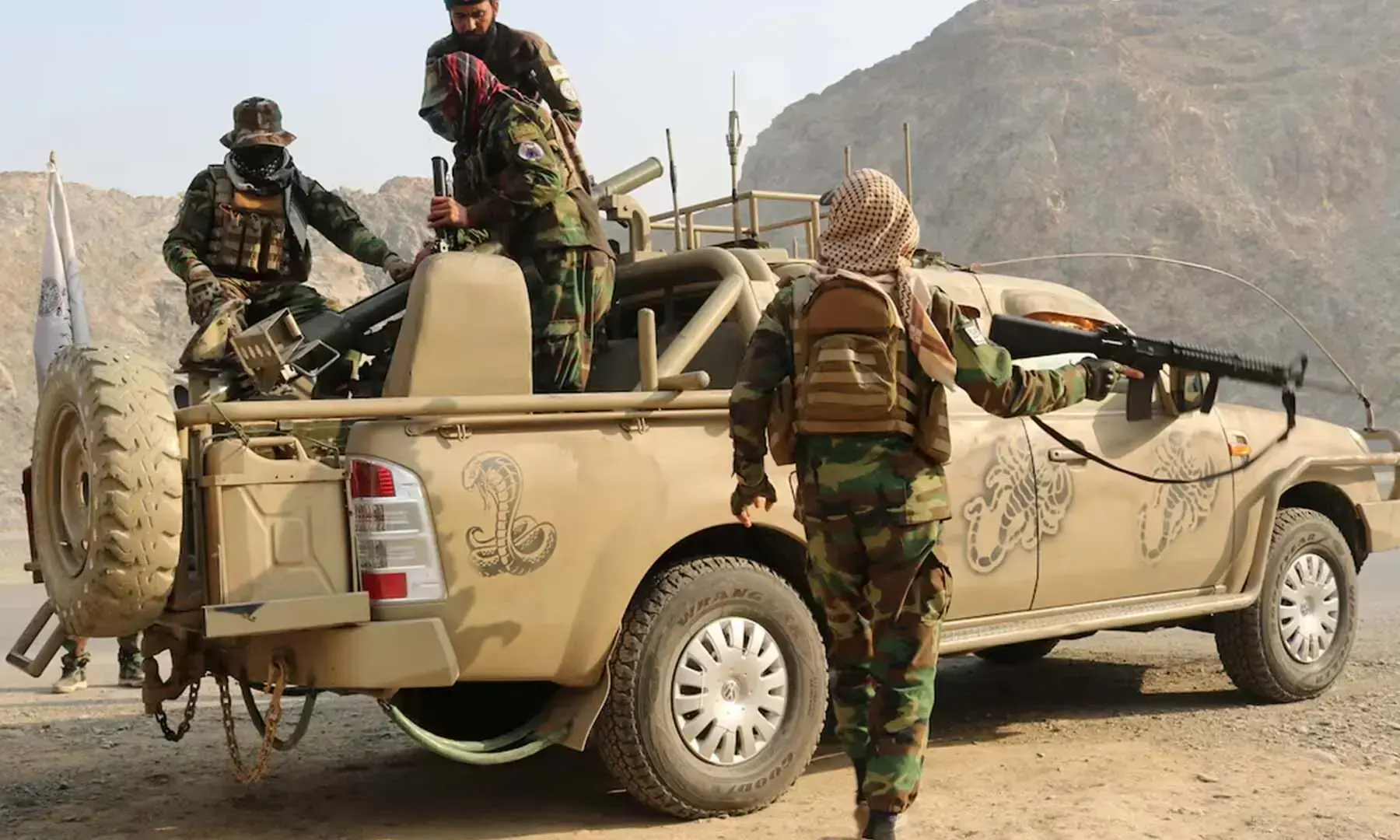


• Taliban chief reportedly warned outfit to halt attacks or risk losing support
• UN report points to training links involving TTP, BLA, Al Qaeda
• ISIL-K attacks decline in Afghanistan, but increase in Pakistan
ISLAMABAD: The Afghan Taliban’s continued support for the Tehreek-i-Taliban Pakistan (TTP) has contributed to a rise in the frequency and lethality of terrorist attacks in Pakistan, even as Kabul has taken some initial steps to rein in the group, according to a UN Security Council-mandated monitoring report.
The report also points to growing operational and facilitation linkages among the TTP, Al Qaeda, Islamic State-Khorasan (ISIL-K) and the Baloch Liberation Army (BLA).
The 38th report of the UN Analytical Support and Sanctions Monitoring Team, covering the period from Dec 16, 2025, to June 9, 2026, said that “cross-border attacks between Pakistan and Afghanistan escalated, provoked by a high number of attacks by Tehreek-i-Taliban Pakistan against Pakistan”.
Like previous editions, the report was unequivocal in its assessment of Kabul’s role, saying that “the de facto authorities (Taliban) continued their support to the Tehreek-i-Taliban Pakistan (TTP), which escalated attacks against Pakistan, provoking military exchanges”.
It noted concern among member states that the continuing conflict could create opportunities for terrorist groups and generate additional security challenges for the region.
Taliban’s dual-track approach
The assessment nevertheless recorded some initial steps by the Taliban authorities to contain the TTP, although these appeared aimed more at managing the group than dismantling its infrastructure.
The report said Afghan authorities had relocated around 2,000 TTP fighters and their families from areas along the Pakistani border to deeper inside Afghanistan in an effort to rein in the group.
It also said Taliban leader Hibatullah Akhundzada had warned the TTP leadership through backchannel communications to halt attacks against Pakistan or risk losing Taliban support.
The developments point to what appears to be a dual-track Taliban approach, continuing to provide the TTP space and support because of shared ideological ties while moving some fighters away from the border to reduce attacks on Pakistan, avoid a major escalation with Islamabad and address growing international concerns.
For Pakistan, however, relocating fighters deeper inside Afghanistan would do little to address the underlying problem as long as the TTP’s command, training and logistical networks remain intact.
Meanwhile, the TTP has continued to expand its organisational structure and operational reach.
The report said that following its annual rahbari shura in December, the group announced a revised structure with two new divisions covering Balochistan and the central region, and Kashmir and Gilgit.
The restructuring also included a new division described by the group as the “TTP Air Force”, suggesting an effort to broaden its operational capabilities.
In March, the group announced in several languages its spring campaign, “Operation Khyber”, calling for increased attacks against Pakistani security forces and civilians.
One of its deadliest attacks during the reporting period came on Feb 16 in Bajaur, where a vehicle-borne improvised explosive device martyred 11 security personnel and a child and wounded others. The TTP claimed responsibility and was reportedly operating from Afghanistan, the report said.
Blurred lines
The UN assessment also points to increasingly blurred lines between terrorist groups operating in and from Afghanistan.
Al Qaeda’s official media outlet, As-Sahab Media Foundation, issued a statement on April 28 supporting the Taliban and, for the first time, backing the TTP in its operations against Pakistan.
The report said that while Al Qaeda had previously provided ideological guidance, training and support to the TTP, the latest statement represented more direct backing.
“One member state reported that BLA terrorists were trained along with TTP by Al Qaeda trainers in Afghanistan,” it said.
The report also noted that Al Qaeda in the Indian Subcontinent (AQIS) formed the backbone of Ittihadul Mujahideen Pakistan, which was reportedly involved in several attacks in Khyber Pakhtunkhwa.
AQIS leadership was reported to remain in Kabul after being issued tazkiras, suggesting “close cooperation between the Taliban and AQIS”, according to the report.
The assessment thus points towards a wider militant ecosystem rather than an isolated TTP problem, with training, facilitation and logistical networks increasingly cutting across organisational boundaries.
ISIL-K remains another major component of the threat. The report described it as the greatest threat to the Taliban authorities and the region, despite serious setbacks suffered as a result of counterterrorism operations by Pakistan and the Afghan Taliban.
ISIL-K was reported to have moved its operational infrastructure towards northern Afghanistan while dispersing training networks across the Pakistan-Afghanistan border region, including Khyber Pakhtunkhwa, and retaining a presence in the suburbs of Kabul.
The UN report said ISIL-K was in a rebuilding phase, having shifted from attempts to hold territory to conducting fewer but high-profile, mass-casualty attacks, demonstrating resilience and adaptability.
Member states reported that the group possessed modern tactical equipment, including drones, night-vision devices and thermal imagers, and had received training in urban combat and the use of drones.
One member state also reported that ISIL-K and the BLA shared facilitation networks for logistics.
The report said ISIL-K attacks had declined in Afghanistan but increased in Pakistan.
On Feb 6, a suicide bomber detonated explosives during Friday prayers at the Khadija Tul Kubra Mosque of the Shia community in Islamabad, killing 32 people and injuring more than 150. The attack was claimed by a group calling itself ISIL in Pakistan but was likely conducted by ISIL-K, the report said.
The group also claimed responsibility for the May 5 assassination of Pakistani cleric Sheikh Muhammad Idrees in Khyber Pakhtunkhwa.
The findings suggest that the threat facing Pakistan from Afghanistan is becoming more complex, with the TTP retaining Taliban ideological and logistical support, Al Qaeda providing training and ideological backing and ISIL-K and the BLA benefiting from overlapping facilitation networks.
The Taliban’s reported relocation of TTP fighters and warning to its leadership may reduce immediate pressure along the border, but the UN assessment does not suggest that Kabul has taken the more consequential step of severing its relationship with the group.
Published in Dawn, August 13th, 2026