US PRESIDENT Donald Trump has predicted that the Iran war will end “very soon”. Yet the facts on the ground belie this assumption.
While speaking in Ireland on Saturday, the American leader repeated that in his calculation, the conflict would wind down “right after election time”, referring to US midterm polls in November. However, much can happen between now and November, and wars are not cut-and-dry affairs that can be ended with the push of a button.
If he is serious about concluding the war, Mr Trump should immediately reach out to the Iranians to achieve a negotiated solution.
After all, there is much to worry about as the war — and its connected conflicts — have spread across the Middle East.
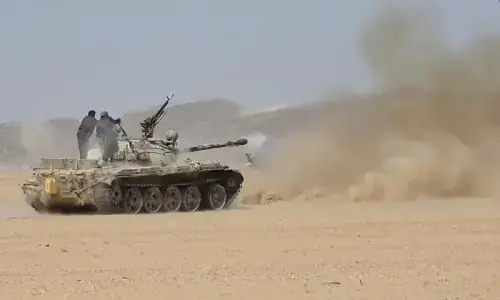
There have been intermittent exchanges between the US and Iran over the past few days. Meanwhile, the Saudi-Houthi ceasefire has collapsed, with the pro-Iran group seizing more territory in Yemen, and aiming its guns at the Bab al-Mandeb strait to prevent Saudi vessels from crossing it.
On the other hand, the East-West oil pipeline in Saudi Arabia — a critical alternative for transporting petroleum after the Hormuz blockade — has been struck apparently from Iraq. Riyadh has said it has held off on taking action after a request from the “brotherly Iraqi government” but reserves the right to respond. Though powerful pro-Iran militias are active in Iraq, no group had, at the time of writing, taken responsibility for the attack.
In Lebanon, Israel continues its savage bombardment as it tries to bring Hezbollah to its knees. Thousands of Lebanese have been killed in these brutal attacks, while hundreds of thousands have been displaced. It should be remembered that a ceasefire in Lebanon was a crucial part of the Islamabad MoU.
All these interconnected conflicts indicate that a Middle East ceasefire cannot wait for November.
As the aggressor in this war, the US should take the first step by ending hostilities with Iran; Tehran should respond in kind. Talks between Iran and the Gulf states regarding the Strait of Hormuz are scheduled in Oman on Monday. Hopefully, the regional states can reach an agreement for the reopening of the crucial waterway.
As a confidence-building measure, the US should announce the cessation of hostilities against Iran, and an end to the blockade of Iranian ports. Wars are unpredictable, and American confidence that Washington can control the tempo of hostilities till November is misplaced. A peaceful solution is required now.
Moreover, the war is deeply unpopular in the US, and many top American generals have reportedly warned their bosses against escalating. Therefore, it is time to end this futile misadventure, and reopen channels of dialogue through trusted third parties such as Pakistan and other regional states.
Published in Dawn, September 13th, 2026