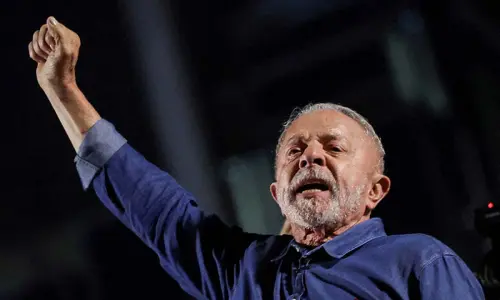
LUIZ Inácio da Silva turned 81 yesterday with much more than a birthday to celebrate. Two days earlier, the man known as Lula pulled off a remarkable triumph, converting a deficit in the first round of Brazil’s presidential elections into a nearly 4m lead in the second round, thereby securing an unprecedented fourth term.
The carnivalesque eruption of joy across much of Brazil was accompanied by an almost global sigh of relief. Flávio Bolsonaro’s first-round advantage compounded the fear of a candidate strongly favoured by the Trump and Netanyahu administrations pursuing his father’s fascistic agenda with even greater fervour. The would-be dynasty’s paterfamilias, Jair Bolsonaro, is serving a 27-year sentence for trying to instigate a coup after losing the 2022 election to Lula. On the eve of last Sunday’s vote, Reuters reported that US State Department officials had informed American diplomats in Brasilia that the aim was to restore Bolsonaro Sr to power.
The extent to which that revelation might have fired up voters is open to conjecture, although previous attempts by Washington to rattle the Lula administration backfired, bolstering his popularity. More consequentially, the Lula campaign changed tack after the first round, shifting its focus from the Bolsonaro family’s crimes to direct action towards easing economic pressures. These included, belatedly, a five-day week, free weekend travel on public transport, more generous welfare payments, and a ban on online gambling.
Such measures served as a reminder of Lula’s record since first winning the presidency in 2002 (following three failed attempts). Broadly speaking, he avoided challenging the precepts of neoliberalism, focusing instead on blunting the rougher edges of predatory capitalism, thereby lifting tens of millions out of poverty and reducing the historic economic and racial inequalities exacerbated by Brazil’s 21 years of military rule. As head of the metalworkers’ union from 1975, Lula’s militant activism was instrumental in challenging the dictatorship. Five years later, he helped found the Partido dos Trabalhadores, whose initial revolutionary zeal was replaced by social democratic ‘pragmatism’.
The victory offers hope the far right can be thwarted electorally.
During a 1984 visit to Britain, Lula said food and jobs were the primary need, rather than any dramatic upheaval. It took him 18 years to reach the presidency, during what was dubbed Latin America’s ‘pink tide’, spearheaded by Hugo Chavez in Venezuela under the fraternal (or perhaps paternal) gaze of Cuba’s Fidel Castro. Some on the left derided Lula’s incremental approach to redressing Brazil’s woes, but in retrospect it has arguably proved wiser than radical haste. Unlike most of his progressive contemporaries, Lula has survived to serve as a bulwark against the Trump administration’s imperialist designs, exemplified by seven consecutive electoral victories for the far right in Latin America.
It has been a close call, though. Brazil’s size makes it easier to push back against hegemonic bullies. Sunday’s result can largely be accounted for by the Lula campaign’s bold strategy between the two electoral rounds, incorporating socioeconomic relief, impressive social media outreach that helped to sharply increase the turnout, and mass mobilisations by (mainly) young Brazilians appalled by the prospect of the Bolsonaros’ return.
Lula will struggle to implement his agenda in the face of a hostile parliament, and a new, younger leadership must emerge to guide the Brazilian left’s fortunes. Yet the lesson that the designs of extreme right forces can electorally be thwarted despite the full-throated support of the US, Israel and the tech oligarchs will resonate far beyond Latin America — not least in Europe, where profoundly regressive forces are preparing to pounce as incumbent centrists struggle to offer any hope to disillusioned electorates.
Long-time Serbian autocrat Aleksandar Vucic’s decisive defeat, also on Sunday, against a Student List thrown up by young protesters who have regularly been mobilising since a poorly constructed train station canopy collapsed in Novi Sad almost exactly two years ago, killing 16 people, sets another interesting example (not least for India’s inspiring agitators). They didn’t just march, they also organised at a grassroots level, and put up a list comprising a diverse range of academics and other professionals. Whether the victors will sensibly handle their surprising success remains to be seen, but it’s a hopeful trend. Equally unexpected was Vucic’s early concession speech, in contrast to Flávio Bolsonaro’s ridiculous diatribe against extended voting hours that his campaign had also sought.
Not least for the sake of the Amazon rainforest, it must be hoped that the Bolsonaro project is dead. But, as Lula must know, complacency would be folly.
Published in Dawn, October 28th, 2026