From Arab Spring to US-Iran war — A history of oil price swings this century
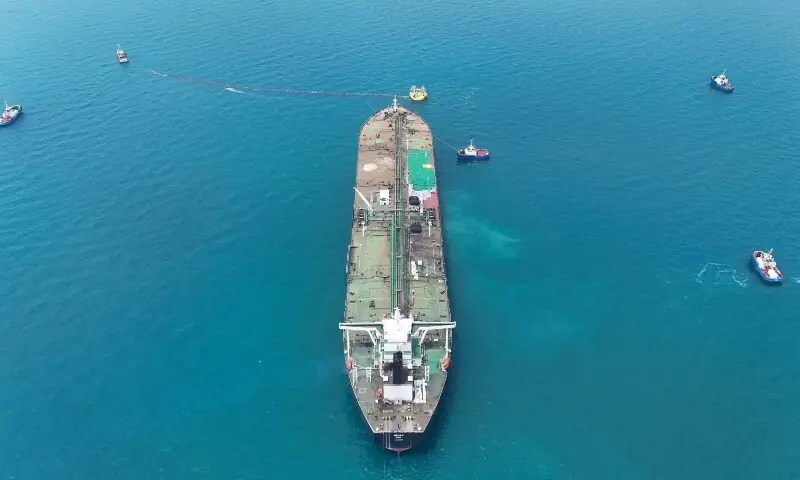
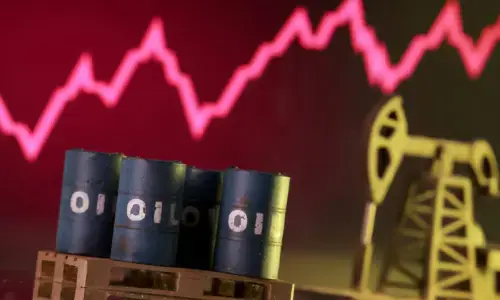
Brent North Sea crude, the international benchmark, topped $100 a barrel on Wednesday following a flare-up in the US-Iran war since the end of August that risks fresh disruption to oil supplies.
Oil prices have experienced great volatility since the start of the conflict at the end of February.
Below is an examination of oil’s price swings this century, including when crude surged to record highs close to $150 per barrel in 2008, before turning negative 12 years later during the Covid-19 pandemic.
2026: US-Iran war
Oil prices shot above $100 shortly after the start of the US-Iran war on February 28. The conflict has effectively blocked the Strait of Hormuz, through which almost 20 per cent of the world’s oil is transported.
Brent North Sea reached a peak of $126.41 a barrel at the end of April.
The main US contract, West Texas Intermediate (WTI), hit as high as $119.48 a barrel in early March.
Hopes for de-escalation, weaker demand from China and the massive release of countries’ strategic oil reserves caused prices to fall back in June.
Prices then fell below pre-war levels when Iran and the United States signed a Pakistan-mediated memorandum of understanding on ending the conflict.
But a recent escalation in US-Iran strikes across the region has seen Brent top $100 once more, while WTI sits around $95 a barrel.
2022: Russia’s invasion of Ukraine
Crude futures climbed above $100 in February 2022, soon after the invasion of Ukraine by major oil producer Russia.
In March of that year, prices approached their 2008 highs, with Brent reaching $139.13 a barrel and WTI $130.50.
Fears of insufficient oil supplies rose as Western sanctions against Russia followed. Coupled with increased demand after the Covid-19 pandemic, prices mostly stayed above $100 until the summer of 2022.
Prices went on to fall back, largely owing to high supplies.
2020: Covid pandemic
Oil prices briefly turned negative following the onset of the coronavirus pandemic that shut offices and factories — and grounded planes worldwide.
Scarce storage facilities and a Saudi-Russia price war also helped cause the market to tumble.
WTI slumped to minus $40.32, meaning that producers paid buyers to take the oil off their hands.
At the same time, Brent tanked to a record low of $15.98.
2012: Iran crude embargo
After falling under $90 over a eurozone economic crisis, oil prices rose back above $100 after Western powers imposed a raft of economic sanctions on Iran, including crude exports, aimed at halting its nuclear programme.
Wider tensions in the Middle East owing to the Syria conflict kept prices almost continuously above $100 until 2014, before they slid under $50 at the start of the following year as a result of American shale oil flooding the market.
2011: Arab Spring
Brent soared to $127 in March 2011 following unrest in the oil-producing Middle East and North Africa region.
The market bounded higher after the so-called Arab Spring uprisings toppled the long-standing leaders of Tunisia, Egypt and Yemen, while the unrest rocked other parts of the region, especially crude producer Libya.
2008: Record-high above $147
On July 11, 2008, Brent hit a record high of $147.50 a barrel, having breached $100 at the start of the year for the first time.
The same day, WTI achieved an all-time peak at $147.27.
Crude surged thanks to falling stockpiles in the United States, strong Chinese demand and unrest in key Opec members Iran and Nigeria.
A weaker dollar lent strong support, making crude priced in the greenback cheaper for buyers holding other currencies.
But by December 2008, Brent had tanked to sit at around $36 owing to a severe economic recession worldwide in the wake of the global financial crisis.