FEW individuals have occupied the centre of Indian politics for as long while revealing as little of themselves as Sonia Gandhi. For nearly three decades, she has been at once ubiquitous and elusive: the head of India’s oldest political party, the matriarch of its most famous family and, during the United Progressive Alliance years, arguably the most consequential figures in the country’s political establishment.
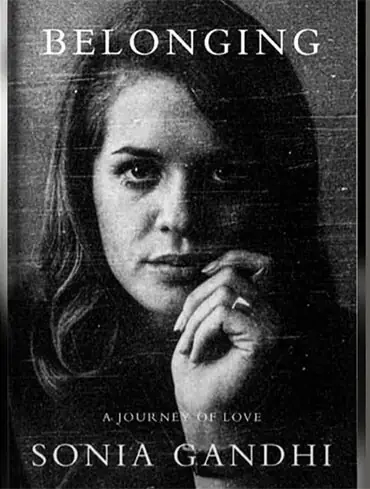
Her forthcoming memoir, Belonging: A Journey of Love, therefore matters not merely as autobiography but as a potential document of political history. The real test will be whether it offers history an insider’s illumination or merely a carefully curated family remembrance.
Mrs Gandhi occupies a position no other living Indian politician can claim. She entered the Nehru-Gandhi family as an outsider, witnessed the assassinations of both Indira Gandhi and Rajiv Gandhi at devastatingly close quarters, resisted politics for years and then became the person who revived a declining Congress and led it back to power. The unanswered questions are consequently formidable.
Why did she finally enter politics after Rajiv Gandhi’s assassination? What persuaded her to decline the prime ministership in 2004 despite possessing the numbers to claim it? How did the peculiar duality of authority between Congress president Gandhi and Prime Minister Manmohan Singh actually function? And how does she now assess the decade that combined ambitious welfare legislation with growing allegations of corruption and administrative drift?
The 2004 decision remains particularly important. Mrs Gandhi’s refusal of the prime ministership was projected as one of the most dramatic acts of political renunciation in independent India.
Yet renunciation did not mean retirement from power. Her subsequent position at the head of the United Progressive Alliance created an unusual arrangement in which constitutional authority and political authority appeared to reside in different places.
A candid account could clarify an enduring ambiguity in India’s democratic history. Mrs Gandhi had fiercely opposed her husband’s entry into politics. Yet after years spent protecting her children from the consequences of their family’s inheritance, the dynasty’s political legacy eventually passed to Rahul Gandhi, while Priyanka Gandhi Vadra entered electoral politics much later. How she reconciles maternal instinct with political inheritance could be among the memoir’s most revealing themes.
But perhaps the book’s title offers the clearest clue to its purpose. Sonia Gandhi’s defining political journey has been one of belonging: from Italy to India, from private life into a public dynasty, and from reluctant participant to custodian of a political inheritance increasingly challenged by the rise of Narendra Modi’s BJP. That makes the memoir important at a moment when the Congress itself is struggling to define its future.
The Nehru-Gandhi family remains simultaneously the party’s greatest emotional asset and its most persistent political burden. Mrs Gandhi may not answer every uncomfortable question. Memoirs rarely do. But what she chooses to explain — and what she chooses to pass over — will itself constitute a judgement on a family, a political career and a chapter of Indian history that is still being fiercely contested.
Published in Dawn, September 7th, 2026