IT has been six months since the US and Israel launched their war on Iran — a costly misadventure that remains far from being resolved. In fact, the threat of renewed hostilities is ever-present, despite efforts by regional states, such as Pakistan, Oman and Qatar, to revive peace talks.
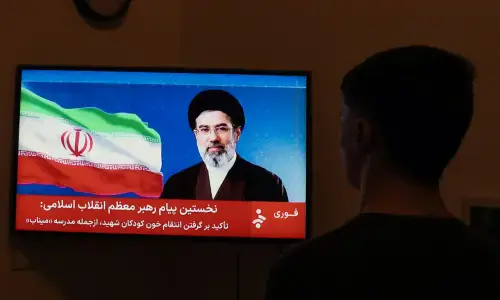
The war has been a miscalculation of Trumpian proportions, and the US president and his coterie of war hawks have few ‘good’ options to save face and bring their troops home. Despite the decimation of its religious, political and military top tier in the first few days of the conflict, Iran — which is militarily no match for the US war machine — managed to defend itself, and now conservative factions within the Iranian establishment are unwilling to back down. Rather, they seem prepared to absorb the pain and play the long game with the Americans.
Yet instead of realising that the kinetic option has failed against Tehran, the US has stepped up its economic war against the Islamic Republic, warning sovereign states not to do business with Iran. While this action will impact the Iranian economy — which has survived sanctions for over four decades — it is unlikely to make Tehran raise the white flag, with Iranian Foreign Minister Abbas Araghchi saying, “pressure doesn’t work”.
Moreover, China, the world’s second biggest economy and a major trading partner of Iran, is not buying it. As the Chinese foreign ministry spokesperson said, Beijing “opposes illegal, unilateral sanctions”. Just as the US failed to defeat Iran on the battlefield, it may also fail on the economic front.
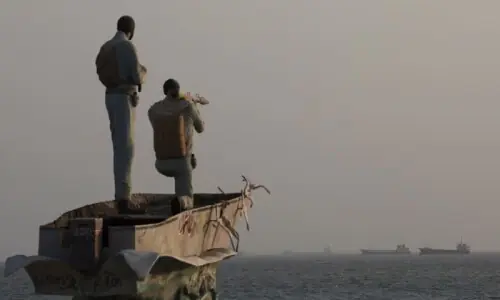
Wise nations learn from mistakes. But while wisdom may admittedly be in short supply in the White House at the moment, it is time the US put aside its ego and committed itself to finding a diplomatic solution with Iran. The nuclear issue consists of hype more than any credible Iranian threat, while the Strait of Hormuz blockade by Iran is a direct result of the US aggression, with Tehran using the key waterway as a bargaining chip to secure its interests and security.
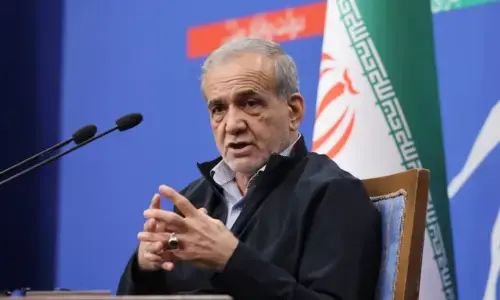
The Islamabad MoU continues to offer the best available off-ramp to all sides, and both Washington and Tehran should return to the spirit of this document. The Iranian president has reaffirmed his country’s belief in dialogue; it is time President Donald Trump did the same.
Instead of playing global policeman, the US should re-evaluate its role in the Middle East. Let regional states — specifically Iran and the Arabs — reach a mutually acceptable security framework. If there is to be long-term peace in the region, the US and Israel must end their armed aggression against sovereign states, and allow the people of the region to work out solutions amongst themselves.
Published in Dawn, August 31st, 2026