US announces plan for ‘economic onslaught’ on Iran
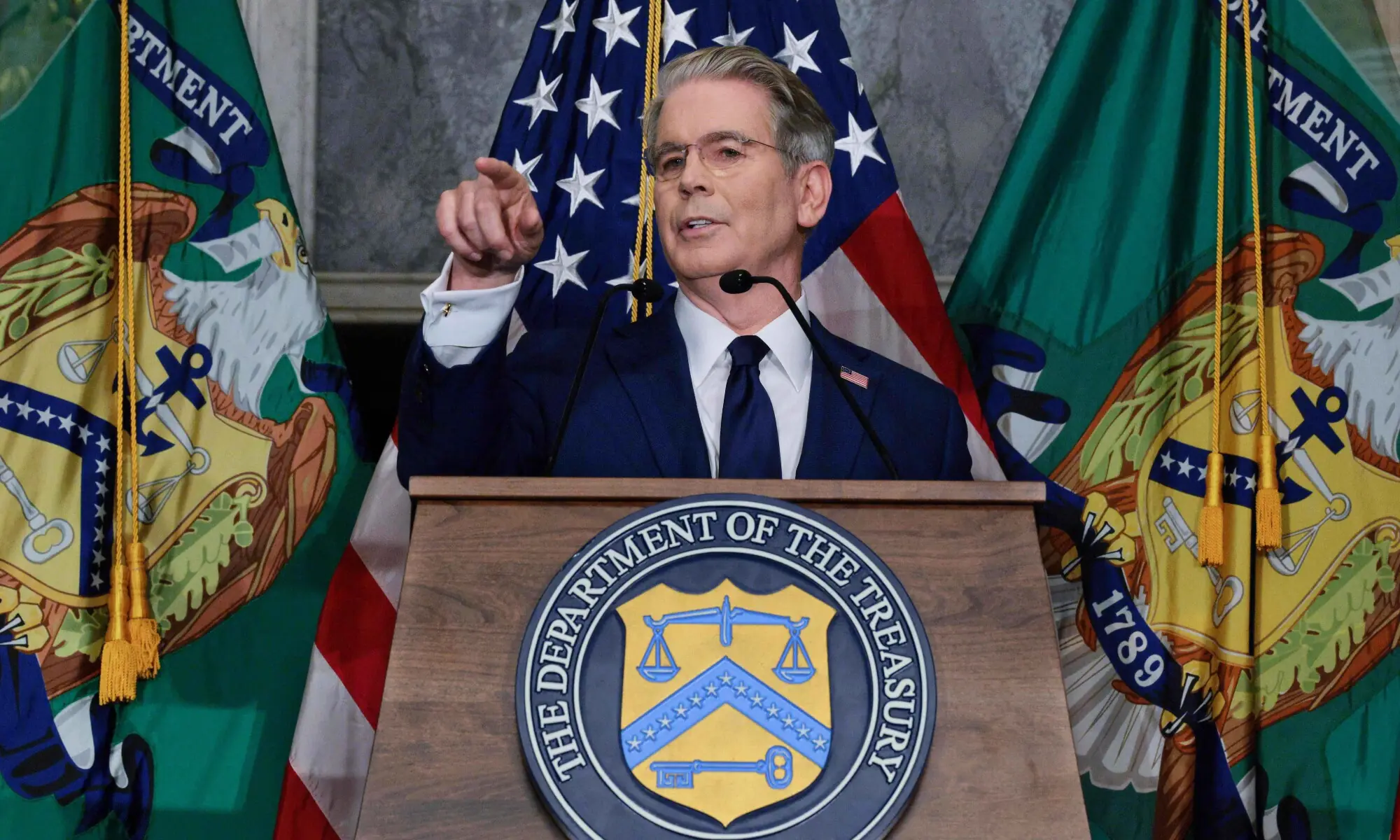
• Tehran laughs off Trump, Bessent’s claims of ‘economic D-Day’
• Treasury secretary doesn’t divulge specifics, or which countries will be targeted
• China vows to defend its interests; Xi calls for diplomatic solution
WASHINGTON: President Donald Trump’s administration on Monday announced a possible expansion of sanctions on countries doing business with Iran, but stopped short of actually imposing penalties.
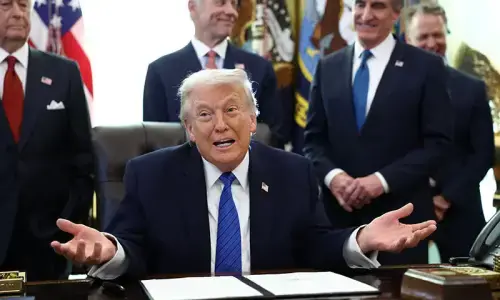
As the war with Iran nears its six-month mark, Treasury Secretary Scott Bessent said the US was launching an “economic onslaught” against Iran’s financial connections around the globe.
But Bessent declined to say what specific countries would be targeted, or when those penalties would take effect.
“Why would I want to blow up the global financial system? We believe that it is important to level set and give people a cure period, but they should know that that will move very quickly and that we are serious,” he told a press conference.
He also teased a “major announcement” of sanctions on a financial institution by the end of the week.
Bessent also announced sanctions on nearly 60 entities, individuals and vessels, and said Treasury was targeting five sectors Iran was using to prop up its economy: digital assets, gold, technology, aviation and shipping.
The US has maintained sanctions against Iran for decades, most of which have been aimed at curtailing the country’s oil revenues, aviation sector, cryptocurrency, procurement of weapons components and other military hardware, and cutting off funding for business enterprises controlled by the Islamic Revolutionary Guard Corps (IRGC).
The sanctions bar designated entities from the dollar-based financial system, but Iran has been successful in quickly standing up new front companies, other entities and vessel registrations to evade the sanctions.
Ahead of the announcement, President Donald Trump claimed that Iran was “collapsing”, hours after Bessent, in a column for the Financial Times, warned that any country that continued to enable Tehran would become a “global pariah”.
The treasury secretary’s column dwelt on nations which “appease” and “enable” Iran.
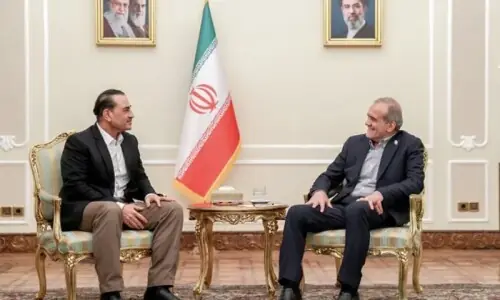
But Tehran laughed off the claims, saying the US turn to financial warfare proved Bessent’s claims false.
“Your narrative doesn’t add up,” Gharibabadi said, asking why, if Washington had achieved its goals, “there is a need for ‘the largest financial invasion in history’ and the mobilisation of all institutions and powers of the US!’’
China vows to protect interests
China has for several years been the biggest buyer of Iranian oil, and Washington has intensified its efforts to clamp down on Chinese purchases, but has so far stopped short of targeting larger Chinese banks with sanctions.
In Beijing, a foreign ministry spokesperson said China will closely watch developments and do what is necessary to protect its rights.
Besides threatening to impose “the toughest sanctions in history” on Iran, Bessent also urged Beijing to cooperate with Washington.
Speaking at a daily press conference, the spokesperson urged all parties to act rationally and with restraint, warning that sanctions and pressure tactics do not help to resolve issues.
Meanwhile, Chinese President Xi Jinping has urged a “diplomatic” solution to the Middle East crisis, telling the king of Jordan that the sovereignty of countries in the region should be respected.
Xi told King Abdullah II during talks in Beijing that China values Jordan’s “unique and important role in the region”, which was thrown into crisis after the US and Israel attacked Iran.
“China has always advocated for a comprehensive ceasefire (and) resolving disputes through political and diplomatic means,” Xi said, according to a Chinese foreign ministry statement.
“(China) believes the sovereignty and security of regional countries, including Jordan, should be respected,” Xi said.
The Chinese president also called for a “comprehensive, just and lasting solution to the Palestinian issue”, the foreign ministry statement said. China supports “resumption of Israeli-Palestinian peace talks anchored on the correct direction of the two-state solution”, Xi said.
Published in Dawn, August 25th, 2026