US sanctions can’t succeed without Chinese compliance: NYT
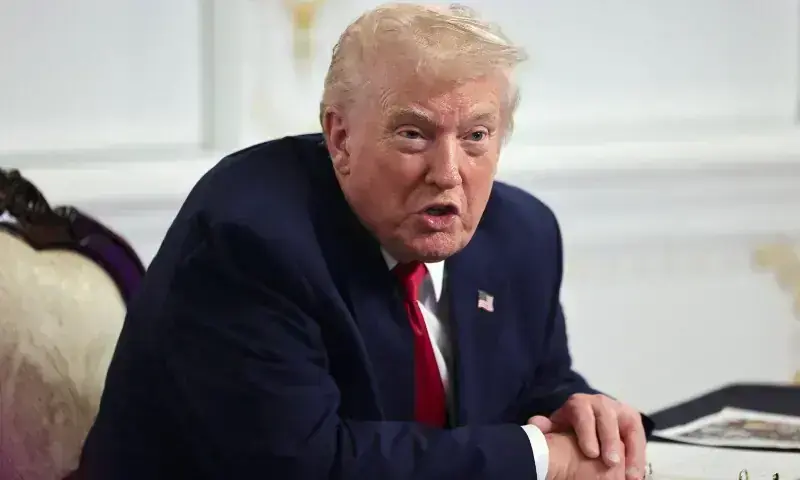
WASHINGTON: US sanctions against Iran will not succeed without China’s compliance, and Beijing appears increasingly defiant because it holds powerful economic leverage over Washington, The New York Times reported on Saturday.
According to the report, a major reason US pressure could backfire is that “China is equipped to cut the supply of critical minerals to American companies, including makers of US weapons.”
The Times said China had already demonstrated the power of this economic “chokehold” during last year’s trade confrontation with Washington, when Beijing restricted critical-mineral exports and forced President Donald Trump to pause an escalating trade war. The resulting détente has largely held.
That experience may have strengthened Beijing’s belief that Washington will hesitate before imposing sweeping economic penalties on China over its trade with Iran, the newspaper noted.
China could retaliate by restricting supplies of critical minerals to American technology companies and defence manufacturers at a time when US stocks of some of these materials have been depleted by the war, the report added.
China’s confidence, however, rests on more than its ability to hurt the United States. Beijing also occupies a uniquely important position in Iran’s economy — one that makes Chinese cooperation essential if Trump wants his sanctions to economically isolate Tehran.
China was Iran’s largest trading partner in 2025. The US-China Economic and Security Review Commission estimates that Iranian crude-oil exports to China were worth about $31.2 billion last year, while the total value of China-Iran trade was roughly $41.2 billion.
China is also by far Iran’s largest oil customer. Chinese buyers have accounted for as much as 90 percent of Iran’s oil exports, according to The New York Times. Much of the crude is purchased by small independent Chinese refineries, known as “teapots,” which are relatively insulated from the international financial system and therefore less vulnerable to conventional US sanctions.
That makes Beijing indispensable to any serious attempt to economically isolate Iran. Washington can sanction Iranian banks, companies, ships and oil traders, but if China continues purchasing Iranian crude and maintaining commercial ties with Tehran, Iran retains a major source of foreign revenue and access to one of the world’s largest economies.
The report argues that the issue is not simply whether China can withstand US sanctions. The larger question is whether Washington can enforce an effective economic isolation of Iran without China’s cooperation — and whether it can pressure Beijing without provoking an economic response that damages American industry itself.
The New York Times report suggests that Chinese analysts increasingly see the war in Iran as evidence of what they regard as Washington’s mounting weakness.
Wu Xinbo, a leading American-studies scholar at Shanghai’s Fudan University who advises China’s foreign ministry, described Trump’s latest threat as evidence of what he called the administration’s desperation over Iran.
Wu argued that Washington was making the threat because it had few alternatives for escaping what he described as a “self-created dilemma.” China’s confidence is also reinforced by the broader strategic picture. The United States has been moving some military assets away from the Pacific to support operations in the Middle East.
Most recently, the aircraft carrier George Washington was moved out of the region. Chinese observers see such movements as potentially weakening the American military posture in Asia while Washington is simultaneously trying to pressure Beijing over Iran.
The result is a difficult strategic equation for Washington: the United States can increase pressure on Tehran, but doing so without Beijing’s cooperation could prove far more difficult — and potentially more costly — than imposing sanctions on Iran alone.
Published in Dawn, August 23rd, 2026