Senate health committee approves e-cigarette regulation bill, retains four-year BDS programme
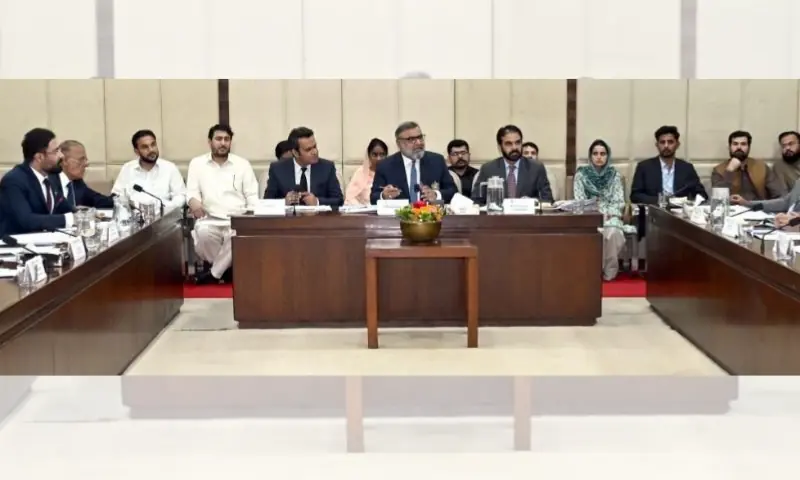
ISLAMABAD: The Senate Standing Committee on Health Services on Thursday approved the Electronic Nicotine Delivery Systems (Regulation) Bill, 2025, and decided to retain the four-year Bachelor of Dental Surgery (BDS) programme.
The meeting was chaired by Senator Amir Waliuddin Chishti and attended by Senators Masroor Ahsan, Rubina Khalid, Nadeem Ahmed Bhutto, Rahat Jamali, Shahzaib Durrani, Nasir Mehmood Butt and Sarmad Ali. Federal Health Minister Syed Mustafa Kamal was also present along with officials from the ministry.
The committee considered the Private Member’s Bill titled “The Electronic Nicotine Delivery Systems (Regulation) Bill, 2025”, introduced by Senator Sarmad Ali during the Senate sitting held in December 2025 and subsequently referred to the committee for consideration.
During the discussion, Senator Sarmad Ali said the bill had remained pending for a considerable period, while the federal minister informed the committee that Private Member’s Bills were required to follow the prescribed procedure and Standard Operating Procedures of the Ministry of Law under Rule 28.
The Additional Secretary Health briefed the committee that such bills required government consent, detailed examination by the concerned ministry, stakeholder consultation and assessment of financial implications.
The committee observed that all relevant stakeholders had already been consulted and that the Pakistan Standards and Quality Control Authority possessed laboratory capacity to test nicotine levels. Members expressed concern over the prolonged delay and noted that implementation of the proposed legislation would not create financial implications for the government.
Following the discussion, the committee voted and unanimously recommended the Electronic Nicotine Delivery Systems (Regulation) Bill, 2025, as proposed by the mover.
The committee also reviewed the compliance status of the Pakistan Electronic Media Regulatory Authority (Pemra) regarding implementation of its directives on formula milk advertisements.
The chairperson Premra informed the committee that between July 24 and August 16, 2026, advertisements for Lactogrow formula milk were aired on television channels with the disclaimer “Mother’s milk is the best for a child”, with a reported total of 6,171 broadcasts. Similarly, formula milk advertisements carrying disclaimers were aired 1,555 times in three days.
The committee considered a briefing by the health ministry and Pakistan Medical and Dental Council (PMDC) regarding the proposal to extend the Bachelor of Dental Surgery programme from four years to five years.
Officials informed the committee that dentistry had undergone significant advancements globally and that an additional year was proposed to align dental education in Pakistan with international standards.
Senator Rubina Khalid opposed the extension, stating that improving the curriculum, quality and clinical training was more important than increasing the duration of the programme. She emphasised that the quality of education, rather than the number of years, should remain the priority and expressed concerns regarding the additional financial burden on parents.
Officials clarified that the proposal was aimed at producing competent dental professionals and ensuring international recognition of Pakistani dental qualifications.
They informed the committee that several international systems required five years of dental education for equivalence purposes.
Representatives from the Pakistan Association of Private Medical and Dental Institutions (Pami) expressed serious displeasure over the proposal, saying they had not been taken into confidence before the order.
They also said the prime minister had directed the PMDC to consult them before making any changes.
Senator Shahzaib Durrani questioned the distinction between four-year and five-year graduates and sought clarification regarding the future status of existing graduates.
Chairman Senator Amir Waliuddin Chishti raised serious concerns over the process through which the proposed change was approved. After detailed deliberation, the committee unanimously directed the ministry and PMDC to retain the four-year BDS programme.
The committee emphasised that major educational reforms should only be introduced after comprehensive consultations with students, parents and other relevant stakeholders, saying these stakeholders had not been adequately consulted. The committee further stressed the need to improve the existing curriculum, enhance clinical training and strengthen academic standards.
Published in Dawn, August 21st, 2026