APPREHENSIONS regarding a fresh round of US-Iran hostilities are palpable, as the 60-day window for negotiations envisaged under the Islamabad MoU expired on Monday, with no forward movement on the diplomatic front.
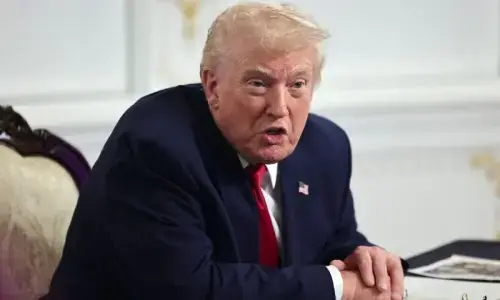
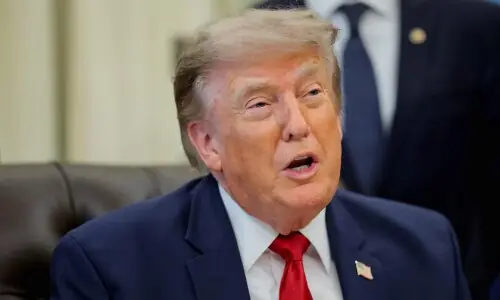
In fact, Tehran disputes the characterisation of the 60-day window as a deadline, with Iran’s foreign ministry spokesman saying it was only a “framework” to facilitate talks. Meanwhile, the noises coming out of Washington are not reassuring at all. US President Donald Trump has asked Iran to “put up the white flag of surrender” while also threatening to bomb his ally Oman if it “gets in the way”.
Oman is currently negotiating with Iran to resolve the Strait of Hormuz crisis. Mr Trump’s latest pronouncement has been to declare the strait a “new US territory”. Such unhinged Trumpian antics have made it particularly difficult for America to extricate itself from a quagmire of its own making.
If the past six months have shown anything, it is that the Iranians do not yield to threats. Therefore, asking Tehran to surrender is a non-starter. And, threatening to bomb Oman defies logic. The Gulf sultanate is one of the few states that maintain close ties with both Iran and the US, and can play a crucial role in taking the diplomatic process forward.
Clearly, very little thought — if any — goes into the American leader’s ‘diplomacy’, as he lambastes both friends and foes with incendiary comments. If there are any adults left in the White House situation room, they need to stand up and be counted, and offer wiser counsel to their boss.
The fact is that saner elements within the US leadership, as well as in Iran, must realise that the Islamabad MoU still offers the best framework for peace. Therefore, it would be a mistake to discard the document. If the MoU is allowed to lapse, and a hot war resumes, it will be devastating for all. The front line has already expanded, pulling in the GCC states and Iraq, while Yemen’s pro-Iran Houthis seek to replicate the closure of the Strait of Hormuz with the Bab al-Mandeb blockade.
Their attacks on Saudi targets are also expanding. Therefore, there is a need to revive and expand the MoU. Lebanon was included in the document, but Israel has been raining fire on the country despite a supposed ceasefire. In fact, the Iranian foreign minister has said that Israel is trying to sabotage the Iran-US deal.
All these fronts — the Gulf, Lebanon, Yemen — require an immediate, coordinated and lasting ceasefire, while Washington must offer genuine sanctions relief to Iran, and ditch its threats and absurd claims. Tehran, conversely, should pledge to keep Hormuz open, and end its attacks on the GCC states. Without these concessions, a far more destructive conflict could ensue.
Published in Dawn, August 19th, 2026