Record wildfires force evacuations in Belgium and Germany


• Brussels activates EU emergency protocols as nation’s largest blaze scorches 1,600 hectares; water bombers, helicopters deployed from across Europe
• Western German inferno stabilises after 2,000 residents flee village
• Scientists, officials tie worsening fire risk, heat to climate change
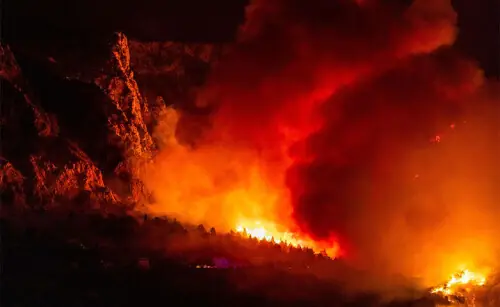
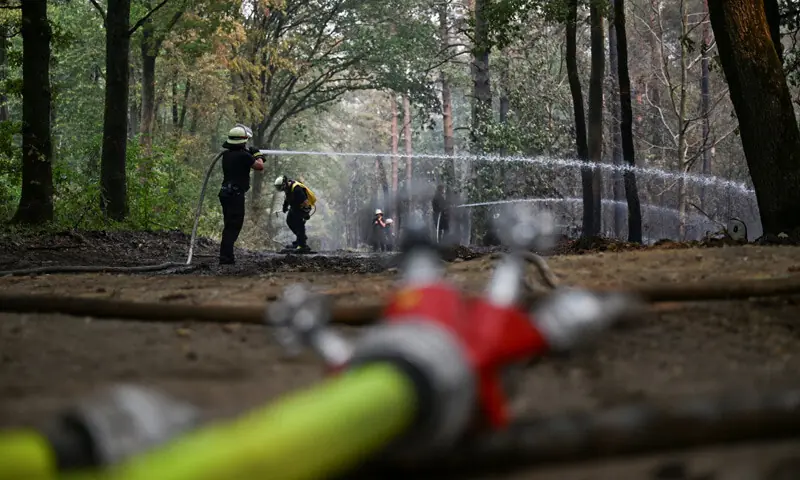
BRUSSELS: Residents began evacuating from two villages in eastern Belgium on Saturday as firefighters, backed by water bombers and helicopters from across Europe, battled one of the biggest wildfires in the country’s history.
Reinforcements from across the country were fighting the uncontrolled blaze that broke out Friday in the High Fens natural park, a vast wood- and heathland popular with hikers near the German border.
By early Saturday afternoon, the fire had scorched at least 1,600 hectares, making it the largest fire on record in Belgium. It surpasses a 2011 blaze that burnt nearly 1,400 hectares, according to data from the European Forest Fire Information System.
The office of the governor of Liege province asked residents in parts of the villages of Sourbrodt and Buetgenbach to evacuate their homes due to changing winds and heavy smoke. Others in the area were advised to remain indoors and keep windows closed.
Tourists staying in the area were advised to leave, and a children’s summer camp was also evacuated.
“There is a risk that the fire could reach homes, but we are deploying all available resources to protect them,” said Nicolas Yernaux, a spokesperson for the regional authorities in Wallonia.
Belgium swiftly activated the European Union civil protection mechanism, allowing it to request personnel and equipment from across the continent. The EU deployed three helicopters and two water-bombing aircraft to tackle the record wildfire, the bloc’s crisis commissioner said.
European Commissioner Hadja Lahbib noted that two Swedish water-bombing aircraft, along with helicopters from the Czech Republic and the Netherlands, were dispatched.
“The situation is complicated and highly dependent on aerial resources,” Yernaux said. Operations on the ground were made harder by the fens’ terrain, which is a patchwork of heath, peat bogs and raised wooden boardwalks.
Firefighters pulled back to the edge of the forest and allowed parts of the heathland to burn because the area is extremely difficult to access.
Interior Minister Bernard Quintin toured the burn zone, witnessing a huge expanse of singed vegetation with thick smoke hanging in the air.
“When you see how things looked this morning and how they are now, you can only be shocked,” Quintin said. “But at the same time, we’re grateful for the work that has been done. You can see the farmers out here driving around and continuing to wet down the area. It’s impressive, very impressive.”
Numerous farmers posted photographs on social media of themselves heading to the fire zone to support emergency crews. Liege provincial governor Herve Jamar said authorities had been flooded with offers of help.
David Rodolfs, 38, who owns two restaurants in the nearby Waimes area, said the wildfire forced businesses to evacuate and left residents stunned by the destruction. “It’s a catastrophe,” he said.
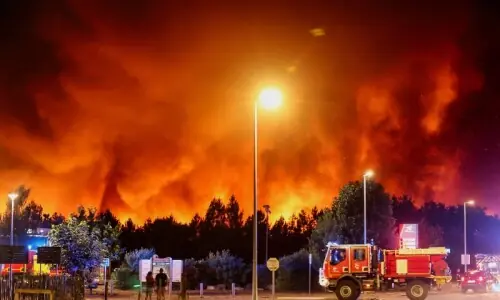
The Belgian wildfire is located only a few dozen kilometres from another major blaze in western Germany. That fire, the biggest ever to strike North Rhine-Westphalia, forced the evacuation of more than 2,000 people from the village of Gey, near the Belgian border, on Friday after flames advanced within 300 metres of the community.
The German wildfire stabilised on Saturday, although residents were still barred from returning home. State Premier Hendrik Wuest said the fire extended over 300 hectares, drawing around 1,500 emergency services personnel.
“This isn’t the first time we’ve experienced these extreme weather conditions. And that’s also linked to climate change. No one is seriously going to deny that any longer,” Wuest told reporters. “In future, we will have to deal with extreme weather events more frequently.”
Like much of Europe, Belgium and Germany have experienced a fresh spell of intense heat, with temperatures reaching as high as 37 degrees Celsius in parts of Belgium on Friday.
Scientists say human-caused climate change has increased the likelihood of the hot and dry conditions that allow wildfires to spread faster and burn longer.
Published in Dawn, August 16th, 2026