Avalanche risk, bad weather disrupt climbing season in Gilgit-Baltistan
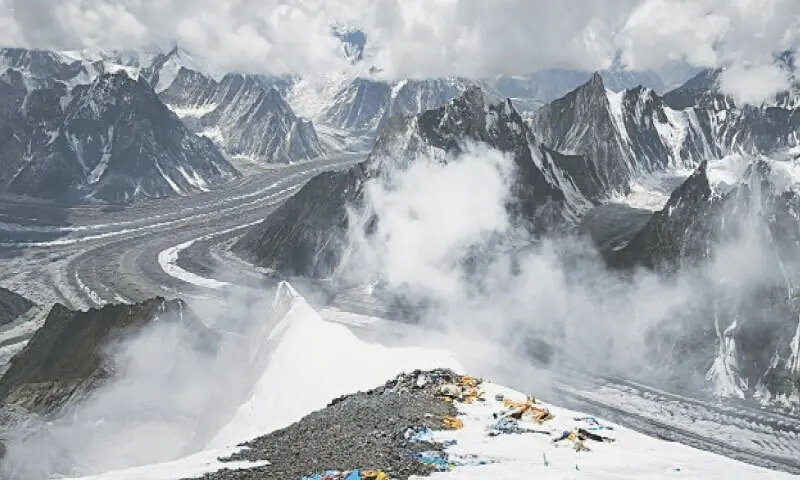


GILGIT: Climate change-induced shifts in weather patterns have worsened conditions on the peaks of the Karakoram Range in Gilgit-Baltistan, creating serious difficulties for mountaineers.
No climber managed to summit the world’s second-highest mountain, K2 (8,611 metres), or Gasherbrum-I (8,080 metres), this summer.
Around 40 foreign climbers also failed to reach the summits of Gasherbrum-II (8,035 metres), Broad Peak (8,047 metres) and Nanga Parbat (8,126 metres) this year.
Persistent storms, heavy snowfall, unstable snow conditions and an exceptionally high avalanche risk created hurdles for climbers attempting to summit peaks in Gilgit-Baltistan, particularly five of the 14 eight-thousanders.
No climber managed to summit K2, Gasherbrum-I this summer
Expedition teams usually spend weeks at base camps assessing weather forecasts, fixing ropes and acclimatising before beginning their summit push.
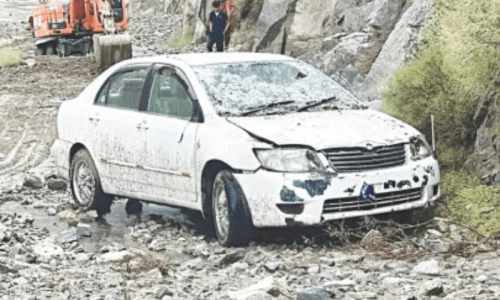
Mountaineers have experienced persistent bad weather, avalanches, rockfalls, strong winds and unpredictable conditions at the peaks during the summer season for the past two years. The climbing season on the Karakoram peaks, including K2, Broad Peak, Gasherbrum-I and Gasherbrum-II, usually runs from the end of July to mid-August.
‘Over 200 attempted’
Ghulam Muhammad, a tour operator, told Dawn that more than 200 climbers attempted to summit K2, Broad Peak, Gasherbrum-II and Gasherbrum-I this year. “This year, continued bad weather kept teams at base camp, while repeated summit attempts were called off due to unsafe conditions on the mountains.”
He said only three foreign expedition groups reached the summit of Gasherbrum-II, while members of one local expedition team successfully summited Broad Peak. Earlier, two expedition teams had summited Nanga Parbat, where the climbing season closes by the end of June.
Ayaz Shigri, general secretary of the Alpine Club of Pakistan, told Dawn that weather conditions at the peaks remained unstable this summer. However, he said that after the devastating tragedy at Broad Peak on July 30, in which 10 foreign climbers, including Pakistani climber Sohail Sakhi, lost their lives when a snow avalanche struck them during their summit attempt, many climbers at K2 and Gasherbrum-I abandoned their missions and joined the search and rescue operation.
Asghar Porik, another tour operator, said shifting weather patterns in the mountains had made it difficult for mountaineers to plan their summit attempts. “For 100 or 500 years, climbers have planned their attempts in the Karakoram according to established weather patterns. They usually attempt K2 between July 20 and August 15, with the weather generally considered suitable until the end of June,” he said.
He said the situation had worsened in recent years as rising temperatures made snow unstable and increased the risks of avalanches and rockfalls. Asghar Porik added that his 11-member expedition team at Gasherbrum-II could not find a suitable weather window and called off its expedition.
Ikram Baig, president of the GB Association of Tour Operators, said Broad Peak was considered one of the comparatively less dangerous eight-thousanders. “Broad Peak is often described by experienced mountaineers as one of the comparatively less technical 8,000-metre peaks. However, fresh snowfall can make even an easier route extremely dangerous by creating unstable snow conditions and a high risk of avalanches,” he said.
Mr Baig said climate change had altered conditions and made the environment at the peaks increasingly uncertain. Mohammad Ali Nagari, a tour operator, said the growing number of commercial expeditions was also degrading the fragile environment at the peaks.
Ayaz Shigri said the summer climbing season on the Karakoram peaks had now closed, with climbers returning from the eight-thousanders without summiting K2 or Gasherbrum-I this year. Last year, too, foreign climbers faced similar conditions and mostly returned without summiting peaks in GB.
Published in Dawn, August 16th, 2026