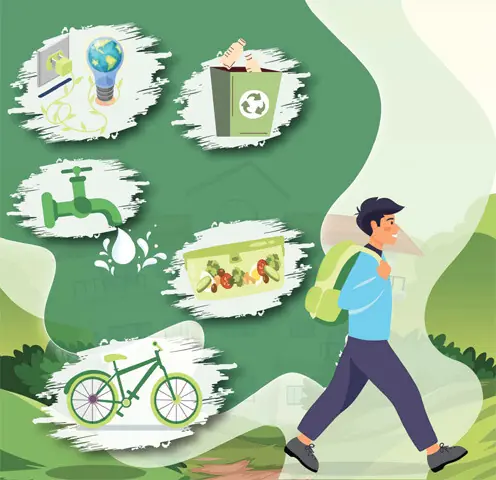
The back-to-school phase after every summer vacation is usually an exciting one, for it means meeting friends every day, starting a new class and achieving new milestones. While there are a lot of ‘new’ things that students have, such as books, bags and stationery, there is often little that is new about their routine and goals. Everyone wants to excel in studies, enjoy themselves and do better academically than they have in the past.
But why not make your new school year more meaningful by adding another goal this time, one that doesn’t just benefit you, but your school and the planet too? Okay, let me tell you what exactly I have in mind: go back to school with a ‘green mission’, to make your school greener and inspire others to do so too.
To become more environmentally friendly and make an impact, you don’t have to be a legislator or an activist, or become involved in huge projects that promise to impact hundreds and thousands of people. One student switching off a light or bringing a reusable bottle may not seem like much. But when hundreds of students begin making the same choices every day, those small actions soon become part of the school’s culture and create a green movement with far-reaching effects.
This really is happening around the world. Young people are becoming more involved, innovative and proactive than ever before. And International Youth Day, observed annually on August 12, celebrates the important role young people play in making a difference today and shaping a better tomorrow.
New books and fresh uniforms aren’t the only things you should take back to school this year. Why not return with a mission too? Discover how small everyday habits can help make your school greener and inspire others to protect the planet
This year’s theme, “Different contexts, common aspirations,” highlights the resilience of young people, particularly in developing and vulnerable regions, and celebrates the creative grassroots solutions driven by young leaders in resource-constrained areas.
To put it more simply, no matter where young people live or what challenges they face, they all want the same thing: a safer, cleaner and more sustainable future. And they don’t have to wait until they’re adults to start making it happen. In fact, many are already leading the way through small actions in their schools and communities.
What does that actually mean for you? It means every student has the power to protect the environment, and one of the best places to start is at school. You spend a major chunk of your time there every day. What you do at school becomes part of your daily routine. So, make it your goal to adopt greener habits at school and encourage others to do the same.
Small habits, big impact
Start by talking to your classmates, teachers and even the principal. Make a group of like-minded students who are willing to play an active role in your ‘green school’ campaign. Brainstorm ideas about what can be done within your class and across the school to reduce your school’s carbon footprint and protect the environment.
If you don’t know what a carbon footprint is, now’s a good time to find out. Understanding it will help you see how everyday choices affect the environment and what you can do to reduce your own impact.
Once you have a group, even a small one, you can start your campaign, which you need to give a nice name. You can also give yourselves a title, such as “Green Guardians” or whatever you like. Now there are many things you can do. Let’s look at them one by one.
Days with a mission
A complete change is difficult to implement all at once, so start slowly. Set different days of the week for different environmentally friendly activities. For instance, you can set Mondays as No Plastic Day, where the use of single-use plastic items such as polythene bags, disposable cups, plates and cutlery is not allowed inside the school.
On “Waste Less Tuesday”, encourage both students and teachers to bring lunch in reusable containers instead of disposable packaging, carry a reusable water bottle instead of buying bottled water, finish their lunch instead of throwing food away, avoid individually wrapped snacks, use reusable cutlery and cloth napkins instead of tissue paper, and use both sides of a sheet of paper before recycling it.
To make this more interesting, at the end of the day, the class that produces the least amount of rubbish could be given a shout-out during the morning assembly or receive an award that is passed on each week to the next winner.
The simple act of thinking twice before throwing something away, once it becomes second nature, can turn into a habit that lasts a lifetime. See how simple it is to pick up a good habit?
Wednesdays can be Water Wise Day, where the focus is on conserving water. Use only as much water as needed. Make and display water-saving reminders near sinks and drinking water stations.
Thursdays can be Switch It Off Day, when everyone focuses on switching off unnecessary lights, fans and gadgets. This once-a-week activity will soon become a habit and you will soon be saving electricity wherever you are. Appoint an “Energy Monitor” for each class so they can help ensure this continues on the rest of the days too.
Make Fridays Gardening Day, when each class tends to the plants and garden around the school. If you don’t have many plants or trees, plant some. Ask students who can to bring potted plants for the school.
Cut down on school waste
Since waste is one of the main pollutants in the school environment, we need to look at it in more detail rather than leave it as just a once-a-week activity.
Students and school staff use countless disposable items every day, from plastic water bottles and juice boxes to snack wrappers, tissue paper and endless sheets of paper that are soon discarded. While one item may not seem like much, multiply it by hundreds or even thousands of students, and the amount of waste becomes enormous.
Start with simple swaps. Always bring a reusable water bottle to school instead of buying bottled water. Bring lunch in a reusable lunchbox instead of disposable packaging. Reduce the use of disposable wrappers, particularly plastic ones, as well as disposable plates and cutlery in the school canteen. Ban plastic bags inside the school altogether.
Use both sides of your notebook pages, and don’t start a new notebook until you’ve filled the old one, even if you’ve begun a new term.
Before printing an assignment, check whether you can submit it digitally. If you have to print, use both sides of the paper whenever possible. Save partially used sheets for rough work instead of throwing them away.
When you have school activities and events, don’t throw away all the decorations afterwards thinking that new ones will be bought for the next occasion. Carefully take down and store reusable items and keep using them for as long as they last. Start a recycling corner
Many people want the waste they throw away to be recycled, but they don’t know where to put it because there are hardly any proper recycling bins around. As a result, all kinds of rubbish end up in landfill, where metal and plastic can take years to decompose.
So ask your teacher to set up clearly labelled bins for paper, plastic and other recyclable materials, and get student volunteers to ensure the bins are used correctly. Have the school authorities send these different types of waste to the appropriate recycling centres. With time, recycling will become a habit. Think how much difference that could make if those habits stayed with you for life.
Every small action matters
It’s easy to think that one student’s actions won’t make much difference. But imagine if every student in your school brought a reusable bottle, saved a few sheets of paper each week, switched off unnecessary lights and inspired just one friend to do the same. When this happens in every classroom, real change takes place.
A greener school is created through hundreds of small choices made every single day. So as you return to school this year, don’t just carry new books and fresh ambitions. Carry a green mission too. Protecting the planet doesn’t always require mega projects or global conferences. It can begin with one student deciding to make their classroom, their school and their world just a little greener.
Published in Dawn, Young World, August 8th, 2026